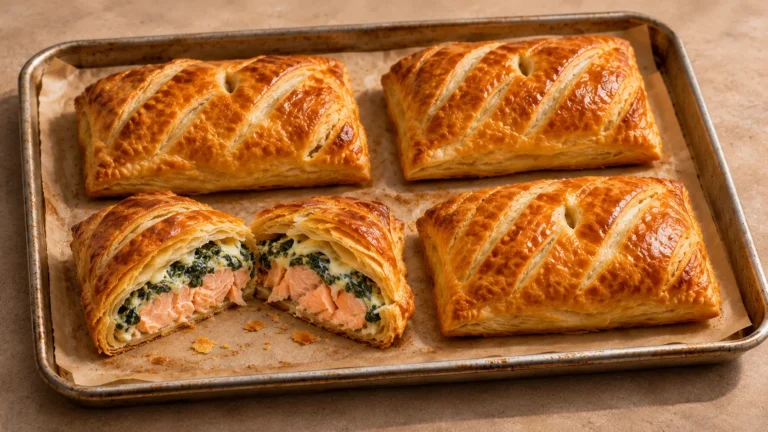
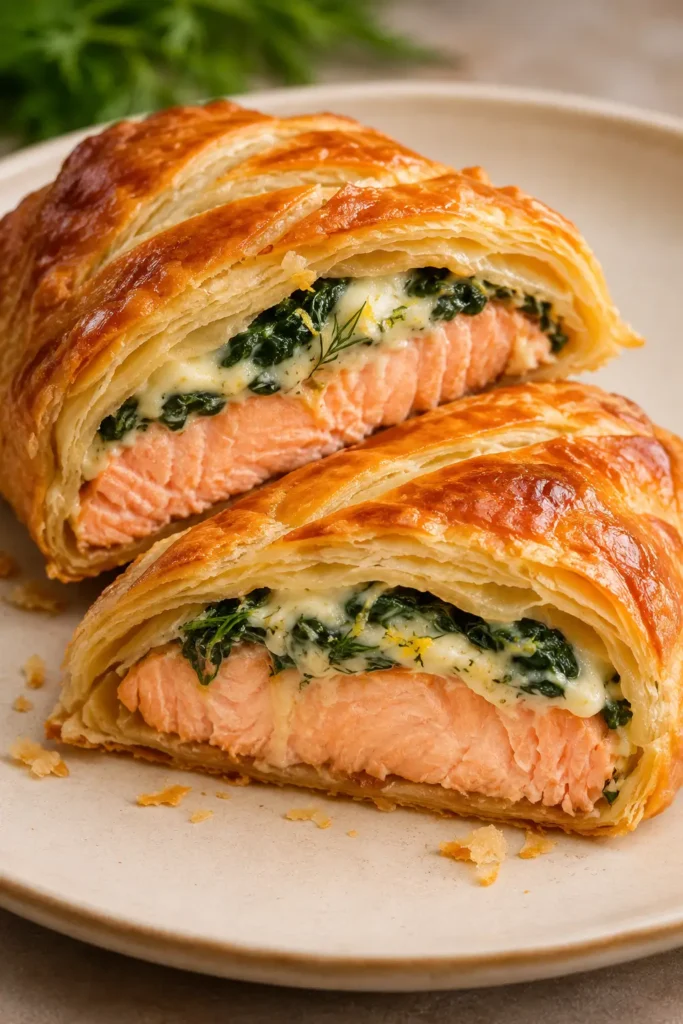
Spinach and Cheese Stuffed Salmon Wellington wraps salmon fillets and a creamy three-cheese filling in crisp, golden puff pastry. Garlic, lemon zest, and fresh dill bring brightness to the rich center. A few careful steps—draining the spinach, cooling the filling, and sealing the pastry—help every parcel bake with distinct layers.
Quick Overview
- Flavor and texture: Buttery, flaky pastry with salmon, creamy cheese, spinach, garlic, and fresh herbs.
- Difficulty: Moderate; the filling is straightforward, while wrapping takes a little care.
- Best for: Family dinners, holiday meals, or a seafood dinner with guests.
- Method: Wilt the spinach, mix the filling, wrap individual salmon fillets, and oven-bake.
- Servings: 4 individual Wellingtons.
- Prep time: About 20 minutes.
- Cook time: About 30–35 minutes, including the spinach and a 25–30 minute baking window.
- Rest time: 5 minutes.
- Total time: About 55–60 minutes, excluding thawing and any additional cooling or baking needed.
The baking window is a guide. Fillet thickness, pastry size, and the temperature of the assembled parcels affect how long the centers take to cook.
What This Is and Why You’ll Love It
Salmon Wellington, also called salmon en croute, is salmon enclosed in pastry. Here, the spinach and cheese mixture sits over each fillet inside its own pastry parcel.
- Each person gets an individual Wellington with a crisp exterior.
- Cream cheese holds the filling together, mozzarella adds melt, and Parmesan brings savory flavor.
- Lemon zest adds citrus aroma without introducing extra liquid.
- Fresh dill complements the salmon without needing a separate sauce.
- The filling and pastry provide enough richness to pair with simple vegetables.
- If you enjoy creamy spinach with salmon, this sweet-savory stuffed salmon dinner offers another way to use that combination.
Ingredients
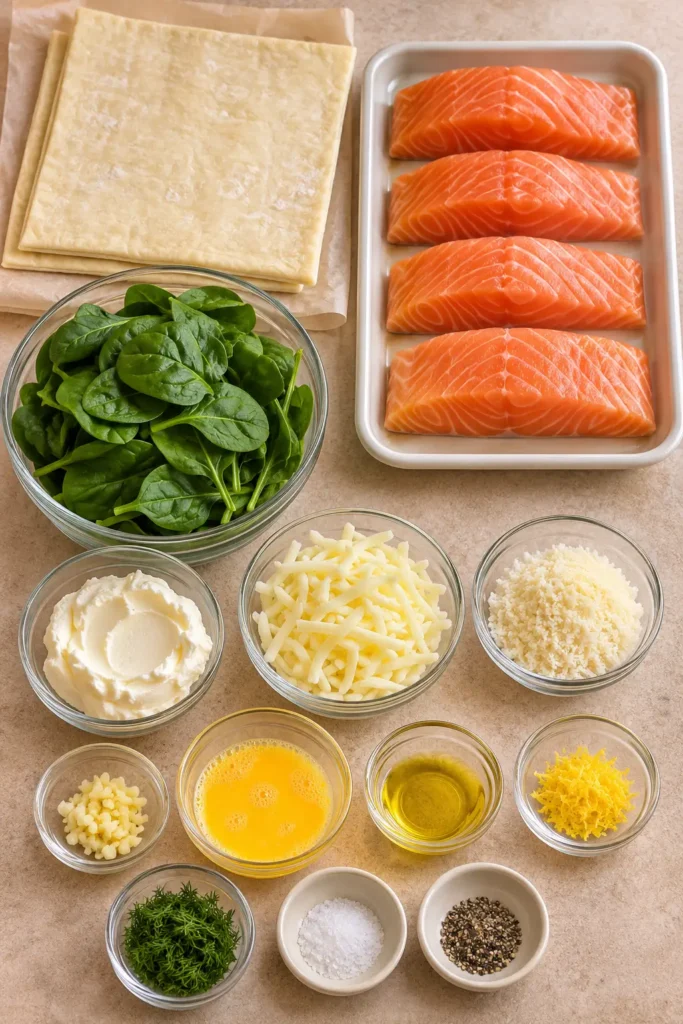
- 2 sheets puff pastry, thawed
- 4 salmon fillets, 6 oz each, skinless
- 2 cups fresh spinach
- 1/2 cup cream cheese, softened
- 1/2 cup shredded mozzarella
- 1/4 cup grated Parmesan cheese
- 2 cloves garlic, minced
- 1 large egg, beaten, for egg wash
- 1 tablespoon olive oil
- 1 teaspoon lemon zest
- 1 teaspoon fresh dill, finely chopped
- Salt and freshly ground black pepper to taste
Key ingredients
Puff pastry: Use thawed pastry that still feels cool. It should unfold without cracking, but it should not feel sticky or greasy. Sheet dimensions vary, so check that each half can wrap one fillet before adding the filling.
Salmon: Choose fillets with similar thickness so they cook at a similar rate. Check for pin bones and pat the surfaces dry before assembly.
Fresh spinach: Measure the 2 cups before cooking. The leaves shrink considerably, giving the cheese mixture flecks of spinach rather than a thick vegetable layer.
The three cheeses: Softened cream cheese makes mixing easier. Mozzarella melts into the filling, while Parmesan adds saltiness, so season with a light hand.
Lemon zest and dill: These add freshness to a rich filling. Use only the yellow part of the lemon peel; the white pith can taste bitter.
Egg wash: A thin, even coating gives the pastry its golden sheen. Avoid letting it collect around the bottom edges.
Substitutions
Baby spinach or regular fresh spinach works with the listed 2 cups; remove tough stems from larger leaves. Fresh or fully thawed frozen salmon can be used as the four 6 oz skinless fillets.
All-butter and other standard puff pastry products differ in flavor and sheet size. Keep the two-sheet quantity and make sure the pastry can enclose all four portions without being stretched paper-thin.
For the intended filling, retain the cream cheese, mozzarella, and Parmesan in the amounts listed. Replacing them with wetter ingredients can change the filling’s consistency.
How to Make It: Spinach and Cheese Stuffed Salmon Wellington
- Prepare the spinach filling. Preheat the oven to 400°F and line a baking sheet with parchment paper. Heat the olive oil in a skillet over medium heat. Add the garlic and sauté for about 1 minute, just until fragrant, without browning it. Add the spinach and cook until wilted. Remove from the heat, drain any liquid, and let the spinach cool. Gently squeeze out remaining moisture, then chop if the leaves are large. It should feel damp rather than release liquid when pressed.
- Build the cheese mixture. Combine the softened cream cheese, mozzarella, Parmesan, lemon zest, dill, and cooled spinach in a bowl. Season with salt and freshly ground black pepper. Mix until cohesive and spreadable, with the spinach distributed throughout. Let any remaining warmth dissipate before the filling touches the pastry.
- Assemble the Wellingtons. Lightly roll out the two puff pastry sheets to smooth the folds. Cut each sheet into two equal portions, making four pastry portions altogether. Check that each can wrap one fillet with enough overlap to seal; gently enlarge the portions as needed without making the pastry excessively thin. Pat the salmon dry, place one fillet in the center of each portion, and season lightly. Divide the filling evenly over the four fillets, keeping it off the pastry borders.
- Encase and finish. Fold the pastry around each fillet and press the clean edges firmly together. Trim bulky excess overlap if needed, keeping the salmon fully enclosed. Place the parcels seam-side down on the prepared baking sheet with space between them. Brush with a thin layer of beaten egg. Lightly score the tops and make a small vent through the top pastry layer without cutting into the salmon.
- Bake and rest. Bake for 25–30 minutes as an initial guide, checking toward the earlier end. The pastry should be puffed, crisp, and deeply golden. Use an instant-read thermometer to check the thickest part of the salmon and the center of the filling in each parcel; this recipe uses a conservative 165°F center target for the enclosed preparation. Continue baking if needed. If the tops brown before the centers are ready, loosely shield them with foil. Rest uncovered for 5 minutes before slicing.
Doneness note: The FDA Food Code specifies 165°F for stuffed fish. Applying that target to these filled pastry parcels is a conservative cooking choice; it may require longer than the original baking estimate. Measure the center rather than judging readiness from pastry color alone.
Pro Tips
- Drain before mixing. Removing spinach liquid is easier before it is incorporated into the cheese.
- Cool the filling fully. Warm filling softens the pastry during wrapping.
- Keep unused pastry refrigerated. Bring out only what you can assemble promptly.
- Check the pastry fit first. A trial fit around a fillet helps avoid discovering a short edge after filling.
- Keep the borders clean. Cheese or spinach between the edges can prevent a firm seal.
- Avoid thick folds underneath. Heavy layers of overlap take longer to bake through.
- Space the parcels apart. Leave room for the pastry to expand without touching its neighbors.
- Rest uncovered. A cover traps steam against the crust.
- Use a sharp serrated knife. Gentle sawing helps cut the pastry without pressing the filling out.
Variations
These options change the presentation or filling texture while keeping the listed ingredients and amounts.
- Diagonal pastry pattern: Add shallow parallel scores and a separate small steam vent.
- Diamond pastry pattern: Lightly crosshatch the tops, taking care not to cut deeply into the pastry.
- Finer spinach filling: Chop the cooked, drained spinach finely for an even distribution in every slice.
- More visible spinach: Leave the cooked spinach coarsely chopped for a more distinct leafy texture.
For another seafood pastry to add to your meal plan, try these golden rolls with a creamy shrimp and crab filling.
What to Serve With It
Choose one or two sides so the pastry remains the main feature.
- Steamed green beans for a fresh, crisp side.
- Roasted asparagus with lightly browned tips.
- A small romaine salad with homemade Caesar dressing.
- Roasted carrots for gentle sweetness.
- Steamed broccoli served alongside the pastry.
- A cucumber and tomato salad for a cool accompaniment.
- A small portion of roasted baby potatoes for a heartier meal.
- A mixed green salad with a light vinaigrette.
Keep salads and moist vegetables beside the Wellington rather than underneath it to help the bottom crust stay crisp.
Storage
Refrigerate: Transfer leftovers to shallow containers and refrigerate promptly, within 2 hours of cooking, or within 1 hour if the surrounding temperature is above 90°F. Store at 40°F or below and use within 3–4 days. The pastry will soften during storage.
Reheat: Place a refrigerated portion on a baking sheet in a 350°F oven. Reheat until the center reaches 165°F, checking with a thermometer. Loosely shield the top if it darkens too quickly. The time depends on the portion’s thickness.
Freeze: For longer storage, freeze promptly chilled, cooked portions in airtight wrapping. Thaw in the refrigerator before reheating. Expect some loss of pastry crispness and a possible change in the creamy filling’s texture.
Prepare ahead: You can cook, drain, cool, and refrigerate the spinach filling earlier in the day. Keep the salmon refrigerated separately and assemble close to baking for the best pastry texture.
Troubleshooting
- The bottom is soggy: Spinach liquid, wet salmon, warm filling, or excessive pastry overlap can contribute. Drain and cool the filling, pat the fish dry, and keep the underside folds compact.
- The filling leaks: The border may contain filling, or the seam may have opened. Divide the mixture evenly, leave clean edges, and seal firmly before placing seam-side down.
- The pastry splits: It may be too cold to unfold or stretched too tightly around the fish. Let it become pliable while staying cool, and check the fit before filling.
- The top browns before the center cooks: Loosely shield the top with foil and continue until the center reaches the target temperature.
- The pastry looks flat or greasy: It may have become too warm during assembly. Refrigerate softened parcels briefly before baking and make sure the oven is fully preheated.
- The slices collapse: Let the Wellington rest for 5 minutes, then cut gently with a sharp serrated knife.
FAQs
Is salmon Wellington the same as salmon en croute?
Both names describe salmon enclosed in pastry. This version makes four individual parcels with a spinach and three-cheese layer over the fish.
How do two pastry sheets make four Wellingtons?
Divide each sheet into two portions. Each portion wraps one 6 oz fillet. Since brands have different sheet dimensions, check the fit and roll gently as needed before adding the filling.
Do I cook the salmon before wrapping it?
No. Assemble with raw, skinless salmon and bake it inside the pastry. Precooking would change the method and could make the fish dry during the final bake.
How do I prevent soggy salmon Wellington?
Drain and gently squeeze the cooked spinach, cool the filling, pat the salmon dry, and keep the pastry cool. Avoid thick overlap underneath the parcels and bake in a fully preheated oven.
Can I use frozen salmon?
Yes, once it is fully thawed in the refrigerator. Pat it dry before assembly. If it comes in vacuum packaging, follow the package’s thawing instructions, including any direction to remove the packaging.
What internal temperature should I check?
This recipe uses a conservative 165°F center target for the filled preparation. Check both the thickest part of the salmon and the filling, keeping the thermometer tip away from the baking sheet.
Can I assemble it the night before?
For better pastry texture, prepare and refrigerate the filling separately, then wrap the salmon closer to baking. Extended contact with the filling can soften raw pastry.
Why should the Wellington rest before slicing?
A 5-minute uncovered rest helps the filling settle and makes cleaner slices easier. Serve soon afterward while the pastry is still crisp.
Conclusion
Spinach and Cheese Stuffed Salmon Wellington brings together golden pastry, a creamy spinach filling, and individually wrapped salmon portions. Keep the filling dry, the pastry cool, and the seams firmly closed. Save this recipe for your next seafood dinner and pair it with a simple vegetable side.
Follow Us
Love easy seafood recipes, creamy dinners, and quick weeknight meals?
👉 Follow us on Facebook for daily viral recipes and cooking inspiration
👉 Save your favorite recipes on Pinterest for easy meal planning and seafood ideas
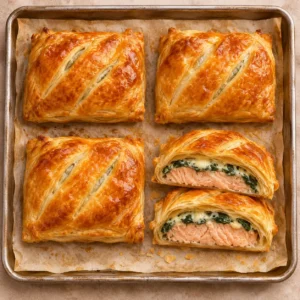
Spinach and Cheese Stuffed Salmon Wellington
Equipment
- Oven Preheat to 400°F for baking the Wellingtons.
- skillet For sautéing the garlic and wilting the spinach.
- mixing bowl For combining the spinach and three-cheese filling.
- mixing spoon or spatula For stirring the spinach and mixing the filling.
- Rolling Pin For smoothing and gently enlarging the puff pastry portions.
- sharp knife For dividing and trimming the pastry and lightly scoring the tops.
- baking sheet Line with parchment paper and leave space between the four parcels.
- pastry brush For applying a thin, even layer of beaten egg.
- instant-read thermometer For checking the thickest part of the salmon and the center of the filling.
Ingredients
- 2 sheets puff pastry, thawed
- 4 salmon fillets, 6 oz each, skinless
- 2 cups fresh spinach
- 1/2 cup cream cheese, softened
- 1/2 cup shredded mozzarella
- 1/4 cup grated Parmesan cheese
- 2 cloves garlic, minced
- 1 large egg, beaten, for egg wash
- 1 tbsp olive oil
- 1 tsp lemon zest
- 1 tsp fresh dill, finely chopped
- salt and freshly ground black pepper, to taste
Instructions
- Prepare the spinach filling. Preheat the oven to 400°F and line a baking sheet with parchment paper. Heat the olive oil in a skillet over medium heat. Add the garlic and sauté for about 1 minute, just until fragrant, without browning it. Add the spinach and cook until wilted. Remove from the heat, drain any liquid, and let the spinach cool. Gently squeeze out remaining moisture, then chop if the leaves are large. It should feel damp rather than release liquid when pressed.
- Build the cheese mixture. Combine the softened cream cheese, mozzarella, Parmesan, lemon zest, dill, and cooled spinach in a bowl. Season with salt and freshly ground black pepper. Mix until cohesive and spreadable, with the spinach distributed throughout. Let any remaining warmth dissipate before the filling touches the pastry.
- Assemble the Wellingtons. Lightly roll out the two puff pastry sheets to smooth the folds. Cut each sheet into two equal portions, making four pastry portions altogether. Check that each can wrap one fillet with enough overlap to seal; gently enlarge the portions as needed without making the pastry excessively thin. Pat the salmon dry, place one fillet in the center of each portion, and season lightly. Divide the filling evenly over the four fillets, keeping it off the pastry borders.
- Encase and finish. Fold the pastry around each fillet and press the clean edges firmly together. Trim bulky excess overlap if needed, keeping the salmon fully enclosed. Place the parcels seam-side down on the prepared baking sheet with space between them. Brush with a thin layer of beaten egg. Lightly score the tops and make a small vent through the top pastry layer without cutting into the salmon.
- Bake and rest. Bake for 25–30 minutes as an initial guide, checking toward the earlier end. The pastry should be puffed, crisp, and deeply golden. Use an instant-read thermometer to check the thickest part of the salmon and the center of the filling in each parcel; this recipe uses a conservative 165°F center target for the enclosed preparation. Continue baking if needed. If the tops brown before the centers are ready, loosely shield them with foil. Rest uncovered for 5 minutes before slicing.
Notes
Nutrition
All nutritional information is based on third party calculations and is only an estimate. Each recipe’s nutritional value will vary depending on the ingredients used, measuring methods, and portion sizes.