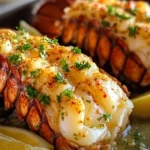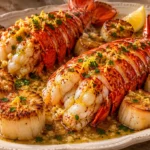
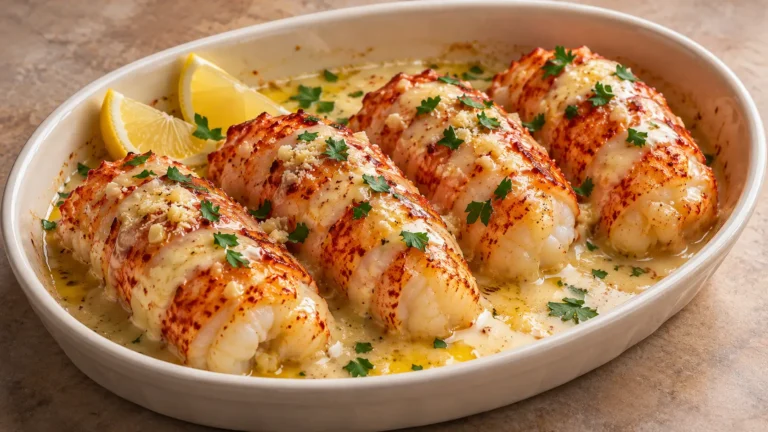
Garlic Butter Lobster Tails pair sweet, tender lobster with a golden garlic butter coating and creamy lemon Parmesan sauce. The lobster roasts in the oven while the sauce comes together on the stove, making this a practical special occasion dinner in about 30 minutes. Fresh lemon and parsley brighten each buttery bite without covering up the seafood.
Quick Overview
- Flavor and texture: Sweet lobster, savory garlic, smoky paprika, and a smooth Parmesan cream sauce with a fresh lemon finish.
- Difficulty: Easy to moderate; butterflying the tails takes a little care.
- Best for: Date night, small celebrations, holiday dinners, or a seafood weekend meal.
- Method: Oven-baked lobster tails with a stovetop sauce and an optional brief broil.
- Prep Time: 15 min.
- Cook Time: 15 min.
- Total Time: 30 min.
- Servings: 4, with one lobster tail per serving.
- Approximate nutrition: 460 Calories | 24g Protein per serving, using the supplied estimate.
Timing assumes the lobster tails are already thawed and the sauce is made while they bake. Oven preheating, thawing, and an optional broiler finish can add time.
What This Is and Why You’ll Love It
- Butterflied lobster tails sit above their shells, making the meat easy to season and serve.
- Garlic butter coats the lobster before baking, while a separate lemon Parmesan sauce adds a creamy finish.
- Smoked paprika brings gentle warmth and color without making the dish spicy.
- The sauce cooks during the lobster’s oven time, keeping the preparation manageable.
- Four individual tails make portioning straightforward for a dinner for four.
- If you enjoy buttery lobster dinners, save our simple lemon-garlic lobster recipe for another evening.
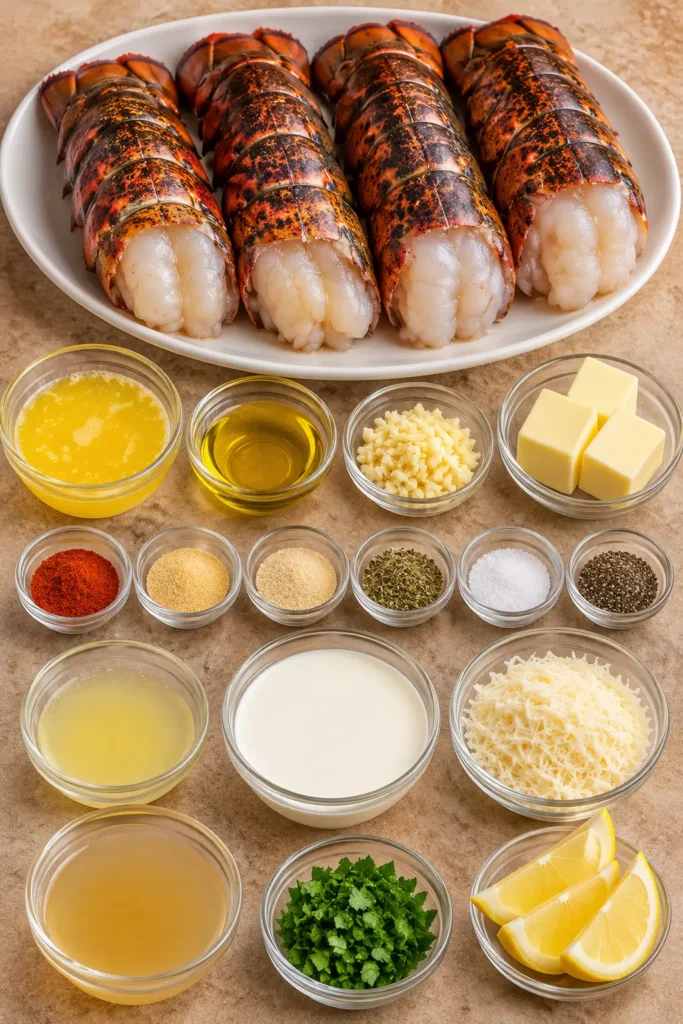
Ingredients
For the Garlic Butter Lobster Tails:
- 4 lobster tails (5 to 6 oz each), thawed
- 3 tbsp unsalted butter, melted
- 1 tbsp olive oil
- 4 cloves garlic, freshly minced
- 1 tsp smoked paprika
- 1/2 tsp garlic powder
- 1/2 tsp onion powder
- 1/2 tsp Italian seasoning
- 1/2 tsp salt, or to taste
- 1/4 tsp freshly ground black pepper
- 1 tbsp fresh lemon juice
For the Creamy Lemon Parmesan Butter Sauce:
- 4 tbsp unsalted butter
- 3 cloves garlic, freshly minced
- 1/2 cup heavy cream
- 1/4 cup freshly grated Parmesan cheese
- 1/4 cup seafood stock or chicken broth
- 2 tbsp fresh lemon juice
- 1/2 tsp Italian seasoning
- 1/4 tsp smoked paprika
- 1/4 tsp freshly ground black pepper
- Salt, to taste
- 2 tbsp fresh parsley, finely chopped
For Garnishing:
- 2 tbsp fresh parsley, chopped
- Extra warm garlic butter sauce from the recipe, for drizzling
- Fresh lemon wedges, optional for serving
Key ingredients
Lobster tails: Use thawed tails of similar size so they cook at a similar rate. Butterflying exposes the meat while the shell supports it during baking.
Butter and garlic: These appear in both parts of the recipe. Measure the lobster coating and the saucepan ingredients separately before starting so each mixture gets its intended amount.
Heavy cream and Parmesan: Cream gives the sauce body, and finely grated Parmesan melts into it. Keep the heat low after adding the cheese for a smoother finish.
Fresh lemon juice: The lobster coating includes lemon, and the finished sauce gets another addition. Stir the sauce’s lemon juice in at the end as directed.
Seafood stock or chicken broth: This adds savory flavor and helps the sauce stay spoonable. Salt levels vary by brand, so taste the sauce before its final seasoning.
Ingredient Note: The finishing drizzle comes from the warm sauce already made in this recipe. You do not need an additional batch of butter or sauce.
Substitutions
The recipe already allows 1/4 cup seafood stock or chicken broth; use either option in that same amount. Lemon wedges are optional for serving. For the intended texture and flavor, keep the remaining ingredients and quantities as listed.
How to Make It: Garlic Butter Lobster Tails
- Prepare the lobster tails. Heat the oven to 425°F. Snip along the middle of each top shell with kitchen shears, stopping before the tail fan. Ease the meat loose while keeping it connected at the base, then rest it over the shell. Blot dry and place in a baking dish with the meat facing up. The meat should sit securely above the split shell, with enough space between tails for even cooking.
- Season and bake. Blend the melted butter, olive oil, garlic, smoked paprika, garlic powder, onion powder, Italian seasoning, salt, pepper, and lemon juice. Brush generously over the meat. Bake for 10 to 15 minutes, depending on size, until the center reaches 145°F. For extra color, briefly broil for 1 to 2 minutes near the end, watching closely and checking the temperature so the lobster stays tender. The cooked meat should look pearly and opaque, with a moist surface. Start checking near the early end of the baking range, and stop cooking when the temperature is reached.
- Make the lemon Parmesan sauce. While the lobster bakes, melt the sauce butter in a saucepan over medium-low heat. Stir in the garlic for 30 to 60 seconds. Add the stock, cream, Italian seasoning, smoked paprika, pepper, and salt; gently simmer for 2 to 3 minutes. Turn the heat to low and stir in the Parmesan until smooth, then add the lemon juice and finely chopped parsley. Look for small, gentle bubbles during simmering and a glossy sauce after the cheese melts.
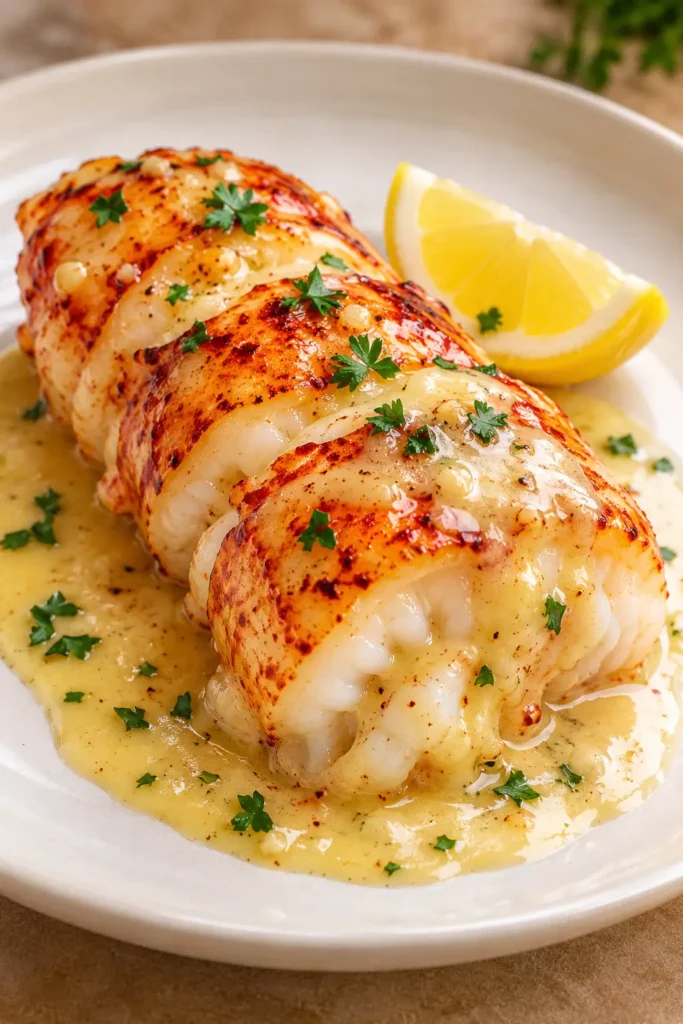
- Spoon the sauce over the lobster. Give the cooked lobster 1 to 2 minutes to settle, then spoon warm sauce over the exposed meat. Let a little collect around the shells, keeping those golden tops peeking through.
- Garnish and serve. Scatter the remaining chopped parsley over the lobster and sauce. Drizzle with any reserved warm sauce and serve right away, adding lemon wedges if you like a bright squeeze with each buttery bite.
Pro Tips
- Organize two ingredient groups. Keep the baking mixture separate from the sauce ingredients so the repeated butter, garlic, lemon, and seasonings are easy to track.
- Use kitchen shears for the shell. Take short cuts along the center, then loosen the meat gently with your fingers rather than pulling hard at the base.
- Dry between the folds. A paper towel helps remove excess thawing moisture where the butter needs to cling.
- Choose a baking dish with a little breathing room. Keep all four tails in a single layer without pressing them tightly together.
- Place the thermometer carefully. Insert it into the thickest part of the meat without touching the shell; check individual tails if their sizes differ.
- Treat broiling as an optional finish. Begin checking before the lobster is fully done if you want to add color. A tail already at 145°F does not need another full broiling interval.
- Grate the Parmesan finely. Add it over low heat and stir until incorporated before adding the lemon juice.
- Reserve serving sauce cleanly. Use a clean spoon for the finished sauce and keep it separate from brushes or utensils that touched raw lobster.
Variations
- Bake-only finish: Skip the optional broiler step for a paler, glossy top. Cook to the same internal temperature.
- Lightly golden finish: Use the recipe’s brief broiler option near the end of cooking, monitoring the lobster closely so the garlic does not burn.
- Sauce on the side: Serve the same quantity of warm lemon Parmesan sauce in individual bowls, allowing each person to spoon it over their lobster.
These options use the original ingredients and amounts; only the finish or presentation changes.
What to Serve With It
Choose one simple starch and one vegetable to balance the rich sauce.
- Steamed asparagus for a fresh, lightly crisp side.
- Plain rice to catch the lemon Parmesan sauce.
- Mashed potatoes for a soft, comforting pairing.
- Roasted baby potatoes when you want crisp edges.
- Steamed green beans for a straightforward vegetable side.
- Crusty bread for the sauce left on the plate.
- Lightly dressed cucumber and tomato salad for a cool contrast.
- Crisp romaine with homemade Caesar dressing for a classic seafood dinner pairing.
Storage
Refrigerate promptly: Transfer leftovers to shallow containers and refrigerate at 40°F or below within 2 hours of cooking, or within 1 hour when the surrounding temperature is above 90°F. Keep the containers covered and use refrigerated leftovers within 3 to 4 days, following USDA leftover storage guidance.
Reheat carefully: Warm only the portion needed in a covered skillet, turning the lobster and stirring the sauce as needed for even heating. Check that the lobster and sauce reach 165°F throughout, as recommended in USDA reheating guidance. Serve as soon as that temperature is reached to limit further cooking.
Freezing: Freshly made lobster and sauce give the best texture. The cream sauce may separate after freezing and thawing, and reheated lobster can become firmer, so refrigeration is the more practical choice for near-term leftovers.
Troubleshooting
- The lobster is rubbery: It likely cooked beyond the target temperature. Sauce can add moisture to the plate, but it will not restore the original tenderness. Check sooner next time, especially when broiling.
- The center is still translucent: Continue baking and check the thickest part with a thermometer. Browning on the surface does not tell you whether the center is cooked.
- The garlic tastes bitter: It may have browned too much in the saucepan or under the broiler. Keep saucepan heat moderate to low and watch the lobster closely during its optional finish.
- The sauce looks grainy: Take it off the heat and whisk gently. Finely grated cheese and lower heat help prevent this, although a badly separated sauce may not become completely smooth again.
- The sauce is too thick: Remove it from the heat and stir; it thickens further as it stands. Next time, keep the initial simmer brief rather than reducing the sauce heavily.
- The finished dish tastes too salty: Parmesan and stock both contribute salt. Taste the sauce before adding its salt to taste, and consider a lower-sodium version of the listed stock or broth next time.
FAQs
Can I use frozen lobster tails?
Yes. Thaw them fully before beginning, preferably overnight in the refrigerator. Blot the exposed meat dry after butterflying. Thawing time is separate from the recipe’s 30-minute preparation and cooking estimate.
Do I have to lift the lobster meat onto the shell?
That is the presentation used here. Keep the meat connected at the base and rest it on top of the split shell so the garlic butter reaches its surface. Loosen it gently rather than detaching the entire piece.
How do I know when lobster tails are done?
Check for 145°F in the thickest part of the meat. The flesh should also be firm, pearly, and opaque. These temperature and appearance cues follow FDA guidance for cooking seafood; the thermometer is especially helpful when tails differ in thickness.
Can I skip the broiler?
Yes. Broiling only adds surface color. Baking at 425°F until the lobster reaches the target temperature completes the cooking without that extra step.
How do I keep the lemon Parmesan sauce smooth?
Simmer the cream and stock gently, reduce the heat before stirring in finely grated Parmesan, and add the lemon juice last. Avoid a rolling boil after adding the cheese and lemon.
Can I prepare anything ahead?
Measure the seasonings, mince the garlic, grate the Parmesan, and chop the parsley in advance. Keep perishable ingredients refrigerated until needed. Bake the lobster and finish the sauce close to serving for the best texture.
Can I double the recipe?
Yes. Double each ingredient and use enough baking space to keep the tails in a single layer. Cooking time depends on the size of the individual tails, so check their temperatures rather than automatically doubling the baking time.
What does the extra sauce for drizzling mean?
It means a reserved portion of the warm sauce you already prepared. Spoon most over the lobster in step 4, then use the remainder for the finishing drizzle or serve it alongside.
Conclusion
Garlic Butter Lobster Tails with Lemon Parmesan Sauce make a generous seafood dinner with a simple oven-and-stovetop method. Save this recipe for your next dinner for four, and try our creamy salmon and shrimp oven dinner when you want another way to serve seafood with a rich garlic sauce.
Follow Us
Love easy seafood recipes, creamy dinners, and quick weeknight meals?
👉 Follow us on Facebook for daily viral recipes and cooking inspiration
👉 Save your favorite recipes on Pinterest for easy meal planning and seafood ideas
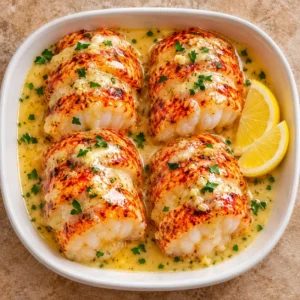
Garlic Butter Lobster Tails with Lemon Parmesan Sauce
Equipment
- kitchen shears For cutting the top shells and butterflying the lobster tails.
- baking dish Holds all four lobster tails in a single layer with space between them.
- small mixing bowl For blending the seasoned garlic butter coating.
- pastry brush For brushing garlic butter over the exposed lobster meat.
- saucepan For gently cooking the lemon Parmesan cream sauce.
- Whisk or mixing spoon For blending the sauce and stirring in Parmesan until smooth.
- instant-read thermometer For checking the thickest part of the lobster reaches 145°F.
Ingredients
- 4 lobster tails (5 to 6 oz each), thawed
- 3 tbsp unsalted butter, melted (for lobster)
- 1 tbsp olive oil
- 4 cloves garlic, freshly minced (for lobster)
- 1 tsp smoked paprika (for lobster)
- 1/2 tsp garlic powder
- 1/2 tsp onion powder
- 1/2 tsp Italian seasoning (for lobster)
- 1/2 tsp salt, or to taste (for lobster)
- 1/4 tsp freshly ground black pepper (for lobster)
- 1 tbsp fresh lemon juice (for lobster)
- 4 tbsp unsalted butter (for sauce)
- 3 cloves garlic, freshly minced (for sauce)
- 1/2 cup heavy cream
- 1/4 cup freshly grated Parmesan cheese
- 1/4 cup seafood stock or chicken broth
- 2 tbsp fresh lemon juice (for sauce)
- 1/2 tsp Italian seasoning (for sauce)
- 1/4 tsp smoked paprika (for sauce)
- 1/4 tsp freshly ground black pepper (for sauce)
- salt, to taste (for sauce)
- 2 tbsp fresh parsley, finely chopped (for sauce)
- 2 tbsp fresh parsley, chopped (for garnish)
- extra warm garlic butter sauce from the recipe, reserved for drizzling
- fresh lemon wedges, optional for serving
Instructions
- Prepare the lobster tails. Heat the oven to 425°F. Snip along the middle of each top shell with kitchen shears, stopping before the tail fan. Ease the meat loose while keeping it connected at the base, then rest it over the shell. Blot dry and place in a baking dish with the meat facing up. The meat should sit securely above the split shell, with enough space between tails for even cooking.
- Season and bake. Blend the melted butter, olive oil, garlic, smoked paprika, garlic powder, onion powder, Italian seasoning, salt, pepper, and lemon juice. Brush generously over the meat. Bake for 10 to 15 minutes, depending on size, until the center reaches 145°F. For extra color, briefly broil for 1 to 2 minutes near the end, watching closely and checking the temperature so the lobster stays tender. The cooked meat should look pearly and opaque, with a moist surface. Start checking near the early end of the baking range, and stop cooking when the temperature is reached.
- Make the lemon Parmesan sauce. While the lobster bakes, melt the sauce butter in a saucepan over medium-low heat. Stir in the garlic for 30 to 60 seconds. Add the stock, cream, Italian seasoning, smoked paprika, pepper, and salt; gently simmer for 2 to 3 minutes. Turn the heat to low and stir in the Parmesan until smooth, then add the lemon juice and finely chopped parsley. Look for small, gentle bubbles during simmering and a glossy sauce after the cheese melts.
- Spoon the sauce over the lobster. Give the cooked lobster 1 to 2 minutes to settle, then spoon warm sauce over the exposed meat. Let a little collect around the shells, keeping those golden tops peeking through.
- Garnish and serve. Scatter the remaining chopped parsley over the lobster and sauce. Drizzle with any reserved warm sauce and serve right away, adding lemon wedges if you like a bright squeeze with each buttery bite.
Notes
Nutrition
All nutritional information is based on third party calculations and is only an estimate. Each recipe’s nutritional value will vary depending on the ingredients used, measuring methods, and portion sizes.