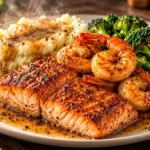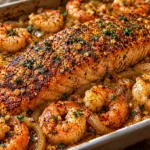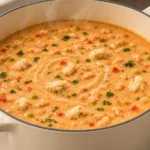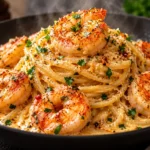
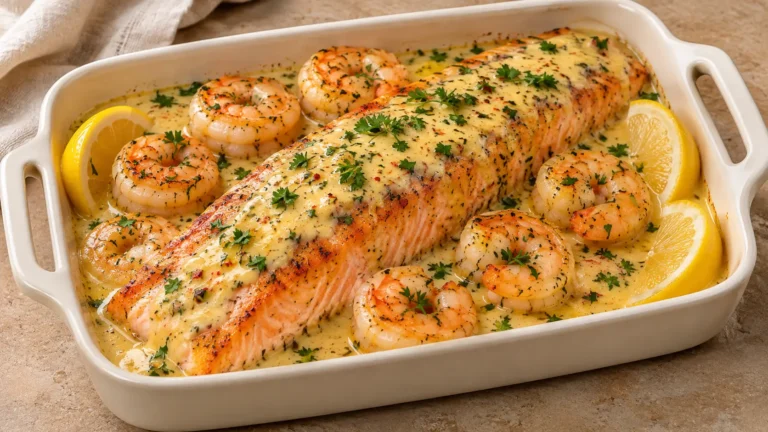
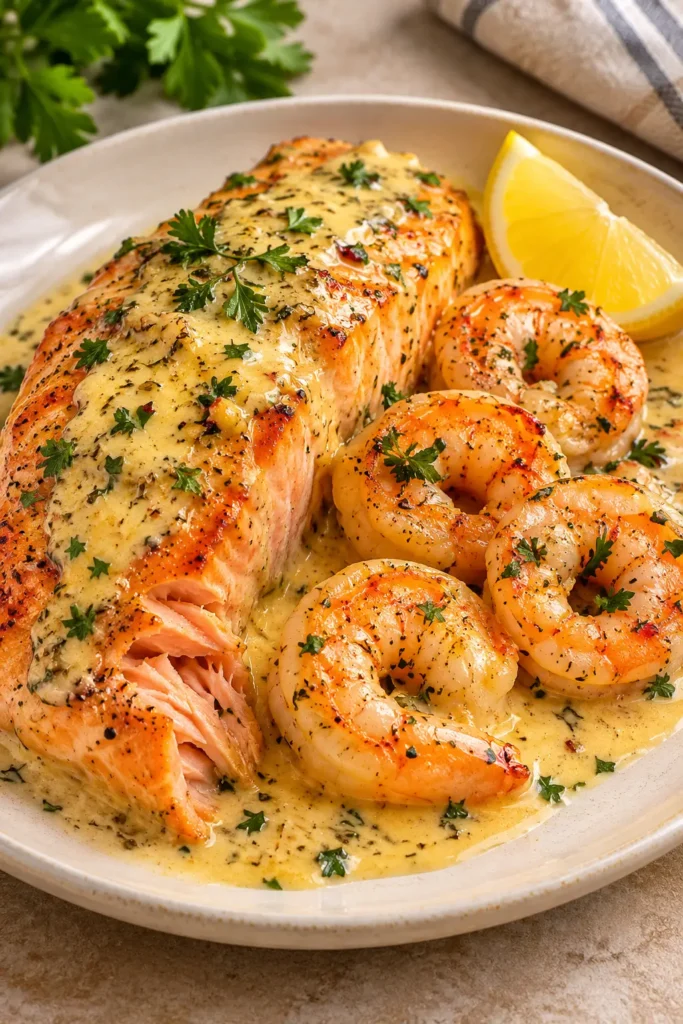
Creamy Garlic Butter Salmon and Shrimp Bake brings flaky salmon and tender shrimp together under a silky garlic-Parmesan sauce. A quick sear gives the seafood savory edges before it finishes in the oven, while lemon and parsley brighten the buttery cream. Set the baking dish on the table and let everyone spoon a little extra sauce over their favorite side.
Quick Overview
- Flavor and texture: Buttery garlic, savory Parmesan, gentle smoky seasoning, flaky salmon, and juicy shrimp.
- Difficulty: Easy to moderate; the main tasks are searing seafood and keeping the cream sauce at a gentle simmer.
- Best for: Family seafood dinners, relaxed entertaining, and a cozy meal for six.
- Method: Skillet searing, stovetop sauce, and an oven finish in a baking dish.
- Prep time: 15 minutes.
- Oven time: 12 to 15 minutes, with additional time for searing and preparing the sauce.
- Servings: 6.
What This Is and Why You’ll Love It
This salmon and shrimp bake combines two kinds of seafood with a warm cream sauce made in the same skillet used for searing. The sauce settles around the seafood, giving each serving plenty of garlic flavor without hiding the salmon’s delicate flakes.
- Two textures in every serving: Salmon is soft and flaky, while large shrimp provide a tender, springy bite.
- A sauce made from simple ingredients: Butter, garlic, cream, and Parmesan create a smooth coating without a flour-based roux.
- Freshness alongside richness: Lemon juice, zest, and parsley keep the finish lively.
- A useful skillet step: Lightly browned cooking juices add depth to the sauce.
- Flexible serving options: Pair the finished bake with rice, potatoes, vegetables, or pasta.
- Another seafood favorite to save: If you enjoy this combination, try a lemony Cajun salmon and shrimp dinner on another night.
Ingredients
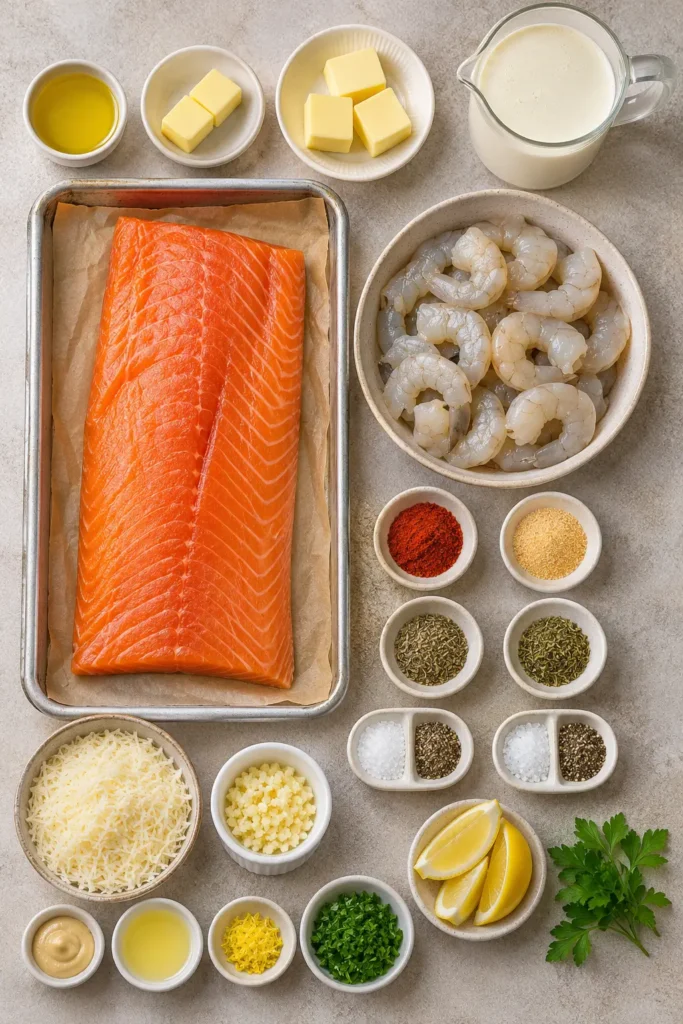
- 1½–2 lb salmon fillet
- 1 lb large shrimp, peeled and deveined
- 2 tbsp olive oil
- 2 tbsp unsalted butter
- 1 tsp smoked paprika
- 1 tsp garlic powder
- 1 tsp Italian seasoning
- Salt and freshly ground black pepper, to taste
- 3 tbsp unsalted butter
- 5 garlic cloves, minced
- 1½ cups heavy cream
- ¾ cup freshly grated Parmesan cheese
- 1 tsp Dijon mustard
- 1 tbsp fresh lemon juice
- 1 tsp lemon zest
- 1 tsp Italian seasoning
- 2 tbsp chopped fresh parsley
- Salt and black pepper, to taste
- Lemon wedges
- Fresh parsley
Key ingredients
Salmon and shrimp: Choose a salmon fillet with fairly even thickness and large raw shrimp of similar size. Remove the shrimp tails for easier serving and eating.
Butter and garlic: Keep the butter portions separate. The first 2 tbsp are for searing with the olive oil; the remaining 3 tbsp begin the sauce. Fresh minced garlic adds a different layer of flavor from the garlic powder used on the seafood.
Cream and Parmesan: Heavy cream gives the sauce body, and freshly grated Parmesan melts into it more readily than coarsely shredded cheese. Dijon adds a quiet savory note; lemon juice and zest supply brightness.
Italian seasoning: The list includes two separate 1 tsp portions: one for the seafood and one for the sauce.
Substitutions
Fresh or previously frozen raw salmon and shrimp both work. Thaw frozen seafood before cooking and dry it thoroughly. Keep the listed cream, cheese, and quantities for the intended consistency; lower-fat dairy behaves differently under heat.
How to Make It: Creamy Garlic Butter Salmon and Shrimp Bake
- Season the Fish
Preheat the oven to 375°F. Pat the salmon and shrimp dry, checking the salmon for pin bones and removing any shrimp tails. Season with the smoked paprika, garlic powder, the first 1 tsp Italian seasoning, salt, and pepper. Dry surfaces help the seafood sear instead of steaming. - Give the Salmon a Sear
Warm the olive oil and 2 tbsp butter in a large skillet over medium-high heat. Sear the salmon for 2 to 3 minutes per side, then carefully transfer it to a baking dish. Quickly sear the shrimp for about 1 minute per side and arrange them around the salmon. Keep this step brief: the seafood will continue cooking in the oven. - Prepare the Cream Sauce
Reduce the skillet heat. Melt the remaining 3 tbsp butter and cook the minced garlic until fragrant, without browning it. Stir in the heavy cream, Parmesan, Dijon, lemon juice, lemon zest, and remaining 1 tsp Italian seasoning. Simmer gently, stirring until smooth. Taste before adding the second salt and pepper seasoning. The sauce should lightly coat a spoon while remaining pourable. - Bake Until Tender
Pour the warm sauce over the salmon and shrimp. Bake at 375°F for 12 to 15 minutes, checking sooner if the fillet is thin. The salmon should reach 145°F in its thickest part and separate into moist flakes; the shrimp should be pearly and opaque throughout. If shrimp finish first, transfer them to a clean plate while the salmon finishes, then return them for serving. - Garnish and Bring to the Table
Scatter the chopped parsley over the finished bake and add fresh parsley for garnish as desired. Serve with lemon wedges and spoon the sauce over each portion. Rice, mashed potatoes, roasted asparagus, or buttery pasta can be offered alongside.
The doneness guidance follows the FDA’s seafood cooking recommendations.
Pro Tips
- Have the dish ready: Move directly from searing to sauce preparation and baking so the partially cooked seafood is finished promptly.
- Use a roomy skillet: Crowding traps moisture and makes it harder to develop lightly browned edges.
- Check the cooking juices: Use golden browned bits for flavor; wipe away blackened residue before making the sauce.
- Grate the cheese finely: Small pieces incorporate more evenly into warm cream.
- Keep the simmer gentle: Hard boiling can make the sauce oily or grainy.
- Watch thickness, not just weight: A thin salmon tail section cooks faster than a thick center section.
- Check shrimp early: They have already had a short sear and may finish before the salmon.
- Leave room for sauce: Choose a baking dish that holds the seafood comfortably without spreading the cream into a very thin layer.
Variations
These options keep the base ingredients and quantities unchanged.
- Individual salmon portions: Cut the fillet into six portions before searing. Arrange the pieces with space between them and check thinner portions earlier during baking.
- Skin-on salmon: If your fillet has skin, begin searing skin-side down and place it skin-side down in the baking dish. The cream sauce will soften the skin, so serve the flesh away from it if preferred.
- Seafood pasta plates: Serve portions of the finished bake over buttery pasta, one of the original suggested accompaniments. Spoon the garlic-Parmesan sauce over the pasta just before serving.
For a separate recipe with a filled presentation, save this salmon with creamy crab and shrimp stuffing.
What to Serve With It
Choose one starch and one vegetable to give the rich sauce somewhere to go while keeping the meal balanced in texture.
- Steamed rice: A mild base for the garlic-Parmesan cream.
- Mashed potatoes: Soft potatoes catch sauce beneath every bite of salmon.
- Roasted asparagus: Its gently firm texture contrasts with the creamy seafood.
- Buttery pasta: Wide noodles make a satisfying bed for a portion of the bake.
- Steamed broccoli: A simple green side that stays distinct from the sauce.
- Green beans: Serve just tender for a fresh bite.
- Crisp green salad: A cool accompaniment to the warm, rich main dish.
- Warm crusty bread: Useful for the last spoonfuls of sauce.
For more plating inspiration, see the garlic mashed potatoes and broccoli pairing in our Cajun seafood dinner.
Storage
Refrigerate: Transfer leftovers to shallow, covered containers within 2 hours of cooking, or within 1 hour when the temperature is above 90°F. Keep at 40°F or below and use within 3 to 4 days. These limits follow FDA seafood handling guidance and FoodSafety.gov leftover guidance.
Reheat: Warm a single portion gently, covered, with its sauce. Check that leftovers reach 165°F, as recommended in the FoodSafety.gov temperature chart. Avoid repeatedly reheating the whole dish.
Freeze: Freezing is possible, but thawed cream sauce may separate and shrimp can become firmer. For texture, this bake is best enjoyed freshly cooked or refrigerated and reheated once.
Troubleshooting
- The sauce looks grainy: Heat may have been too high, or the Parmesan may not have melted evenly. Take the skillet off the heat and stir gently before baking.
- The sauce seems thin: Thawed seafood may have carried excess water. Dry it carefully next time; let the finished sauce settle briefly before judging its consistency.
- The shrimp are rubbery: The combined sear and bake went too long. Check them early and remove them when cooked through.
- The salmon is dry at the edges: An uneven fillet can finish at different times. Check the thinner sections separately and remove finished portions.
- The garlic tastes bitter: It likely browned too deeply in the skillet. Keep the heat lower when starting the sauce and cook only until fragrant.
FAQs
Can I use frozen salmon and shrimp?
Yes. Thaw them in the refrigerator before cooking, then pat them dry. Excess thawing liquid can dilute the sauce and prevent the seafood from searing well.
Can I use cooked shrimp?
Raw large shrimp are the intended ingredient. Already-cooked shrimp can become tough when seared and baked again, so they do not follow the same timing as this recipe.
Do I have to sear the seafood first?
Searing is part of this method and adds flavor before baking. Skipping it changes the starting temperature of the seafood and requires a different oven timing, so the listed baking window would need adjustment.
Should I bake it covered or uncovered?
Bake uncovered. The sauce is already warm, and the short oven finish cooks the seafood while allowing a little moisture to escape. Avoid leaving it in the oven simply to develop a browned topping.
How do I know the salmon is ready?
Check the thickest section with an instant-read thermometer for 145°F. The flesh should also separate into flakes. Start checking early when the fillet is thin or has smaller tail sections.
Can I prepare it ahead?
You can grate the Parmesan, measure seasonings, and mince garlic ahead, refrigerating perishable ingredients. Sear, make the sauce, and bake in one continuous session for the best texture.
Is this salmon and shrimp bake spicy?
It is primarily garlicky, creamy, and smoky. Smoked paprika usually adds warmth rather than strong heat, although the exact flavor depends on the product you use.
Conclusion
Creamy Garlic Butter Salmon and Shrimp Bake makes a generous seafood dinner with a smooth Parmesan sauce and a bright lemon finish. Save the recipe, choose a simple side, and serve while the seafood is tender and the sauce is warm.
Follow Us
Love easy seafood recipes, creamy dinners, and quick weeknight meals?
👉 Follow us on Facebook for daily viral recipes and cooking inspiration
👉 Save your favorite recipes on Pinterest for easy meal planning and seafood ideas
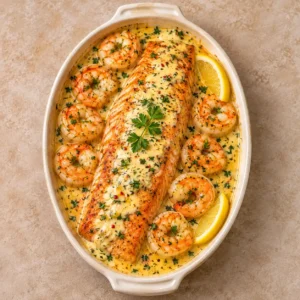
Creamy Garlic Butter Salmon and Shrimp Bake
Equipment
- large skillet For searing the salmon and shrimp and preparing the cream sauce.
- baking dish Sized to hold the seafood comfortably with room for the sauce.
- instant-read thermometer For checking that the thickest part of the salmon reaches 145°F and reheated leftovers reach 165°F.
- Fine grater For finely grating Parmesan and zesting the lemon.
- mixing spoon For stirring the cream sauce and checking its spoon-coating consistency.
Ingredients
- 1 1/2–2 lb salmon fillet
- 1 lb large raw shrimp, peeled, deveined, and tails removed
- 2 tbsp olive oil
- 2 tbsp unsalted butter, for searing
- 1 tsp smoked paprika
- 1 tsp garlic powder
- 1 tsp Italian seasoning, for the seafood
- Salt and freshly ground black pepper, to taste, for the seafood
- 3 tbsp unsalted butter, for the sauce
- 5 cloves garlic, minced
- 1 1/2 cups heavy cream
- 3/4 cup freshly grated Parmesan cheese
- 1 tsp Dijon mustard
- 1 tbsp fresh lemon juice
- 1 tsp lemon zest
- 1 tsp Italian seasoning, for the sauce
- 2 tbsp chopped fresh parsley
- Salt and black pepper, to taste, for the sauce
- Lemon wedges, for serving
- Fresh parsley, for garnish as desired
Instructions
- Season the Fish: Preheat the oven to 375°F. Pat the salmon and shrimp dry, checking the salmon for pin bones and removing any shrimp tails. Season with the smoked paprika, garlic powder, the first 1 tsp Italian seasoning, salt, and pepper. Dry surfaces help the seafood sear instead of steaming.
- Give the Salmon a Sear: Warm the olive oil and 2 tbsp butter in a large skillet over medium-high heat. Sear the salmon for 2 to 3 minutes per side, then carefully transfer it to a baking dish. Quickly sear the shrimp for about 1 minute per side and arrange them around the salmon. Keep this step brief: the seafood will continue cooking in the oven.
- Prepare the Cream Sauce: Reduce the skillet heat. Melt the remaining 3 tbsp butter and cook the minced garlic until fragrant, without browning it. Stir in the heavy cream, Parmesan, Dijon, lemon juice, lemon zest, and remaining 1 tsp Italian seasoning. Simmer gently, stirring until smooth. Taste before adding the second salt and pepper seasoning. The sauce should lightly coat a spoon while remaining pourable.
- Bake Until Tender: Pour the warm sauce over the salmon and shrimp. Bake uncovered at 375°F for 12 to 15 minutes, checking sooner if the fillet is thin. The salmon should reach 145°F in its thickest part and separate into moist flakes; the shrimp should be pearly and opaque throughout. If shrimp finish first, transfer them to a clean plate while the salmon finishes, then return them for serving.
- Garnish and Bring to the Table: Scatter the chopped parsley over the finished bake and add fresh parsley for garnish as desired. Serve with lemon wedges and spoon the sauce over each portion. Rice, mashed potatoes, roasted asparagus, or buttery pasta can be offered alongside.
Notes
Nutrition
All nutritional information is based on third party calculations and is only an estimate. Each recipe’s nutritional value will vary depending on the ingredients used, measuring methods, and portion sizes.