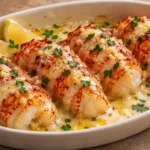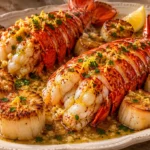
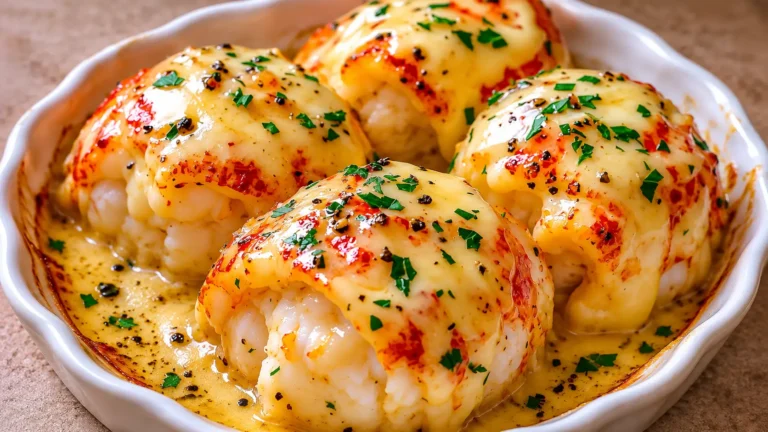
Creamy garlic butter broiled lobster tails bring sweet, tender lobster together with a warm garlic cream sauce and lightly golden tops. Butterflying the tails lets the sauce settle over the exposed meat, while the shells hold each serving in place. With thawed tails, this dinner takes about 25 minutes, making it an easy option for a date night or a small celebration.
Quick Overview
- Flavor and texture: Sweet lobster, savory garlic, rich butter, and a smooth cream sauce with a little lemon brightness.
- Difficulty: Easy to moderate; butterflying the tails and watching the broiler need the most attention.
- Best for: Date nights, holiday dinners, birthdays, and a special dinner at home.
- Method: Make the sauce on the stovetop, spoon it over butterflied lobster tails, and broil.
- Timing: Prep: 10 minutes | Cook: 15 minutes | Total: about 25 minutes. Thawing time is additional.
- Servings: 4, with one lobster tail per serving. The size of each tail affects portion size and cooking time.
- Nutrition: Supplied estimate: approximately 420 calories and 25g protein per serving. Tail size, optional cheese, and the amount of sauce served affect the final values.
What This Is and Why You’ll Love It
These are butterflied lobster tails with the meat lifted above the shell, covered in a creamy garlic butter sauce, and cooked under direct overhead heat.
- The exposed meat catches the sauce and develops lightly golden edges.
- A short stovetop simmer brings the butter, garlic, and cream together before broiling.
- The small amount of lemon juice adds a gentle bright note.
- Parmesan or Gruyère gives you an optional savory cheese finish.
- Four separate tails make serving straightforward.
- A parsley garnish adds freshness right before the dish reaches the table.
- If you enjoy the same buttery flavors with a brighter citrus finish, save these lobster tails brushed with lemon garlic butter for another dinner.
Ingredients
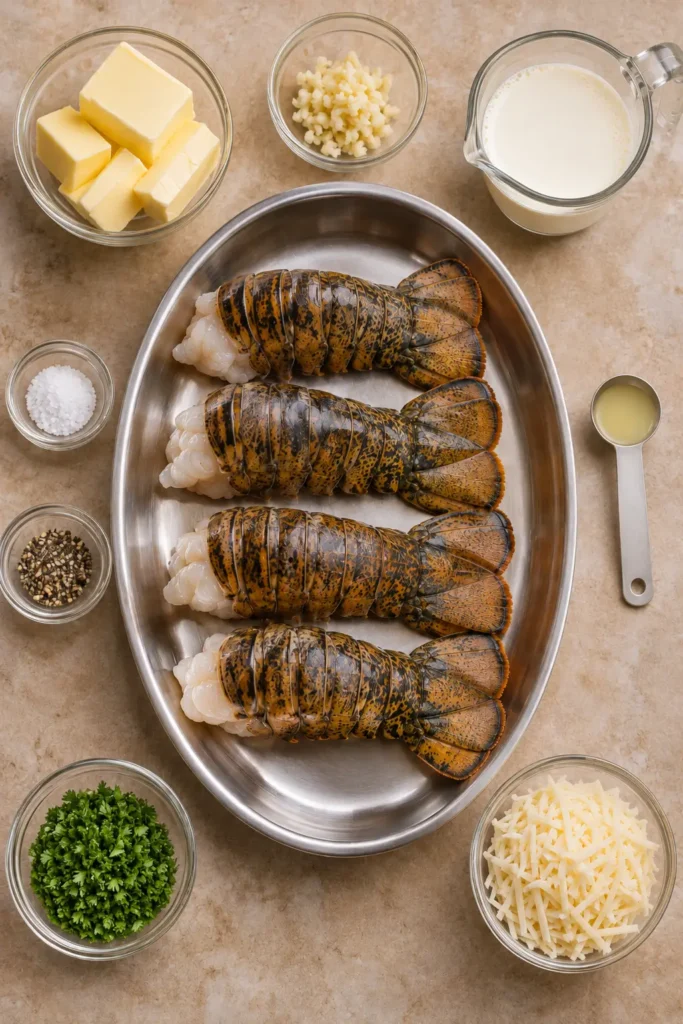
- 4 lobster tails, thawed if frozen
- 1/2 cup unsalted butter
- 3 cloves garlic, minced
- 1/2 cup heavy cream
- 1/2 tsp lemon juice
- Salt and freshly cracked black pepper, to taste
- 2 tbsp chopped parsley
- 1/2 cup shredded Parmesan or Gruyère cheese, optional
Key ingredients
Lobster tails: Use raw tails that are fully thawed. Similar sizes help the portions finish at roughly the same time. Lift the meat gently so it remains attached near the tail fan.
Unsalted butter and garlic: Butter forms the rich base, and minced garlic flavors it quickly. Keep the garlic pale during the stovetop step because it will receive more heat under the broiler.
Heavy cream: The cream gives the sauce body and helps it coat the lobster. Reduce it only until slightly thickened; it will continue bubbling in the baking dish.
Lemon juice and parsley: The lemon provides a small touch of acidity. Chopped parsley goes on after cooking so its color and fresh flavor stay distinct.
Optional Parmesan or Gruyère: Parmesan gives a sharper, salty finish. Gruyère melts smoothly and adds a nutty flavor. Either choice works with the listed amount.
Substitutions
- Choose Parmesan or Gruyère for the optional cheese topping, using the listed 1/2 cup of one cheese.
- Omit the cheese if you prefer the garlic cream sauce on its own. The butter and heavy cream still give the dish plenty of richness.
- Fresh and previously frozen raw lobster tails both work; fully thaw frozen tails before preparing them.
Ingredient Note: The cheese is optional. Keep the remaining ingredients and amounts as listed to preserve the intended sauce consistency.
How to Make It: Creamy Garlic Butter Broiled Lobster Tails
- Butterfly and lift the lobster meat. Use kitchen shears to cut lengthwise along the top of each shell, stopping before the tail fan. Gently open the shell, loosen the meat, and lift it over the shell while keeping it attached at the base. Arrange the tails in a single layer in a broiler-safe baking dish. The exposed meat should rest securely on top of each shell.
- Melt the butter and soften the garlic. Melt the butter in a saucepan over medium heat. Stir in the minced garlic for about 1 minute, lowering the heat if it starts to color. The garlic should smell fragrant and remain pale.
- Make the creamy sauce. Pour in the heavy cream, then stir in the lemon juice, salt, and pepper. Simmer gently for a few minutes until the sauce lightly coats a spoon but still pours easily. Spoon it over the lobster meat, allowing some to collect in the dish. If using the cheese, distribute it over the tails.
- Broil while watching closely. Heat the broiler to high and position the exposed lobster meat about 5 to 6 inches below the heat source, following your oven and dish instructions. Broil for roughly 7 to 10 minutes, depending on tail size and broiler strength. Start checking early and cook until the thickest part of each tail reaches 145°F, with pearly, opaque meat and lightly golden tops. Keep the thermometer tip in the meat rather than against the shell. If the topping colors before the center is ready, move the dish farther from the heat and continue checking.
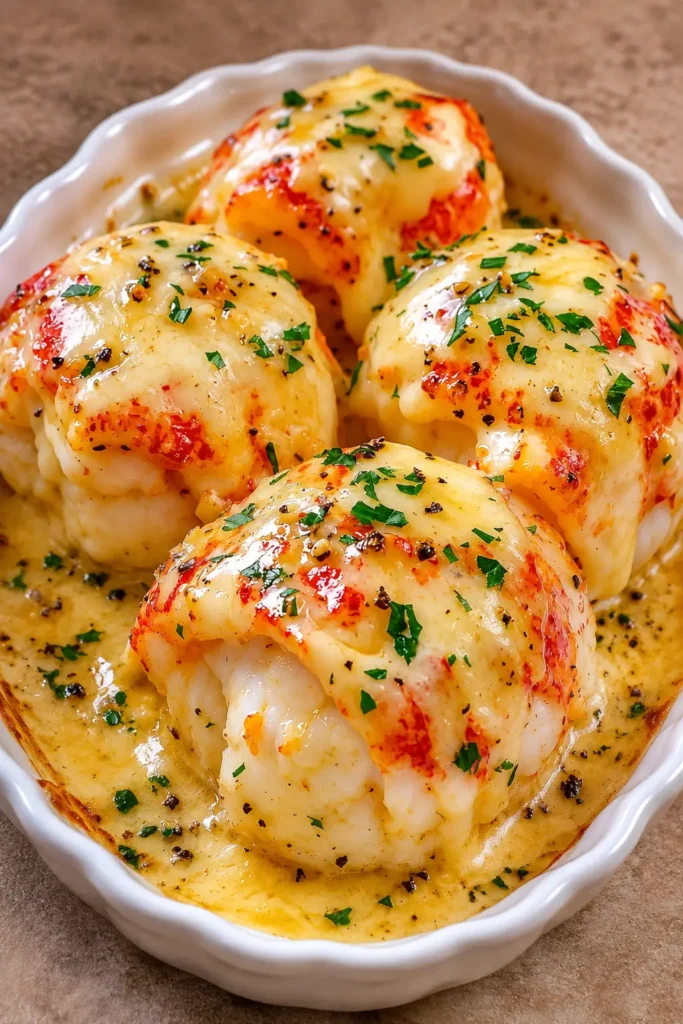
- Garnish and serve. Remove the dish from the broiler. Scatter the chopped parsley over the tails and add a little more of the pepper listed to taste, if desired. Spoon the hot creamy garlic butter from the baking dish over each serving and serve immediately.
The FDA’s seafood cooking guidance recommends 145°F for most seafood and describes cooked lobster meat as firm, pearly, and opaque. Use the temperature and meat texture to judge doneness rather than shell color alone.
Pro Tips
- Dry the exposed meat before adding sauce. Pat it gently with paper towels so thawing moisture does not dilute the cream sauce.
- Choose tails of similar thickness. If they vary, check each tail separately and remove finished portions as they become ready.
- Keep the shell attached at the base. This supports the lifted meat and makes it easier to transfer to a plate.
- Use a dish rated for the broiler. Follow its temperature and placement instructions; a general oven-safe label does not necessarily cover direct broiler heat.
- Keep the sauce pourable. A short, gentle simmer is enough before it goes under the broiler.
- Spread the optional cheese evenly. A thin layer across the four tails melts more evenly than thick piles.
- Stay close to the oven. Garlic and cheese can darken quickly under direct heat, especially near a strong broiler element.
- Prepare the sides first. The lobster is best served as soon as it is cooked, with the sauce warm and easy to spoon.
Variations
Choose a finish using the options already included in the recipe:
- Parmesan-topped lobster tails: Use the optional shredded Parmesan for a savory, lightly golden surface. Season the sauce carefully because Parmesan contributes salt.
- Gruyère-topped lobster tails: Choose the optional shredded Gruyère for a smooth melted topping and a nutty flavor.
- Garlic cream lobster tails without cheese: Leave off the optional cheese and let the warm sauce coat the exposed lobster meat. Watch the meat’s doneness rather than waiting for a deeply browned surface.
What to Serve With It
Keep portions of the sides simple so there is room for the rich sauce:
- Steamed white rice: Spoon a little of the baking-dish sauce over it.
- Mashed potatoes: A soft base that catches the garlic cream.
- Roasted asparagus: Prepare it before the lobster goes under the broiler.
- Steamed green beans: A crisp-tender vegetable pairing.
- Plain baked potatoes: Split them just before serving and add sauce from the dish.
- Crusty bread: Serve small slices alongside for the remaining garlic butter.
- Simple pasta: A modest portion of cooked pasta works well under the sauced lobster.
- A crisp romaine salad: Add a little homemade Caesar dressing for a fresh, crunchy side.
Storage
Refrigerate promptly: Transfer leftovers to shallow, covered containers and refrigerate at 40°F or below within 2 hours of cooking, or within 1 hour when the surrounding temperature is above 90°F. Plan to eat this dish within 2 days for the best texture. General USDA leftover storage guidance allows 3 to 4 days for properly handled refrigerated leftovers.
Reheat covered: Place the lobster and its sauce in a covered oven-safe dish. Reheat in a 325°F oven until the meat reaches 165°F, checking frequently so it spends as little extra time in the oven as possible. The USDA’s reheating guidance recommends an oven setting of at least 325°F and a leftover internal temperature of 165°F. Reheated lobster can be firmer than freshly cooked lobster.
Freezing: This finished dish is best enjoyed fresh or refrigerated briefly. The cream sauce can separate after freezing and thawing, and the lobster may lose some tenderness.
Troubleshooting
- The lobster is rubbery: It likely cooked too long. For the next batch, check the thickest part earlier and remove each tail when it reaches the doneness described in Step 4.
- The top is browning too quickly: Move the dish farther from the broiler so the center has time to finish without scorching the topping.
- The sauce looks thin: Excess thawing moisture or a very short stovetop simmer may be the cause. Dry the lobster well and let the sauce lightly coat a spoon before adding it to the dish.
- The sauce looks oily: Intense heat can separate some butter from the cream. After removing the cooked lobster, gently stir the pan sauce before spooning it over the servings. Some butter gloss is natural in this recipe.
- The garlic tastes bitter: It may have browned in the saucepan or scorched under the broiler. Keep it pale in Step 2 and watch the dish closely as it cooks.
- The center is still translucent: Continue cooking and check the thickest part with a thermometer. A golden cheese topping can appear before the lobster beneath it is done.
FAQs
Can I use frozen lobster tails?
Yes. Thaw them fully in the refrigerator before cutting the shells and lifting the meat. Follow any thawing instructions on the package, then pat the exposed meat dry before adding sauce. The estimated 25-minute recipe time starts with thawed tails.
How long should I broil lobster tails?
This recipe uses roughly 7 to 10 minutes under a high broiler, with the meat about 5 to 6 inches below the heat. Tail thickness and broiler strength affect the timing. Start checking early and follow the doneness guidance in Step 4 rather than relying only on the clock.
How do I know when the lobster is done?
Insert an instant-read thermometer into the thickest part of the meat without touching the shell. Follow the 145°F target in Step 4. The meat should also be pearly and opaque throughout, with a moist, gently firm texture.
Do I need to remove the meat from the shells completely?
Keep it attached near the tail fan. Loosen the meat enough to lift it onto the top of the shell, which supports the portion while the exposed surface catches the sauce.
Can I leave out the cheese?
Yes. The 1/2 cup of Parmesan or Gruyère is optional. The butter, garlic, cream, and lemon juice still make a rich sauce, and the lobster does not need a cheese topping to cook properly.
Can I replace heavy cream with milk?
Heavy cream gives this sauce its intended body. Milk is thinner and will change how the sauce coats the lobster. For the recipe as written, use the listed 1/2 cup heavy cream.
Can I prepare the tails ahead?
You can butterfly the thawed tails a few hours ahead and keep them covered in the refrigerator until cooking. Make the sauce and broil close to serving time for the best texture. Prepare rice, potatoes, or vegetables first so the lobster can go straight to the table.
Can I double the recipe?
Yes. Double all the listed ingredients and arrange the tails in a single layer with space between them. Use more than one broiler-safe dish if necessary, and cook in batches when your broiler cannot heat everything evenly. Check each tail individually instead of doubling the cooking time.
Conclusion
Save these creamy garlic butter broiled lobster tails for a dinner with tender lobster, warm garlic cream, and an optional golden cheese finish. Prepare your sides first and serve the tails straight from the broiler; for another creamy lobster dinner, try these lobster tails with a lemon Parmesan finish.
Follow Us
Love easy seafood recipes, creamy dinners, and quick weeknight meals?
👉 Follow us on Facebook for daily viral recipes and cooking inspiration
👉 Save your favorite recipes on Pinterest for easy meal planning and seafood ideas
Creamy Garlic Butter Broiled Lobster Tails
Equipment
- kitchen shears For cutting the top of each lobster shell while leaving the tail fan intact.
- Broiler-safe baking dish For holding the four butterflied tails in a single layer under direct broiler heat.
- saucepan For melting the butter and gently simmering the garlic cream sauce.
- cooking spoon For stirring the sauce and spooning it over the lobster before and after broiling.
- Oven with broiler Set the broiler to high and position the meat about 5 to 6 inches below the heat, following the oven and dish instructions.
- instant-read thermometer For checking the thickest part of the lobster reaches 145°F without touching the shell.
Ingredients
- 4 lobster tails, thawed if frozen
- 1/2 cup unsalted butter
- 3 cloves garlic, minced
- 1/2 cup heavy cream
- 1/2 tsp lemon juice
- Salt and freshly cracked black pepper, to taste
- 2 tbsp chopped parsley
- 1/2 cup shredded Parmesan or Gruyère cheese, optional
Instructions
- Butterfly and lift the lobster meat. Use kitchen shears to cut lengthwise along the top of each shell, stopping before the tail fan. Gently open the shell, loosen the meat, and lift it over the shell while keeping it attached at the base. Arrange the tails in a single layer in a broiler-safe baking dish. The exposed meat should rest securely on top of each shell.
- Melt the butter and soften the garlic. Melt the butter in a saucepan over medium heat. Stir in the minced garlic for about 1 minute, lowering the heat if it starts to color. The garlic should smell fragrant and remain pale.
- Make the creamy sauce. Pour in the heavy cream, then stir in the lemon juice, salt, and pepper. Simmer gently for a few minutes until the sauce lightly coats a spoon but still pours easily. Spoon it over the lobster meat, allowing some to collect in the dish. If using the cheese, distribute it over the tails.
- Broil while watching closely. Heat the broiler to high and position the exposed lobster meat about 5 to 6 inches below the heat source, following your oven and dish instructions. Broil for roughly 7 to 10 minutes, depending on tail size and broiler strength. Start checking early and cook until the thickest part of each tail reaches 145°F, with pearly, opaque meat and lightly golden tops. Keep the thermometer tip in the meat rather than against the shell. If the topping colors before the center is ready, move the dish farther from the heat and continue checking.
- Garnish and serve. Remove the dish from the broiler. Scatter the chopped parsley over the tails and add a little more of the pepper listed to taste, if desired. Spoon the hot creamy garlic butter from the baking dish over each serving and serve immediately.
Notes
Nutrition
All nutritional information is based on third party calculations and is only an estimate. Each recipe’s nutritional value will vary depending on the ingredients used, measuring methods, and portion sizes.