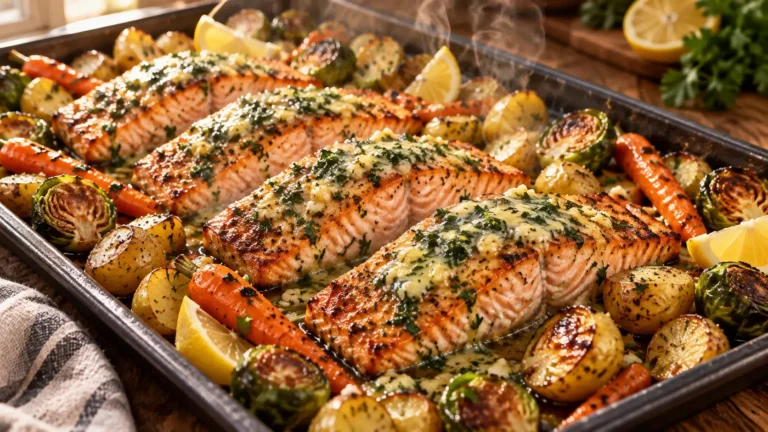
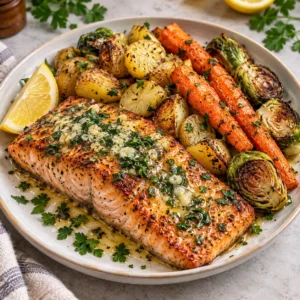
Garlic Butter Sheet Pan Salmon brings tender, flaky salmon together with caramelized vegetables and a glossy lemon-garlic butter finish in one satisfying dinner. Baby potatoes, carrots, and Brussels sprouts roast first for golden edges, then the salmon joins the pan for an easy seafood meal with minimal cleanup. Bright lemon, parsley, and Italian seasoning keep the buttery flavors balanced and fresh.
Quick Overview: Garlic Butter Sheet Pan Salmon
- Flavor/texture: Buttery, garlicky, lemony salmon with flaky centers and tender, caramelized roasted vegetables
- Difficulty: Easy and weeknight-friendly
- Best for: Family dinners, seafood nights, meal prep, or a complete one-pan meal
- Method: Roast the vegetables first, then add seasoned salmon with garlic butter and finish everything together
- Time: Prep Time: 10 min . Cook Time: 35 min . Total Time: 45 min
- Servings: 4
- Approx.: 520 Calories | 38g Protein per serving
What This Is and Why You’ll Love It
- This complete sheet pan dinner combines salmon, potatoes, carrots, and Brussels sprouts without requiring separate pots or skillets.
- Roasting the vegetables before adding the fish gives the potatoes enough time to soften while helping the Brussels sprouts develop browned edges.
- Melted butter, garlic, and lemon juice create a simple sauce that coats the salmon without hiding its natural flavor.
- Paprika gives the salmon warm color while Italian seasoning adds an herby note to the roasted vegetables.
- The staggered cooking method helps the salmon stay tender instead of spending the entire roasting time in the oven.
- Lemon wedges and fresh parsley provide a bright finish that balances the butter.
- If you want another salmon-centered seafood dinner with a richer presentation, save this Creamy Crab and Shrimp Stuffed Salmon.
Ingredients
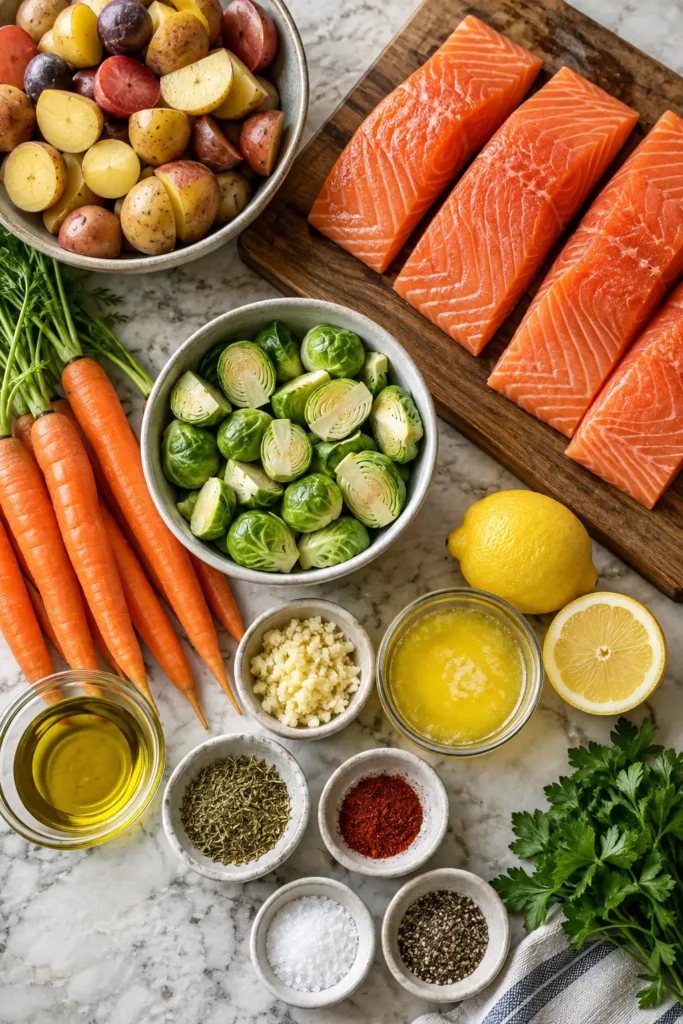
• 4 salmon fillets
• 1 lb baby potatoes, halved
• 2 cups carrots
• 2 cups Brussels sprouts, halved
• 3 tablespoons olive oil
• 4 tablespoons butter, melted
• 4 cloves garlic, minced
• 1 tablespoon lemon juice
• 1 teaspoon Italian seasoning
• ½ teaspoon paprika
• ½ teaspoon salt
• ½ teaspoon black pepper
• 2 tablespoons chopped parsley
• Lemon wedges, for serving
Key ingredients
Salmon fillets: The salmon is added after the vegetables have partially roasted, allowing the fish to cook just until tender and flaky without becoming dry.
Baby potatoes: Halving the potatoes creates more exposed surface area for browning while helping them cook through during the roasting time.
Brussels sprouts: Their cut sides develop deeper caramelization against the hot sheet pan.
Carrots: Carrots bring natural sweetness and a tender bite that complements the rich garlic butter.
Butter and garlic: Melted butter carries the minced garlic across the salmon and creates the glossy, savory finish at the center of the recipe.
Lemon juice: The acidity cuts through the richness of the butter and keeps the seafood flavor bright.
Italian seasoning and paprika: These seasonings add herbaceous flavor and warm color without overwhelming the salmon.
Substitutions
- If baby potatoes are unavailable, another small potato variety can be used as long as the pieces are cut to a similar size for even roasting.
- Regular carrots can be cut into evenly sized pieces if using larger whole carrots.
- Fresh chopped herbs can complement the Italian seasoning when available.
- If using larger or thicker salmon fillets, rely on doneness rather than extending the cooking time automatically.
- Any substitution may slightly change the roasting time or finished flavor, so the original ingredient list gives the most consistent result.
How to Make It
- Prepare the Pan
Heat the oven to 400°F and lightly grease a large sheet pan so the vegetables roast evenly without sticking.
Cue: Use a pan large enough to spread the vegetables out rather than piling them deeply, which helps their edges roast instead of steam. - Start the Vegetables
Arrange the baby potatoes, carrots, and Brussels sprouts on the pan. Toss with olive oil, salt, black pepper, and Italian seasoning, then roast for 20 minutes.
Cue: After 20 minutes, the vegetables should be starting to soften and show light browning around the edges, although the potatoes may not yet be completely tender. - Season the Salmon
While the vegetables roast, season the salmon fillets with paprika, salt, and black pepper. Stir the melted butter with the minced garlic and lemon juice until well combined.
Cue: The garlic should be evenly suspended through the melted butter so every salmon fillet gets some of the mixture. - Finish Together
Nestle the salmon among the partially roasted vegetables and spoon the garlic butter mixture over each fillet. Return the pan to the oven for 12 to 15 minutes, until the salmon flakes easily and the vegetables are tender.
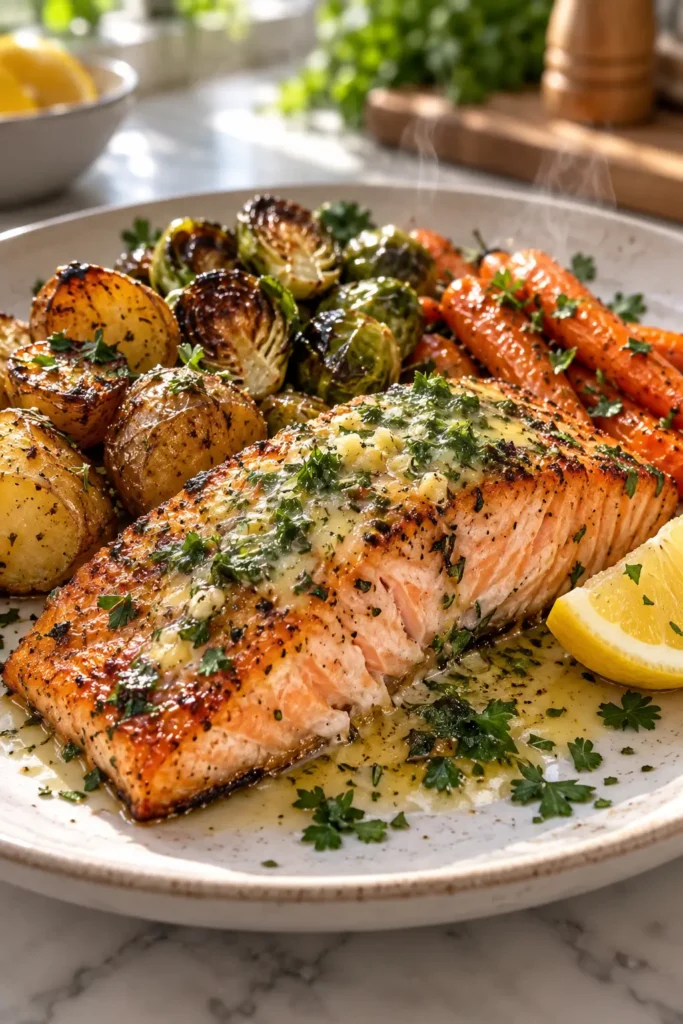
Cue: The salmon should look opaque and separate into moist flakes when gently pressed with a fork. For food-safety guidance, the thickest part should reach 145°F. The potatoes should be easily pierced with a fork. - Garnish and Serve
Scatter chopped parsley over the finished pan and serve with lemon wedges. Store any leftovers in an airtight container for up to 2 days.
Cue: Serve while the salmon is moist, the vegetables are hot, and the garlic butter is still glossy across the pan.
Pro Tips
- Cut the potatoes into evenly sized halves so they finish roasting at roughly the same time.
- Give the vegetables room on the sheet pan. Crowding traps steam and can prevent those browned, caramelized edges.
- Place Brussels sprouts cut-side down where possible for deeper browning.
- Do not add the salmon at the beginning. The vegetables need the 20-minute head start.
- Spoon the garlic butter over the top of the salmon rather than underneath it so the garlic stays close to the fish.
- Start checking the salmon at the lower end of the 12-to-15-minute window, especially if your fillets are thin.
- Salmon is ready when it is opaque, moist, and flakes easily. Avoid waiting until the flesh looks dry or chalky.
- Fresh lemon wedges are worth serving at the table because an extra squeeze can sharpen the buttery flavors right before eating.
- For another simple way to pair flaky fish with butter, garlic, and citrus, try these Lemon Garlic Butter Fish Fillets.
Variations
- Extra lemony: Serve each portion with an additional squeeze from the lemon wedges for a brighter finish.
- Herb-forward: Add a generous sprinkle of the chopped parsley at serving for more fresh herbal flavor.
- More caramelized vegetables: Spread the vegetables across the widest sheet pan available so more pieces make direct contact with the hot surface.
- Crisper Brussels sprouts: Position the halved sprouts cut-side down during their initial roasting time.
- Garlic butter seafood night: If you love the buttery garlic profile but want a faster skillet option another day, try this Garlic Butter Shrimp.
What to Serve With It
- A simple green salad with a bright lemon dressing
- Steamed green beans for an extra green vegetable
- Roasted asparagus with lemon
- Crusty bread for catching any garlic butter left on the plate
- A cucumber and tomato salad for a cool, crisp contrast
- Steamed rice if you want to stretch the meal for a larger table
- Fresh fruit or a citrus salad for a lighter finish
- A small seafood starter such as Crab Imperial with Old Bay Gratin Crust when serving the salmon for a more substantial seafood dinner
- Extra lemon wedges at the table for anyone who prefers a brighter seafood flavor
Storage
Transfer leftover salmon and roasted vegetables to an airtight container and refrigerate for up to 2 days, as directed in the original recipe.
For reheating, use gentle heat so the salmon does not dry out. A covered oven-safe dish at a moderate temperature works well for warming both the salmon and vegetables.
If using a microwave, heat in short intervals and stop as soon as the salmon is warmed through.
The vegetables will soften slightly after refrigeration, so leftovers will not have exactly the same roasted texture as the freshly cooked pan.
For the best texture, enjoy this meal fresh or within the stated two-day refrigerated storage period.
Troubleshooting
- Salmon turned dry: It likely cooked too long. Begin checking thinner fillets around the 12-minute mark and remove them once they are opaque and flake easily.
- Potatoes are still firm: The pieces may have been too large or the pan may have been crowded. Keep the potato halves similar in size and spread them out well.
- Vegetables are soft but not browned: Too much crowding can trap steam. A larger sheet pan provides better airflow and surface contact.
- Garlic is browning too quickly: Make sure the garlic is mixed into the melted butter and spooned over the salmon only when the fish is added.
- Salmon cooked unevenly: Fillets with very different thicknesses will finish at different times. Start checking the thinner pieces first.
- The finished dish tastes too rich: Squeeze fresh lemon from the serving wedges over the salmon and vegetables to brighten the butter.
FAQs
How do I know when the salmon is done?
The salmon should be opaque, moist, and easy to separate into flakes with a fork. An instant-read thermometer inserted into the thickest section should reach 145°F for food-safety guidance.
Why do the vegetables roast before the salmon is added?
Potatoes, carrots, and Brussels sprouts take longer to become tender than salmon. Giving them a 20-minute head start allows everything to finish together without overcooking the fish.
Can I prepare the vegetables ahead of time?
You can wash and cut the vegetables ahead and keep them refrigerated until you are ready to assemble the sheet pan. Keep the salmon chilled separately until cooking.
Can I make Garlic Butter Sheet Pan Salmon for meal prep?
Yes. Divide the cooked salmon and vegetables between airtight containers after cooling and refrigerate for up to 2 days. Reheat gently to protect the salmon’s texture.
Why are my Brussels sprouts not caramelizing?
The pan may be overcrowded, or the cut sides may not be touching the pan. Spread them out and position more of the halved Brussels sprouts cut-side down.
Should salmon be covered while roasting?
No covering is needed for this method. Leaving the sheet pan uncovered allows the vegetables to continue roasting while the salmon cooks.
Can I use a smaller sheet pan?
A smaller pan may crowd the vegetables and make them steam rather than brown. A large sheet pan is preferable so everything has enough space.
What makes the garlic butter sauce taste balanced?
The melted butter provides richness, while minced garlic adds savory flavor and lemon juice supplies acidity. Parsley and lemon wedges provide freshness at serving.
Conclusion
Garlic Butter Sheet Pan Salmon makes a full seafood dinner simple: flaky salmon, tender roasted vegetables, warm garlic butter, fresh lemon, and only one main pan to manage. Save it for a weeknight when you want something satisfying without juggling several dishes, and if garlicky seafood is always welcome at your table, bookmark this Garlic Butter Seafood Skillet with Shrimp, Peppers and Onions for another quick dinner.
Follow Us
Love easy seafood recipes, creamy dinners, and quick weeknight meals?
👉 Follow us on Facebook for daily viral recipes and cooking inspiration
👉 Save your favorite recipes on Pinterest for easy meal planning and seafood ideas
Garlic Butter Sheet Pan Salmon
Equipment
- large sheet pan
- Oven
- mixing bowl
- spoon
- instant-read thermometer Optional, for checking salmon doneness.
Ingredients
- 4 salmon fillets
- 1 lb baby potatoes, halved
- 2 cups carrots
- 2 cups Brussels sprouts, halved
- 3 tablespoons olive oil
- 4 tablespoons butter, melted
- 4 cloves garlic, minced
- 1 tablespoon lemon juice
- 1 teaspoon Italian seasoning
- ½ teaspoon paprika
- ½ teaspoon salt
- ½ teaspoon black pepper
- 2 tablespoons chopped parsley
- Lemon wedges, for serving
Instructions
- Heat the oven to 400°F and lightly grease a large sheet pan so the vegetables roast evenly without sticking. Use a pan large enough to spread the vegetables out rather than piling them deeply, which helps their edges roast instead of steam.
- Arrange the baby potatoes, carrots, and Brussels sprouts on the pan. Toss with olive oil, salt, black pepper, and Italian seasoning, then roast for 20 minutes. After 20 minutes, the vegetables should be starting to soften and show light browning around the edges, although the potatoes may not yet be completely tender.
- While the vegetables roast, season the salmon fillets with paprika, salt, and black pepper. Stir the melted butter with the minced garlic and lemon juice until well combined. The garlic should be evenly suspended through the melted butter so every salmon fillet gets some of the mixture.
- Nestle the salmon among the partially roasted vegetables and spoon the garlic butter mixture over each fillet. Return the pan to the oven for 12 to 15 minutes, until the salmon flakes easily and the vegetables are tender. The salmon should look opaque and separate into moist flakes when gently pressed with a fork. For food-safety guidance, the thickest part should reach 145°F. The potatoes should be easily pierced with a fork.
- Scatter chopped parsley over the finished pan and serve with lemon wedges. Store any leftovers in an airtight container for up to 2 days. Serve while the salmon is moist, the vegetables are hot, and the garlic butter is still glossy across the pan.
Notes
Nutrition
All nutritional information is based on third party calculations and is only an estimate. Each recipe’s nutritional value will vary depending on the ingredients used, measuring methods, and portion sizes.