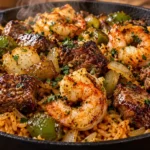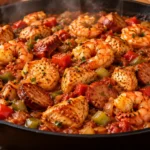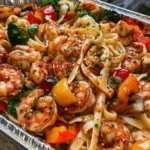
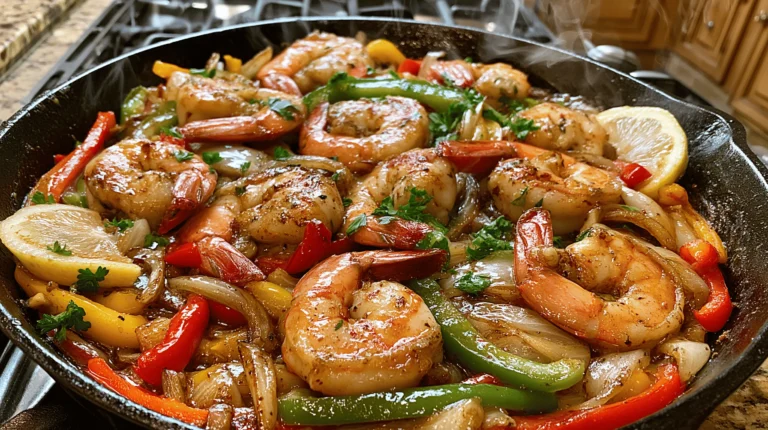
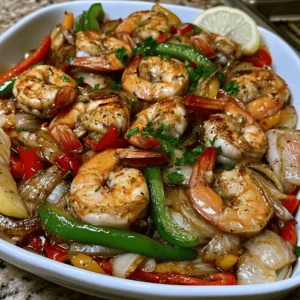
This Garlic Butter Seafood Skillet brings together juicy shrimp, sweet bell peppers, tender onions, and a glossy garlic butter sauce in one fast pan. The lemon finish keeps every bite bright, while the Cajun seasoning adds just enough warmth to make dinner feel special without slowing you down.
Quick Overview: Garlic Butter Seafood Skillet
- Flavor/texture: Buttery, garlicky, lightly smoky, lemony, juicy shrimp with tender-crisp peppers
- Difficulty: Easy and weeknight-friendly
- Best for: Quick seafood dinners, low-carb plates, rice bowls, pasta nights, or skillet meals
- Method: Season, char, sear, toss, and finish with lemon
- Time: Prep Time: 10 min . Cook Time: 15 min . Total Time: 25 min
- Servings: 4
- Approx.: 330 Calories | 36g Protein per serving
What This Is and Why You’ll Love It
- This skillet is loaded with large shrimp, colorful bell peppers, and onion, all coated in garlic butter.
- It cooks quickly, so the shrimp stay tender instead of rubbery.
- The peppers get lightly browned edges for sweetness and a little char.
- Lemon juice balances the butter and keeps the pan sauce fresh.
- Cajun seasoning and paprika add warmth without overpowering the seafood.
- It works with rice, pasta, potatoes, salad, or low-carb sides.
- If you love quick buttery shrimp dinners, you may also enjoy this Garlic Butter Shrimp Recipe for another fast skillet option.
Ingredients
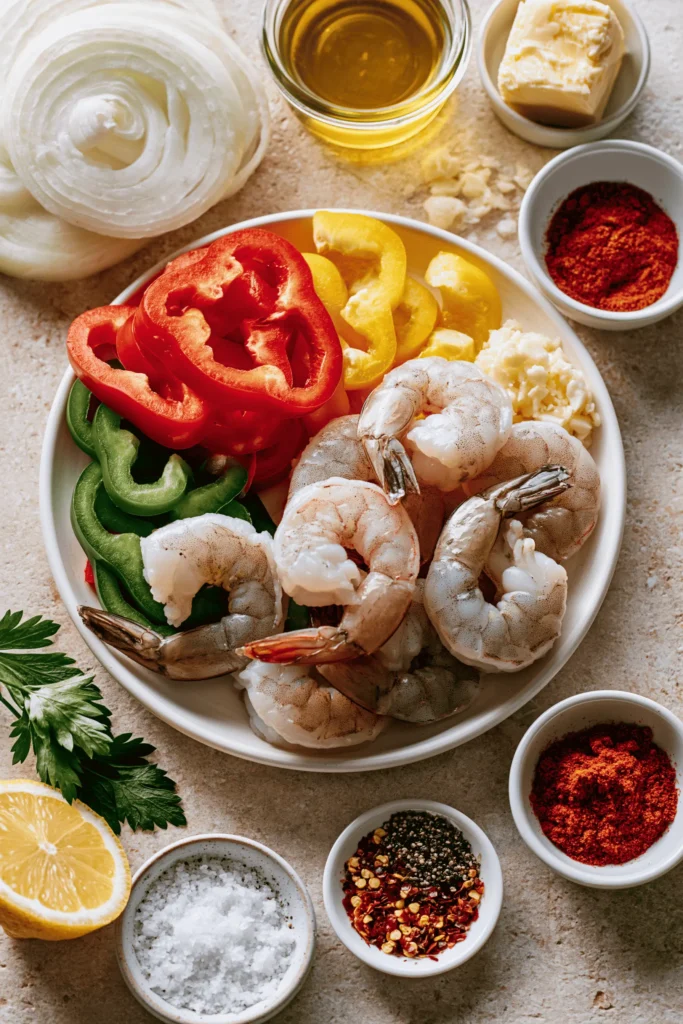
• 1½ lbs large shrimp, peeled and deveined
• 1 green bell pepper, sliced
• 1 red bell pepper, sliced
• 1 yellow bell pepper, sliced
• 1 large onion, sliced
• 1 tbsp olive oil
• 3 tbsp butter, divided
• 5 garlic cloves, minced
• 1 tsp paprika
• ½ tsp Cajun seasoning
• ½ tsp salt
• ¼ tsp black pepper
• ¼ tsp red pepper flakes, optional
• 1 tbsp fresh lemon juice
• 2 tbsp chopped parsley
Key ingredients
Shrimp: Large shrimp are ideal because they cook quickly but still stay juicy. Patting them dry helps them sear instead of steam.
Bell peppers: Green, red, and yellow peppers add color, sweetness, and tender-crisp texture.
Onion: Sliced onion softens into the skillet and adds a savory-sweet base.
Butter: Divided butter builds flavor in stages, first with the vegetables, then with the shrimp, and finally in the garlic sauce.
Garlic: Five cloves give the skillet its bold, fragrant flavor. Add garlic near the end so it stays aromatic and does not burn.
Lemon juice: A final splash brightens the rich butter sauce and makes the shrimp taste fresh.
Substitutions
- Use jumbo shrimp if preferred, but add a little extra cooking time only as needed.
- Use orange bell pepper in place of one of the listed peppers if that is what you have.
- Use mild Cajun seasoning for less heat.
- Skip the red pepper flakes for a gentler skillet.
- Use lime juice instead of lemon juice for a slightly different citrus finish.
- Use chopped cilantro instead of parsley if serving with rice bowls or tortillas.
How to Make It
- Season the Shrimp
Pat the shrimp dry and season with paprika, Cajun seasoning, salt, and black pepper. Keep the sliced peppers and onion ready beside the stove.
Cue: The shrimp should feel dry on the surface and look evenly coated with seasoning. - Char the Vegetables
Heat the olive oil with 1 tbsp butter in a large skillet over medium-high heat. Add the peppers and onion and cook for 5 to 6 minutes until tender with lightly browned edges.
Cue: The vegetables should be glossy, slightly softened, and browned in spots, not mushy. - Sear the Shrimp
Move the vegetables to one side of the skillet and melt in 1 tbsp butter. Add the shrimp and cook for 1 to 2 minutes per side until pink and lightly golden.
Cue: The shrimp are done when they turn pink, opaque, and curl into a loose “C.” A tight “O” shape usually means they are overcooked. - Finish the Garlic Butter
Reduce the heat to medium and add the remaining butter, garlic, and red pepper flakes if using. Cook for 30 to 60 seconds, then toss the shrimp and vegetables together for 1 to 2 minutes until glossy.
Cue: The garlic should smell fragrant, and the butter should coat the shrimp and vegetables in a shiny sauce. - Brighten and Serve
Remove the skillet from the heat, add the lemon juice, and scatter with chopped parsley. Serve hot while the shrimp are tender and the vegetables are still vibrant.
Pro Tips
- Pat the shrimp very dry before seasoning for better browning.
- Keep the skillet hot when cooking the peppers so they char lightly instead of steaming.
- Do not add the garlic too early; minced garlic can burn quickly in butter.
- Cook shrimp just until opaque and pink for the best tender bite.
- Slice the peppers and onion evenly so they cook at the same pace.
- Add lemon juice off the heat so the sauce stays bright and fresh.
- For a heartier seafood skillet night, pair this with Cajun Seafood Dirty Rice.
- Serve right away because shrimp have the best texture fresh from the skillet.
Variations
- Extra spicy: Add more red pepper flakes or use a hotter Cajun seasoning.
- Creamy finish: Stir in a splash of cream after the garlic butter is glossy.
- Pasta skillet: Toss the shrimp, peppers, and onions with cooked penne or linguine.
- Rice bowl style: Serve over white rice, brown rice, or cauliflower rice.
- Seafood feast version: Add this skillet beside a platter-style dinner like Seafood Boil.
- Lemon herb version: Add extra parsley and a little lemon zest before serving.
What to Serve With It
- Steamed white rice or jasmine rice
- Garlic bread for catching the butter sauce
- Creamy mashed potatoes
- Buttered noodles
- Cauliflower rice for a lower-carb plate
- Roasted asparagus or green beans
- A crisp green salad with lemon vinaigrette
- Warm tortillas for shrimp fajita-style wraps
- For a cozy pasta pairing, try this Garlic Shrimp Penne.
Storage
Store leftovers in an airtight container in the refrigerator for up to 3 days.
Reheat gently in a skillet over low heat with a small pat of butter or splash of water. Warm just until the shrimp are heated through.
Freezing is not ideal because cooked shrimp can become rubbery after thawing, and the peppers may soften too much.
Troubleshooting
- Shrimp turned rubbery: They likely cooked too long. Pull them from the heat as soon as they are pink and opaque.
- Vegetables are watery: The skillet may not have been hot enough, or the pan was overcrowded.
- Garlic tastes bitter: It may have browned too much. Add garlic after lowering the heat and cook it briefly.
- Sauce tastes heavy: Add a little extra lemon juice or parsley to brighten it.
- Shrimp did not brown: Pat them dry well and avoid stirring too often while they sear.
- Too spicy: Skip the red pepper flakes next time and use a mild Cajun seasoning.
FAQs
Can I use frozen shrimp?
Yes. Thaw the shrimp completely, then pat them very dry before seasoning.
How do I know when shrimp are done?
Shrimp are done when they turn pink, opaque, and curl into a loose “C” shape.
Can I make this skillet less spicy?
Yes. Skip the red pepper flakes and use a mild Cajun seasoning.
Can I add more vegetables?
Yes. Zucchini, mushrooms, asparagus, or cherry tomatoes can work, but avoid overcrowding the skillet.
What size shrimp should I use?
Large shrimp work best because they stay juicy and cook quickly.
Can I serve this with pasta?
Absolutely. Toss the finished shrimp, peppers, onions, and garlic butter sauce with cooked pasta.
Can I make it dairy-free?
You can replace the butter with a dairy-free butter alternative, though the flavor will be slightly different.
Can I prep this ahead?
You can slice the peppers and onion ahead and season the shrimp shortly before cooking.
Conclusion
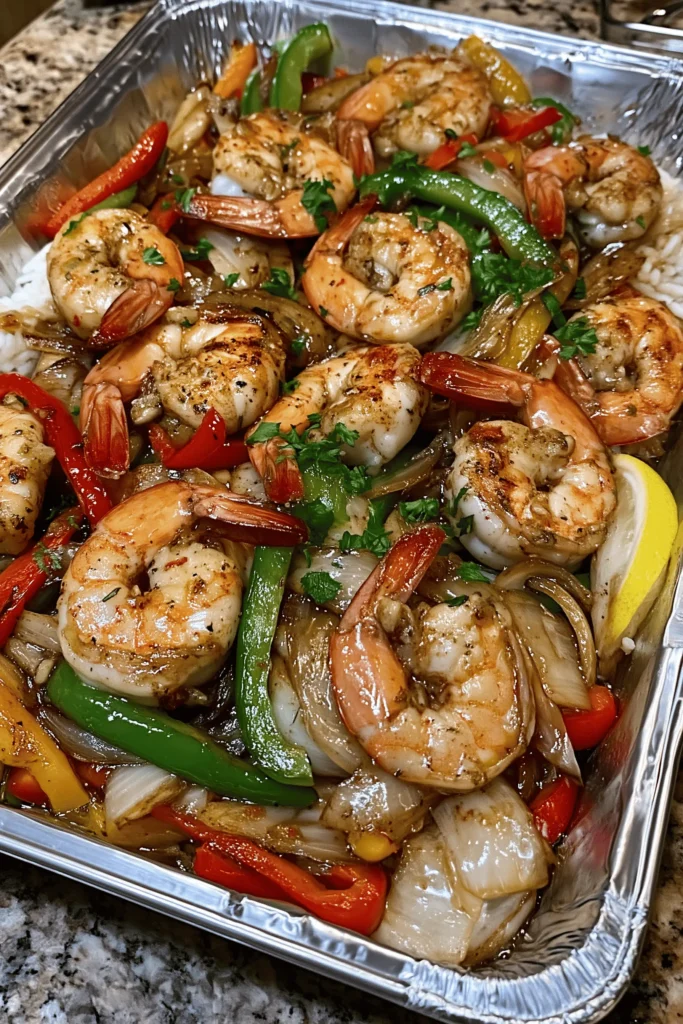
This Garlic Butter Seafood Skillet is fast, colorful, buttery, and full of tender shrimp with just the right lemony finish. Serve it hot from the pan with rice, pasta, bread, or vegetables, and save it for the next time you need a quick seafood dinner that still feels fresh and satisfying.
Follow Us
Love easy seafood recipes, creamy dinners, and quick weeknight meals?
👉 Follow us on Facebook for daily viral recipes and cooking inspiration
👉 Save your favorite recipes on Pinterest for easy meal planning and seafood ideas
Garlic Butter Seafood Skillet
Equipment
- large skillet
Ingredients
- 1½ lbs large shrimp, peeled and deveined
- 1 green bell pepper, sliced
- 1 red bell pepper, sliced
- 1 yellow bell pepper, sliced
- 1 large onion, sliced
- 1 tbsp olive oil
- 3 tbsp butter, divided
- 5 garlic cloves, minced
- 1 tsp paprika
- ½ tsp Cajun seasoning
- ½ tsp salt
- ¼ tsp black pepper
- ¼ tsp red pepper flakes, optional
- 1 tbsp fresh lemon juice
- 2 tbsp chopped parsley
Instructions
- Season the Shrimp
Pat the shrimp dry and season with paprika, Cajun seasoning, salt, and black pepper. Keep the sliced peppers and onion ready beside the stove.
Cue: The shrimp should feel dry on the surface and look evenly coated with seasoning. - Char the Vegetables
Heat the olive oil with 1 tbsp butter in a large skillet over medium-high heat. Add the peppers and onion and cook for 5 to 6 minutes until tender with lightly browned edges.
Cue: The vegetables should be glossy, slightly softened, and browned in spots, not mushy. - Sear the Shrimp
Move the vegetables to one side of the skillet and melt in 1 tbsp butter. Add the shrimp and cook for 1 to 2 minutes per side until pink and lightly golden.
Cue: The shrimp are done when they turn pink, opaque, and curl into a loose “C.” A tight “O” shape usually means they are overcooked. - Finish the Garlic Butter
Reduce the heat to medium and add the remaining butter, garlic, and red pepper flakes if using. Cook for 30 to 60 seconds, then toss the shrimp and vegetables together for 1 to 2 minutes until glossy.
Cue: The garlic should smell fragrant, and the butter should coat the shrimp and vegetables in a shiny sauce. - Brighten and Serve
Remove the skillet from the heat, add the lemon juice, and scatter with chopped parsley. Serve hot while the shrimp are tender and the vegetables are still vibrant.
Notes
Nutrition
All nutritional information is based on third party calculations and is only an estimate. Each recipe’s nutritional value will vary depending on the ingredients used, measuring methods, and portion sizes.