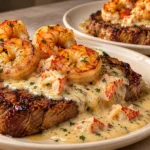
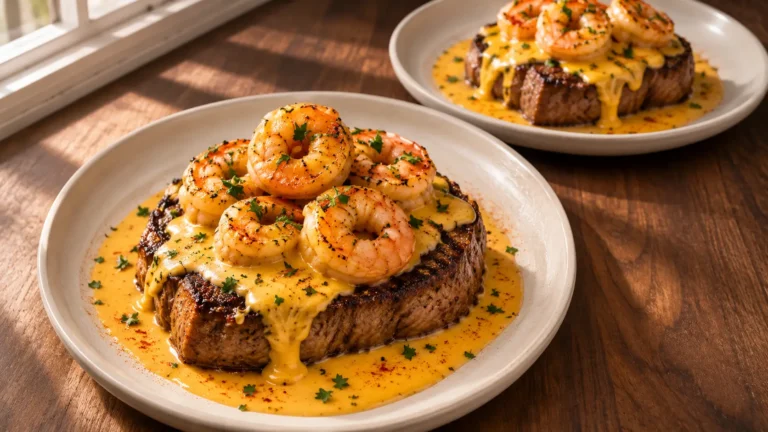
The best bite of creamy cheddar steak and shrimp comes from the edge of the steak, where the browned crust meets the sharp cheddar sauce. While the steaks rest, the shrimp pick up garlic butter and those savory browned bits in the skillet. You can have both plates on the table in about 30 minutes.
Quick Overview
- Time and yield — 10 minutes to prep, 20 minutes to cook, 30 minutes total. Serves 2.
- Flavor and texture — Peppery steak, tender garlic butter shrimp, and a smooth cheddar sauce with a little paprika.
- Difficulty — Easy to moderate. Grating the cheese before you start makes the last few minutes easier.
- Method — Sear the steaks and cook the shrimp in the same skillet. Make the sauce in a small saucepan.
- Best for — A Friday steak dinner or a date night at home.
- Example nutrition per plate — About 890 calories and 78 g protein with a 6 oz trimmed filet, weighed raw, and half of all the sauce and cooking fat.
What This Is and Why You’ll Love It
- The steaks stay whole through the sear and the rest. When you cut into one at the table, you get a browned edge and a juicy center.
- Butter loosens the savory bits left by the steaks, so even a shrimp that misses the cheddar gets plenty of flavor.
- A little flour gives the whole milk enough body to carry a full cup of sharp cheddar. The sauce settles over the shrimp in a ribbon.
- Just 1/4 tsp paprika brings warmth to the cheese while letting the sweetness of the shrimp come through.
- You can use this same stovetop method for a marbled ribeye or a lean filet. For a version with chopped lobster folded into the sauce, try grilled steak with shrimp and lobster cream sauce.
Ingredients
For the steaks
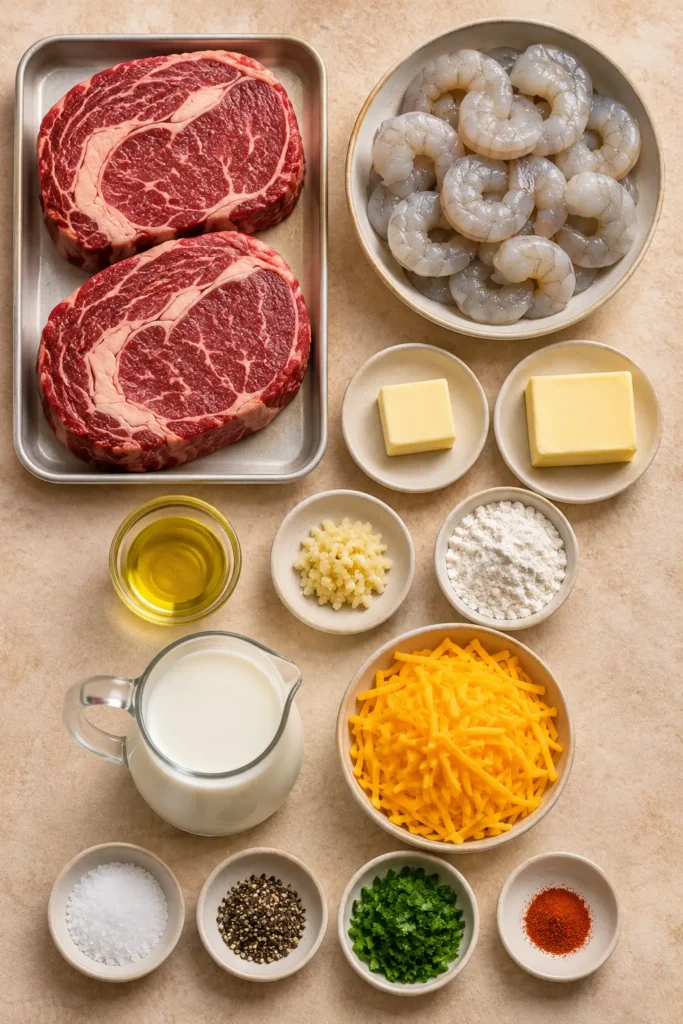
- 2 ribeye or filet mignon steaks, about 1 inch thick
- 1 tbsp olive oil
- Salt and freshly ground black pepper, to taste
For the garlic butter shrimp
- 1/2 lb large shrimp, peeled and deveined
- 1 tbsp butter
- 2 cloves garlic, minced
- Salt and black pepper, to taste
For the cheddar sauce and garnish
- 2 tbsp butter
- 2 tbsp all-purpose flour
- 1 cup whole milk
- 1 cup shredded sharp cheddar cheese
- 1/4 tsp paprika
- Salt and black pepper, to taste
- Fresh parsley, chopped
Key ingredients
The steaks. Ribeye has little seams of fat that turn buttery in the skillet. Filet mignon has a finer texture and a mild flavor. Whichever cut you pick, look for two steaks of similar thickness so you can sear them together.
The shrimp. Start with raw large shrimp and remove the tails along with the shells. When you serve the shrimp over a steak, each one should be ready to eat with a fork.
The cheddar. A block of sharp cheddar gives the sauce its tang. Grate it while it’s cold, then let the shreds sit out just while you sear the steaks. They’ll be easy to stir into the warm milk.
Substitutions
Frozen raw shrimp work in the same amount. Thaw them in the refrigerator, drain them well, and pat them dry. White sharp cheddar also works cup for cup and gives the sauce an ivory color. If your butter is salted, taste the sauce after the cheese melts before deciding how much salt to add.
How to Make It
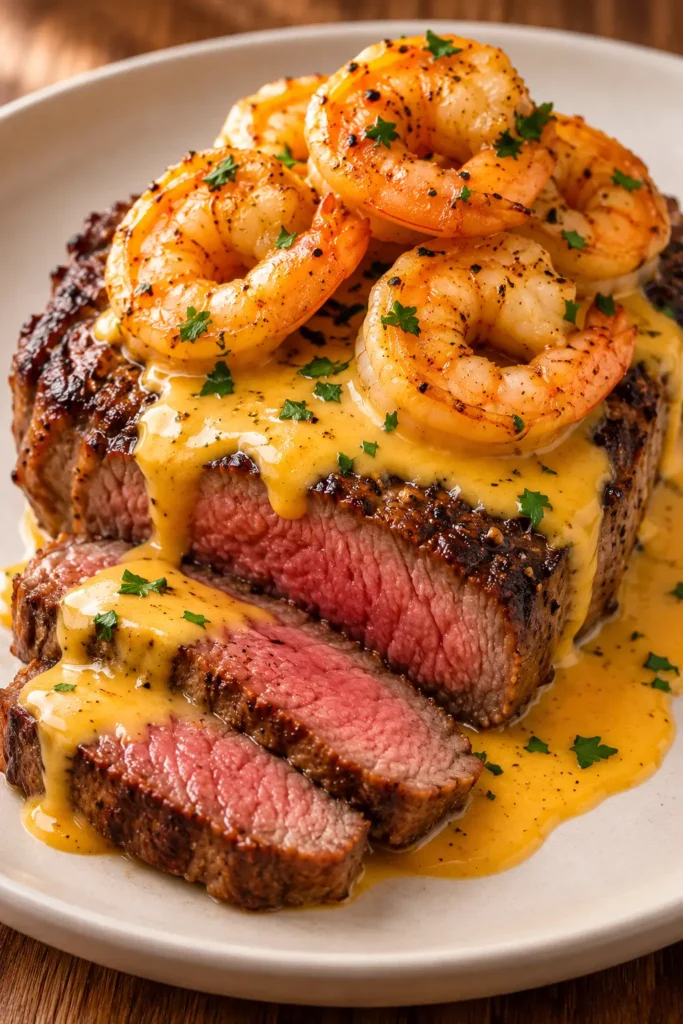
- Sear the steaks. Heat a heavy skillet or grill pan over medium-high heat. Pat the steaks dry, rub them with the olive oil, and season both sides with salt and black pepper. Sear for about 3 to 4 minutes per side, then check the center with a thermometer. For the USDA-recommended minimum, cook whole steaks to 145°F before transferring them to a clean plate. Tent loosely and rest for at least 3 minutes.
- Cook the shrimp. Lower the heat under the same skillet to medium and melt 1 tbsp butter. Stir in the garlic just until fragrant. Add the shrimp in one layer and season with salt and pepper. Cook for about 2 to 3 minutes per side, checking early. Turn them when the undersides turn pink, then lift them onto a clean plate as soon as the centers are pearly and opaque.
- Start the cheese sauce. In a small saucepan over medium heat, melt the remaining 2 tbsp butter. Whisk in the flour. Keep whisking for 1 to 2 minutes, until the paste bubbles and takes on a light golden color.
- Finish the cheddar sauce. Add the milk gradually, whisking each splash smooth before pouring in more. Cook for about 3 minutes, until the mixture lightly coats the back of a spoon. Turn the heat to low and stir in the cheddar a handful at a time. Once it melts, season with paprika, salt, and black pepper.
- Plate and serve. Set one rested steak on each plate and divide the shrimp between them. Spoon the cheddar sauce down the center so some of the crust and shrimp still show. Scatter chopped parsley over the top and serve while the sauce is warm enough to pour.
Pro Tips for Creamy Cheddar Steak and Shrimp
- Use a skillet wide enough to leave a little space between the steaks. Contact with the hot surface gives each one an even crust.
- For a 1-inch steak, slide the thermometer in from the side so the tip reaches the middle. You can check both the steak temperature and the shrimp doneness cue in the FoodSafety.gov cooking chart.
- Look at the skillet before adding the garlic. Keep the brown bits for flavor. If you see blackened patches, wipe those away and give the pan a moment to cool.
- Take the shrimp out with a slotted spoon. Excess liquid on the serving plates can thin the cheddar sauce around the steak.
- Sweep the whisk around the bottom edge of the saucepan as you add the milk. That’s where little pockets of flour tend to hide.
- Let the milk base settle to a gentle heat before adding the cheese. Stir slowly and give each handful time to melt.
- Warm the serving plates with hot tap water and dry them well. The first spoonful of sauce will spread more easily on a warm plate.
Variations
- Pepper-crusted steak. Coarsely crack the black pepper and press it into the steaks just before they hit the pan. The larger pieces give the crust a little crunch.
- Paprika garlic butter. Add a pinch of the measured paprika to the garlic butter just before the shrimp go in. Stir the rest into the sauce as usual.
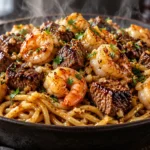
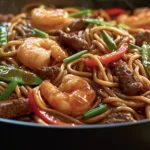
- Surf and turf noodles. Slice the rested steak across the grain and serve it with the shrimp and cheddar sauce over hot noodles. For another steak-and-noodle dinner with a glossy garlic-soy sauce, try garlic butter surf and turf noodles.
What to Serve With It
- Waffle fries have pockets that catch the extra cheddar. Start them while the skillet heats and use this air fryer timing guide for waffle fries.
- Roasted asparagus adds browned tips and a little crunch alongside the tender shrimp.
- A cucumber and radish salad with a splash of vinegar offers a cool, tart bite between forkfuls of steak.
- Steamed broccoli is especially good with a spoonful of sauce caught in the florets.
- A split baked potato soaks up the garlic butter and any extra cheddar sauce.
- Warm sourdough toast gives you something sturdy for scooping up the last of the cheddar.
Storage
Refrigerate leftovers in shallow, covered containers within 2 hours, or within 1 hour if the room is hotter than 90°F. Keep the sauce in its own container if you can. Store at 40°F or below and eat refrigerated leftovers within 3 to 4 days.
Reheat just the steak and shrimp you plan to eat, covered, until they reach 165°F. Warm the leftover sauce separately, whisking as you bring it briefly to a boil. Spoon it over the hot steak just before serving.
Troubleshooting
- The steak sticks when I try to flip it. Give the first side a little longer. Once a crust forms, the steak usually releases with a gentle nudge from the tongs.
- Some shrimp are done before the others. Take each one out when its center turns opaque. Leave the thicker ones in the skillet just long enough to finish.
- The milk mixture has lumps. Take the saucepan off the heat and whisk until smooth. If lumps remain, pour the milk base through a fine strainer before adding the cheddar.
- The sauce runs right off the spoon. Give the milk and flour a little longer at a gentle simmer before adding the cheese. Look for a thin, even coating on the spoon.
- The cheese looks oily as it melts. Lift the saucepan off the burner and whisk gently. If there’s cheddar left to add, wait for the bubbling to stop and stir it in a little at a time.
FAQs
Do the steaks need a marinade?
Olive oil, salt, and freshly ground pepper are enough here. Pat the steaks dry, then oil and season them just before they go into the hot skillet.
How much cheddar should I cut from a block?
About 4 oz of block cheddar makes 1 cup shredded. Grate the cheese first, then fill the cup loosely so the sauce gets the right amount.
Can I use shrimp that are already cooked?
Yes. Thaw them in the fridge if frozen, pat them dry, and toss them briefly in the hot garlic butter to warm through. The timing in step 2 is for raw shrimp.
Can I use stainless steel?
Yes. A heavy stainless-steel skillet browns steak well and lets you see the color of the bits left in the pan. A flat-bottomed skillet also makes it easy to spoon the garlic butter over the shrimp.
What can I prep before dinner?
Grate the cheese, mince the garlic, and chop the parsley earlier in the day. Cover and refrigerate them separately. Measure out the flour and paprika so everything is ready when the steaks start to sizzle.
How do I make four servings?
Double the listed amounts. Use two skillets or sear the steaks in batches, and choose a saucepan with enough room to whisk the larger batch of sauce. Allow extra time if you’re cooking in batches.
Conclusion
Serve creamy cheddar steak and shrimp with the warm sauce down the middle and a little extra in a pitcher for dipping. Save the recipe for your next steak night for two.
Follow Us
Love easy seafood recipes, creamy dinners, and quick weeknight meals?
👉 Follow us on Facebook for daily viral recipes and cooking inspiration
👉 Save your favorite recipes on Pinterest for easy meal planning and seafood ideas
Creamy Cheddar Steak and Shrimp Surf and Turf
Equipment
- heavy skillet or grill pan For searing the steaks and cooking the shrimp in the same pan.
- small saucepan For preparing the cheddar sauce.
- instant-read thermometer For checking the center of the steaks.
- tongs For turning the steaks and shrimp.
- whisk For smoothing the flour and milk into the cheddar sauce.
- Clean plate For resting the steaks and holding the cooked shrimp.
Ingredients
- 2 ribeye or filet mignon steaks, about 1 inch thick
- 1 tbsp olive oil
- salt and freshly ground black pepper, to taste
- 1/2 lb large shrimp, peeled, deveined, and tails removed
- 1 tbsp butter
- 2 cloves garlic, minced
- salt and black pepper, to taste
- 2 tbsp butter
- 2 tbsp all-purpose flour
- 1 cup whole milk
- 1 cup shredded sharp cheddar cheese
- 1/4 tsp paprika
- salt and black pepper, to taste
- fresh parsley, chopped
Instructions
- Heat a heavy skillet or grill pan over medium-high heat. Pat the steaks dry, rub them with the olive oil, and season both sides with salt and black pepper. Sear for about 3 to 4 minutes per side, then check the center with a thermometer. For the USDA-recommended minimum, cook whole steaks to 145°F before transferring them to a clean plate. Tent loosely and rest for at least 3 minutes.
- Lower the heat under the same skillet to medium and melt 1 tbsp butter. Stir in the garlic just until fragrant. Add the shrimp in one layer and season with salt and pepper. Cook for about 2 to 3 minutes per side, checking early. Turn them when the undersides turn pink, then lift them onto a clean plate as soon as the centers are pearly and opaque.
- In a small saucepan over medium heat, melt the remaining 2 tbsp butter. Whisk in the flour. Keep whisking for 1 to 2 minutes, until the paste bubbles and takes on a light golden color.
- Add the milk gradually, whisking each splash smooth before pouring in more. Cook for about 3 minutes, until the mixture lightly coats the back of a spoon. Turn the heat to low and stir in the cheddar a handful at a time. Once it melts, season with paprika, salt, and black pepper.
- Set one rested steak on each plate and divide the shrimp between them. Spoon the cheddar sauce down the center so some of the crust and shrimp still show. Scatter chopped parsley over the top and serve while the sauce is warm enough to pour.
Notes
Nutrition
All nutritional information is based on third party calculations and is only an estimate. Each recipe’s nutritional value will vary depending on the ingredients used, measuring methods, and portion sizes.