Can I Use Mayo Instead of Eggs in Cookies is a question many home bakers ask when they find themselves short on eggs. The quick answer is yes, but it depends on the recipe and the results you’re aiming for. Since mayonnaise contains egg yolks and oil, it can serve as a suitable substitute in some cookie recipes. However, its unique makeup can impact the cookies’ texture, flavor, and moisture level.
In this guide, we’ll break down how eggs function in baking, what mayonnaise is made of, and how it performs as a replacement. You’ll also learn the benefits and drawbacks of using mayo, tips for proper substitution, and which cookies turn out best with this swap. By the end, you’ll know if mayonnaise is the right stand-in for eggs in your favorite cookie recipes.
Understanding the Role of Eggs in Cookies
Can I Use Mayo Instead of Eggs in Cookies? To answer this, it’s essential to first understand the vital role eggs play in cookie recipes. Eggs contribute to structure, moisture, and leavening—key elements that affect the final texture and consistency of your cookies. Without them, baked goods may turn out dry, crumbly, or flat.
Structure, Moisture, Leavening
- Structure: Eggs contain proteins that solidify during baking, helping cookies hold their shape. Without this stabilizing effect, cookies may spread too much or fall apart.
- Moisture: The liquid in eggs keeps cookie dough hydrated, preventing an overly dry texture.
- Leavening: Eggs contribute to the rising process by trapping air, giving cookies a light and airy texture. Some recipes rely heavily on this effect, making substitutions trickier.
Can I use mayo instead of eggs in cookies and still achieve the same results? Since mayonnaise is made of eggs and oil, it can replicate some of these roles—particularly moisture and binding. However, because mayo lacks the eggs’ ability to trap air, cookies may turn out denser when using it as a replacement.
What Is Mayonnaise Made Of?
Can I Use Mayo Instead of Eggs in Cookies? To answer this confidently, you need to understand what mayonnaise is actually made of. Unlike using a whole egg, mayo contains a blend of ingredients that can influence how it performs in baking—especially in cookies.
Ingredients and Composition
Mayonnaise typically includes:
- Egg yolks – Add richness and act as a natural emulsifier.
- Oil – Provides fat and moisture, essential for soft, chewy cookies.
- Vinegar or lemon juice – Brings acidity, which can slightly affect the pH and browning.
- Salt and seasonings – These can influence flavor, depending on how heavily the mayo is seasoned.
Because mayo contains both egg yolks and oil, it helps boost moisture and binding when baking cookies. However, if you’re asking “Can I use mayo instead of eggs in cookies without altering taste?”, be aware that the acidic and salty elements may subtly change the flavor. For best results, choose plain or lightly seasoned mayo to keep the cookie flavor clean and balanced.
How Mayo Works as an Egg Substitute
Mayonnaise is a surprisingly effective egg substitute in many baking recipes, including cookies. To understand how it works, it’s essential to look at its functional components—binding, moisture, and fat content—and how they influence cookie texture and consistency.
Binding, Moisture, Fat Content
- Binding: Mayo contains egg yolks, which help bind ingredients together. This reduces crumbliness and keeps cookies intact.
- Moisture: The oil and water in mayonnaise hydrate the dough, creating a softer, more tender cookie.
- Fat Content: With its high fat content, mayo enriches the dough and enhances the richness of each bite, leading to a slightly denser texture.
However, mayo lacks the leavening power that eggs provide. As a result, cookies made with mayonnaise may not rise as much. To counter this, adding a leavening agent like baking powder can improve the final texture.
Can I use mayo instead of eggs in cookies and still get the same rise? Not exactly—but with a few tweaks, you can come very close.
Pros and Cons of Using Mayo in Cookies
Can I Use Mayo Instead of Eggs in Cookies and expect great results every time? The answer depends on what you’re looking for in your cookies. Mayonnaise can be a reliable substitute, but it comes with both benefits and limitations that home bakers should be aware of.
Taste, Texture, Health Aspects
Pros:
- Moisture boost: Mayo keeps cookies soft and chewy.
- Richer flavor: The fat content in mayo adds a buttery, indulgent taste.
- Useful for egg allergies: Works as an alternative for those who cannot consume eggs.
- Readily available: If you run out of eggs, mayo is a convenient option.
Cons:
- Density: Cookies may turn out heavier and lack the fluffiness provided by eggs.
- Subtle tanginess: The vinegar or lemon juice in mayo can slightly alter the flavor.
- Not suitable for all recipes: Some cookie types require eggs for structure and rise, making mayo a less effective substitute.
By understanding these factors, you can decide whether mayo aligns with your desired cookie outcome.
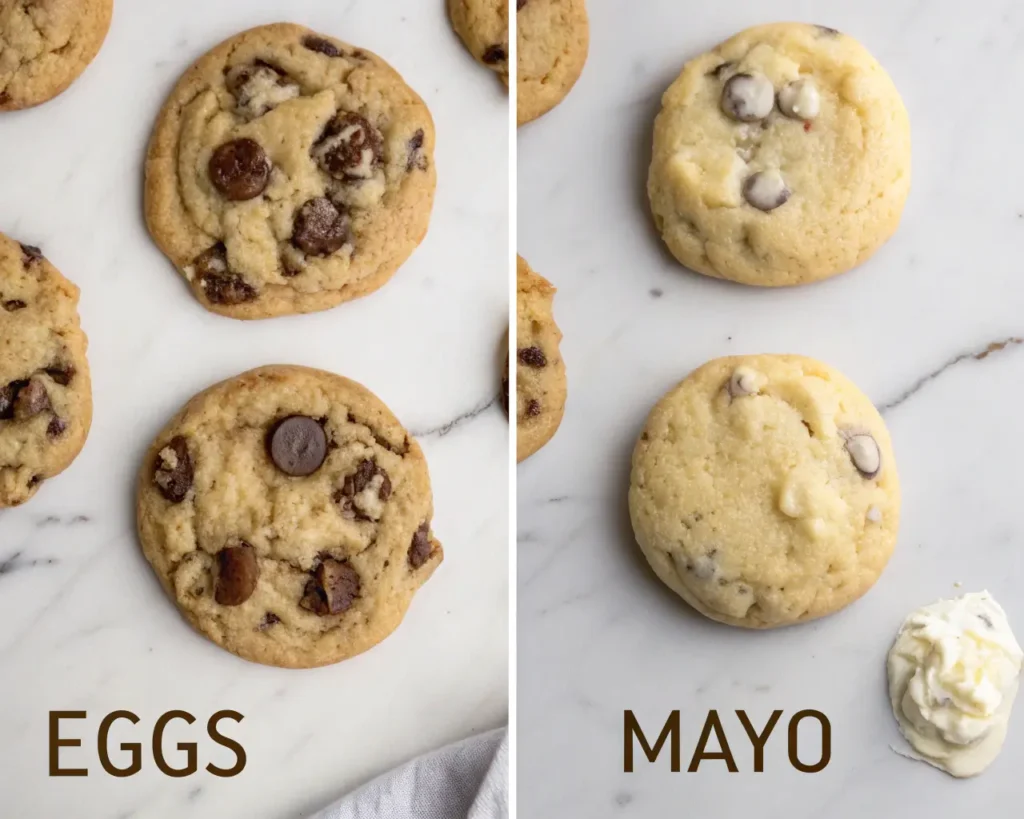
How to Substitute Mayo for Eggs in Cookie Recipes
Replacing eggs with mayonnaise requires precise measurement and careful mixing to achieve the best results. Unlike eggs, mayo is thicker and contains extra fat, so adjustments must be made.
Conversion Ratios, Step-by-Step Instructions
Conversion Ratio:
Use 3 tablespoons of mayo per 1 egg in cookie recipes.
Step-by-Step Instructions:
- Measure the mayo accurately – Overusing it can make cookies greasy.
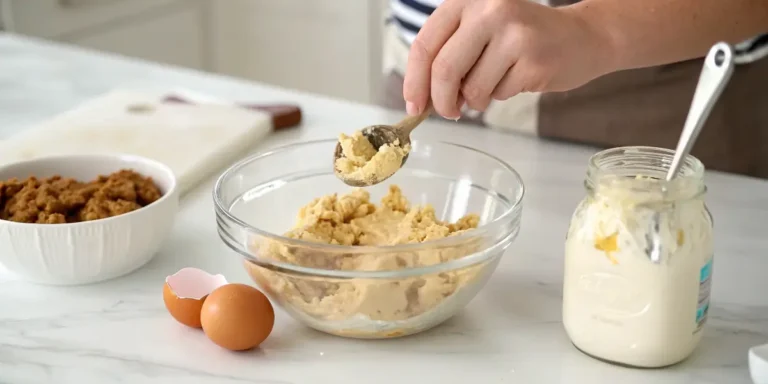
- Mix well with wet ingredients – Ensure the mayo is evenly incorporated for smooth dough.
- Adjust for leavening if necessary – If the recipe depends on eggs for rising, add a pinch of baking powder.
- Bake as usual – Expect slight variations in texture and rise.
Can I use mayo instead of eggs in cookies and still get great results? Yes—with the right ratio and technique, your cookies can turn out moist, flavorful, and satisfying.
Types of Cookies That Work Best with Mayo
Not every cookie recipe responds well to egg replacements, but mayonnaise works best in cookies where added moisture and richness are a plus. If a recipe depends heavily on eggs for lift or structure, the results may fall short.
Chewy, Soft, Dense Cookies
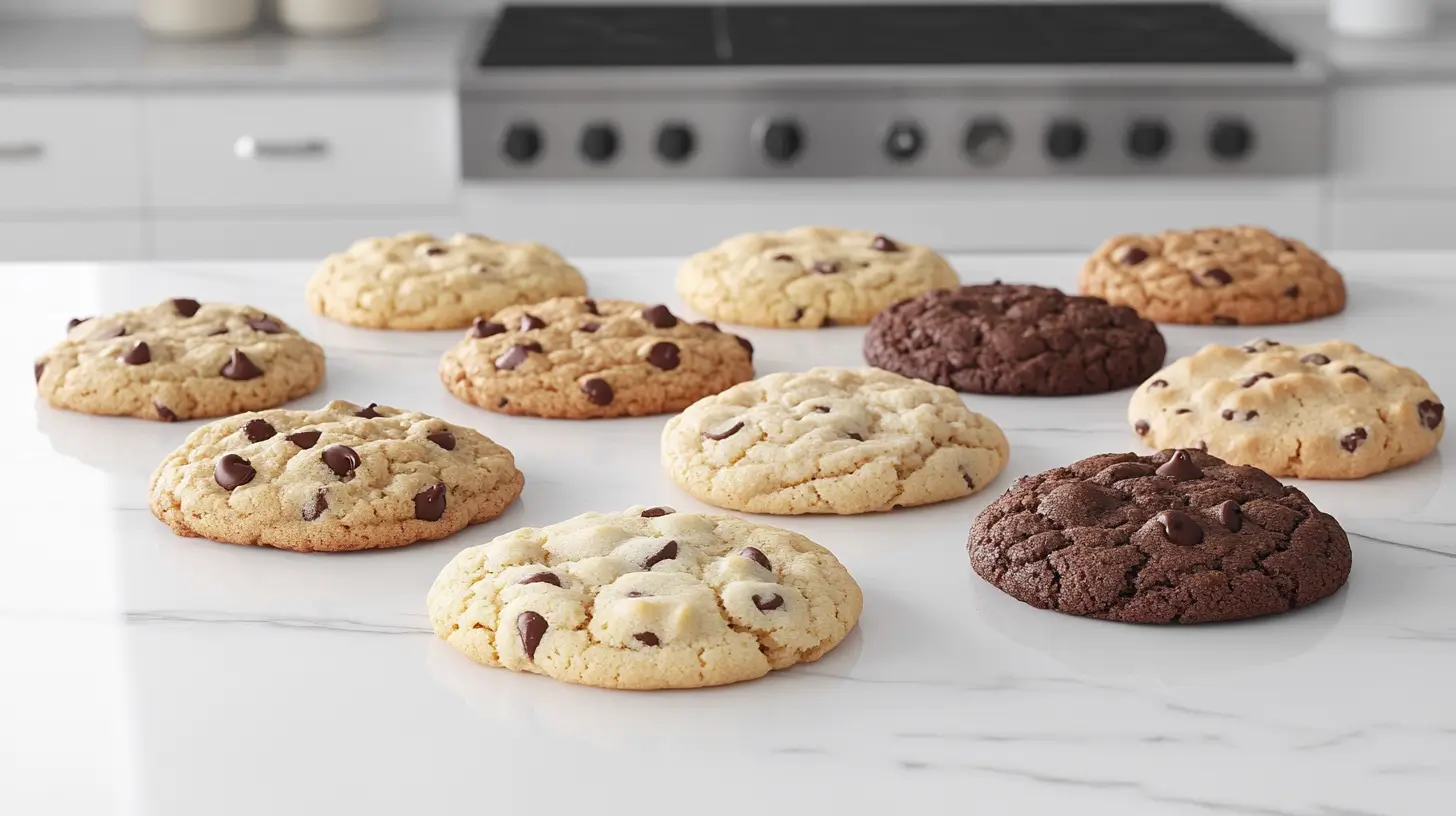
- Chewy Chocolate Chip Cookies – Mayo enhances moisture, keeping cookies soft for days.
- Soft Sugar Cookies – The extra fat in mayo creates a tender texture.
- Fudgy Brownie Cookies – Works well due to the dense nature of brownie-like cookies.
- Oatmeal Cookies – Mayo helps maintain a chewy bite while adding richness.
However, avoid using mayo in cookies that rely on eggs for aeration—like macarons or meringue-based cookies. These require whipped egg whites for lift, something mayonnaise can’t replicate. In those cases, consider alternatives like applesauce or yogurt.
So, can I use mayo instead of eggs in cookies like these? Absolutely—but stick to recipes where softness and richness matter more than rise.
Common Mistakes to Avoid When Using Mayo in Cookies
Using mayonnaise instead of eggs in cookies can work well, but certain errors can ruin the texture and taste. Avoiding these pitfalls ensures better results when baking with mayo.
Overuse, Wrong Type of Mayo
Overuse of Mayo
- Adding too much mayo makes cookies overly greasy and dense.
- Since mayo is high in fat, exceeding the recommended 3 tablespoons per egg results in an oily texture.
- Excess mayo can overpower the cookie’s original flavor, making it taste too rich or tangy.
Wrong Type of Mayo
- Flavored or heavily seasoned mayo (like garlic-infused varieties) will alter the cookie’s taste.
- Low-fat or fat-free mayo lacks enough fat to replace eggs properly, leading to dry and crumbly cookies.
- Homemade mayo may be too runny, affecting dough consistency. Stick to full-fat, plain mayonnaise for the best results.
If you’re wondering, “Can I use mayo instead of eggs in cookies without ruining them?”, the answer is yes—but only if you avoid these common pitfalls.
Expert Tips for Using Mayo in Baking
Substituting mayo for eggs in cookies requires attention to detail. Following expert tips can help you achieve the best possible texture and flavor.
Best Practices for Success
- Measure accurately: Use exactly 3 tablespoons of mayo per egg to maintain the right consistency.
- Choose full-fat mayo: Avoid low-fat or flavored varieties to prevent unwanted texture or taste changes.
- Blend well with wet ingredients: Mayo should be evenly mixed to prevent lumps in the dough.
- Adjust baking time if needed: Cookies made with mayo may bake slightly faster due to the higher fat content.
- Pair with leavening agents if necessary: If the original recipe relies on eggs for rise, add a pinch of baking powder or baking soda to help with structure.
So, can I use mayo instead of eggs in cookies and still get soft, moist results? Yes—with the right techniques, you’ll barely notice the difference.
Taste Test: Mayo vs. Eggs in Cookies
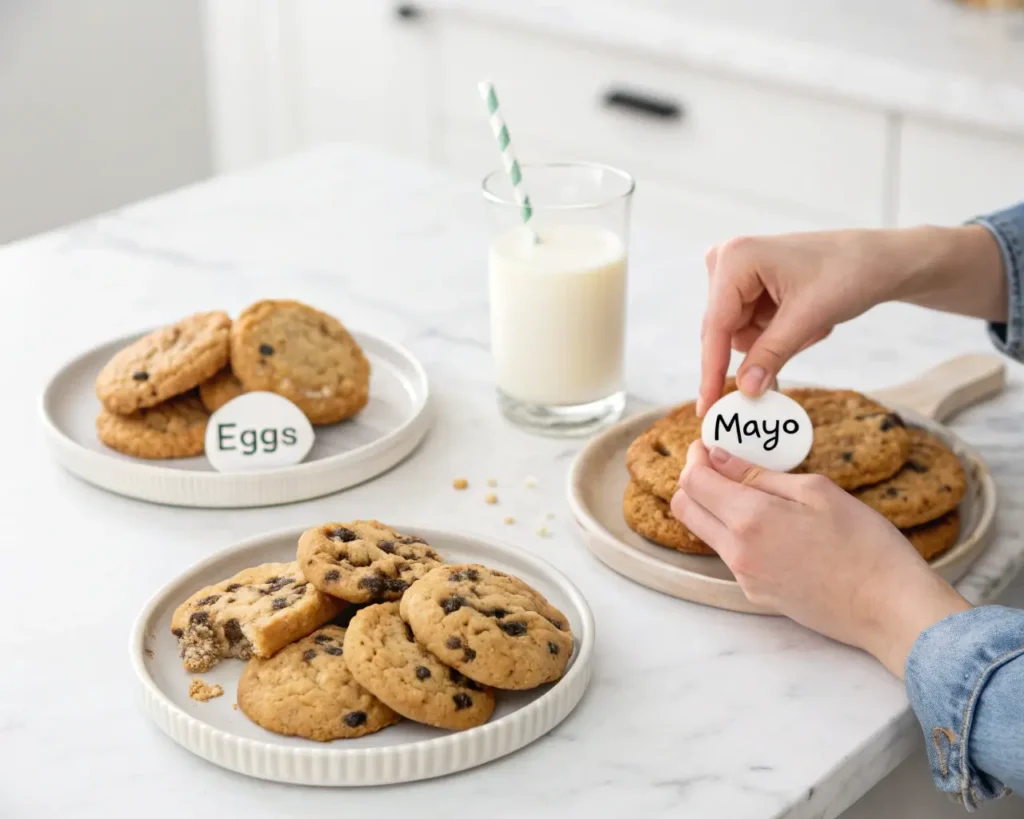
Can I use mayo instead of eggs in cookies and still enjoy the same flavor and texture? To answer that, let’s look at how cookies differ when made with mayo versus traditional eggs.
Comparative Analysis
| Feature | Cookies with Eggs | Cookies with Mayo |
|---|---|---|
| Texture | Light, slightly airy | Denser, more moist |
| Moisture | Balanced hydration | Extra soft, richer |
| Flavor | Neutral, egg enhances ingredients | Slight tang, richer due to oil |
| Leavening | Contributes to rise | Less rise, flatter cookies |
| Shelf Life | Stays fresh for days | Retains moisture longer |
Overall, cookies made with mayo instead of eggs tend to be softer and richer but slightly denser. If you prefer chewy cookies with a moist interior, mayo can be a good alternative. However, if you want a lighter, crispier texture, sticking with eggs is the better choice.
Nutritional Differences Between Mayo and Eggs
Before deciding, can I use mayo instead of eggs in cookies, it’s important to understand how this swap affects nutrition. Eggs and mayo offer different health benefits—and drawbacks—that may influence your choice.
Calories, Fat, Protein
| Nutrient | 1 Large Egg (50g) | 3 tbsp Mayo (45g) |
|---|---|---|
| Calories | 70 kcal | 300 kcal |
| Fat | 5g | 33g |
| Protein | 6g | 0g |
| Cholesterol | 185mg | 30mg |
| Carbohydrates | 0g | 1g |
Key Takeaways:
- Mayo has significantly more calories and fat than eggs.
- Eggs provide protein, which helps with structure, while mayo does not.
- Mayo contributes more cholesterol from oil, but less from eggs since only yolks are used.
If you’re watching your fat intake or need more protein, eggs are the better choice. However, mayo can work as a substitute when dietary restrictions prevent egg consumption.
Alternative Egg Substitutes for Cookies
While mayonnaise can replace eggs in cookies, there are other substitutes that offer different textures and flavors. Depending on your baking goals, you might find an alternative that works better.
Flaxseed, Applesauce, Yogurt
| Substitute | Conversion | Best For | Texture Effect |
|---|---|---|---|
| Flaxseed Meal + Water | 1 tbsp flaxseed + 3 tbsp water per egg | Vegan cookies | Slightly dense, chewy |
| Applesauce | ¼ cup per egg | Soft cookies | Adds sweetness, makes cookies moist |
| Yogurt | ¼ cup per egg | Rich, soft cookies | Adds tang, keeps cookies tender |
Each substitute affects cookies differently:
- Flaxseed meal is ideal for vegan baking and adds fiber.
- Applesauce provides natural sweetness while keeping cookies soft.
- Yogurt works similarly to mayo, enhancing moisture but slightly changing the flavor.
So, can I use mayo instead of eggs in cookies and skip these? Yes—but if mayo’s flavor or fat content isn’t ideal for your recipe, these alternatives give you flexibility while keeping your cookies egg-free.
Frequently Asked Questions (FAQs)
Can I use mayo instead of eggs in all cookie recipes?
Not all cookie recipes work well with mayo as an egg substitute. Mayonnaise is best suited for soft, chewy, or dense cookies like chocolate chip, oatmeal, and brownie-style cookies. However, recipes that require eggs for leavening, such as macarons or meringue-based cookies, will not turn out well with mayo. If a recipe relies on eggs for rising, you may need to add extra baking powder or baking soda to compensate.
How much mayo should I use to replace one egg in cookies?
The standard substitution ratio is 3 tablespoons of mayonnaise per 1 egg. This measurement ensures the dough maintains enough moisture and structure without becoming too oily. It’s important to measure accurately and mix well with wet ingredients to achieve the best consistency in the cookie dough.
Will cookies made with mayo taste different from those made with eggs?
Cookies made with mayo instead of eggs may have a slightly richer, denser texture due to the extra fat content. Some brands of mayo contain vinegar or lemon juice, which can introduce a mild tang. However, in most cookie recipes, the flavor difference is subtle and often unnoticeable, especially when using full-fat, plain mayo.
Can I use low-fat or fat-free mayo as an egg substitute?
It is not recommended to use low-fat or fat-free mayo because these versions contain more water and stabilizers, which can alter the cookie texture. Full-fat mayonnaise works best since it mimics the fat and binding properties of eggs. Using a lower-fat version may result in dry or crumbly cookies.
Are there any health concerns when using mayo instead of eggs in cookies?
Mayonnaise is significantly higher in fat and calories than eggs. While eggs provide protein and essential nutrients, mayo mainly contributes fat. If you are watching your calorie or fat intake, you may want to consider other egg substitutes like flaxseed, applesauce, or yogurt, which offer different nutritional benefits.
What are some other good egg substitutes for cookies?
If mayonnaise isn’t the best fit for your recipe, other substitutes include:
- Flaxseed meal + water: Creates a binding effect similar to eggs (1 tbsp flaxseed + 3 tbsp water = 1 egg).
- Applesauce: Adds natural sweetness and moisture (¼ cup = 1 egg).
- Yogurt: Provides richness and a slight tang (¼ cup = 1 egg).
Each substitute affects cookie texture differently, so choosing the right one depends on the type of cookie you’re making.
Conclusion
Can I use mayo instead of eggs in cookies? Absolutely—but it comes with some trade-offs. Mayonnaise offers moisture, richness, and binding power, making it a suitable egg substitute in many cookie recipes. However, it doesn’t provide leavening like eggs do, which can lead to a denser texture and a subtle tang in flavor.
Key points to remember:
- Use 3 tablespoons of mayo per egg for accurate substitution.
- Choose full-fat, plain mayo to avoid unwanted flavor changes.
- Expect a denser texture with a richer, softer bite.
- Consider other substitutes like flaxseed or applesauce if mayo isn’t ideal for your recipe.
Whether you’re out of eggs or looking for an alternative, mayo can work in many cookie recipes. By following the right techniques and understanding how it changes texture and flavor, you can still bake delicious cookies without eggs.
Follow us on Facebook and Pinterest for healthy recipes, smart cooking tips, and daily inspiration.