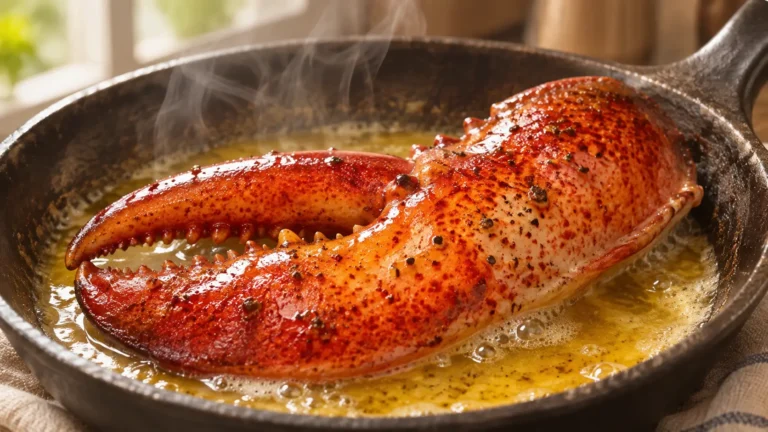
A lobster claw warmed in melted butter makes a simple, satisfying seafood dish with a tender bite and lightly browned, buttery surface. Salt and pepper keep the seasoning simple, letting the lobster’s delicate sweetness shine. With just three ingredients and about eight minutes from start to finish, it’s an easy choice for a small seafood plate.
Quick Overview
- Flavor and texture: Sweet, tender lobster with a buttery, lightly browned exterior.
- Difficulty: Easy.
- Best for: A quick seafood appetizer, a small dinner, or a special-occasion plate.
- Method: Warm the lobster claw in a skillet with melted butter.
- Time: 2 minutes prep, 6 minutes cooking, 8 minutes total.
- Servings: 1.
- Approximate nutrition: 220 calories and 22g protein per serving.
What This Is and Why You’ll Love It
Buttery Pan-Seared Lobster Claw is a straightforward way to serve lobster when you want the seafood to stay at the center of the plate.
- Only three ingredients: Lobster, butter, salt, and pepper keep the ingredient list short.
- Fast cooking: The claw warms in the skillet in just a few minutes.
- Simple seasoning: Butter, salt, and pepper complement lobster’s naturally sweet flavor.
- A tender finish: Gentle heat helps keep the lobster moist.
- Easy to scale: Make one serving for yourself or prepare more claws for a seafood spread.
- A special-feeling plate: The lobster claw makes an appealing starter or small main course. For another cozy seafood dish, try this shrimp and crab bisque.
Ingredients
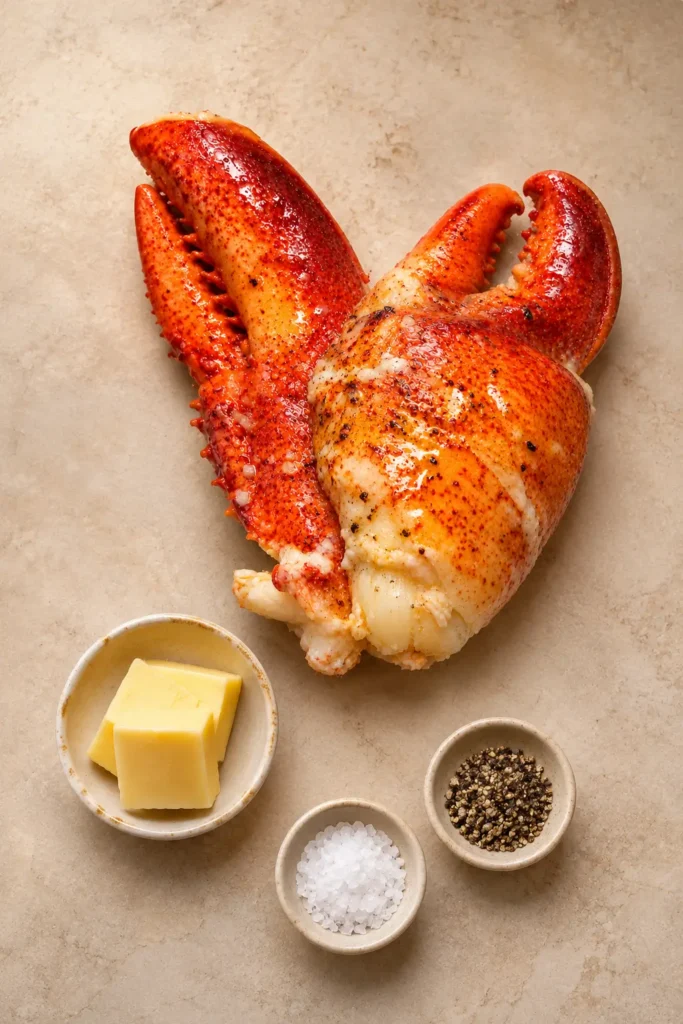
- 1 lobster claw
- 2 tbsp butter
- Salt and pepper, to taste
Key ingredients
Lobster claw: The recipe’s short skillet cook is intended to warm a cooked claw through. If using frozen lobster, thaw it safely in the refrigerator and pat it dry before cooking.
Butter: Butter coats the claw and adds a rich, glossy finish. Keep the heat moderate so the butter doesn’t burn before the lobster is warm.
Salt and pepper: Season to taste, keeping in mind that lobster may already have some saltiness.
Substitutions
The ingredients and amounts are best kept as listed for this simple recipe. You can adjust the salt and pepper to taste.
How to Make It
- Melt the Butter
Set a skillet over medium heat and add the butter, allowing it to melt and coat the pan. - Warm the Lobster
Place the lobster claw into the butter, turning it carefully to coat all sides. - Brown Gently
Cook for 2 to 3 minutes per side, adjusting the heat as needed, until heated through and lightly browned. The lobster should be hot throughout and tender, not rubbery. - Season the Claw
Sprinkle with salt and pepper to taste, turning once more so the seasoning meets the buttery surface. - Serve Immediately
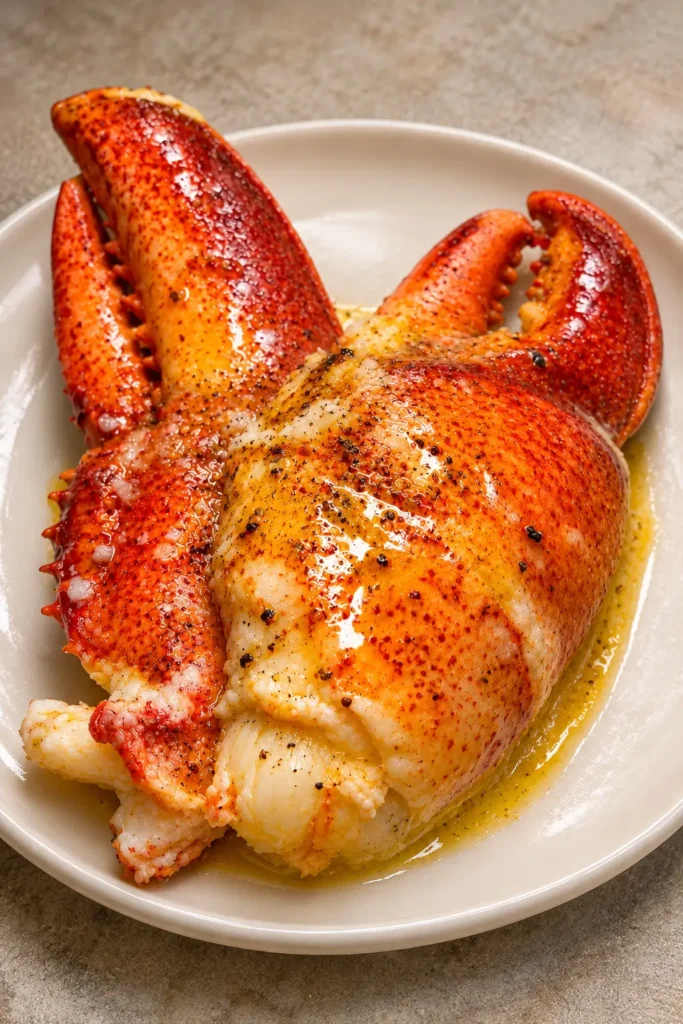
Transfer the warm lobster claw to a serving plate and spoon any butter remaining in the pan over it.
Pro Tips
- Use a skillet large enough to hold the claw without crowding it.
- Pat thawed lobster dry before it goes into the pan; excess moisture can prevent light browning.
- Let the butter melt over medium heat, then lower the heat if it starts to darken quickly.
- Turn the claw carefully with tongs to help coat it evenly without breaking the meat.
- Start checking for doneness at the shorter end of the cooking time, especially if the claw is small.
- Warm cooked lobster just until heated through. Prolonged cooking can make it tough.
- Season near the end so you can taste and adjust before serving.
- Spoon the pan butter over the lobster just before bringing it to the table.
Variations
- Garlic butter: If you’re preparing a separate variation, add a little minced garlic to the butter and cook briefly before adding the lobster.
- Pepper-forward: Add extra black pepper at the table for a stronger, savory finish.
- Lobster plate: Serve the claw as part of a seafood dinner with a simple vegetable or salad.
- Seafood spread: Pair it with another small seafood dish, such as these golden crab and shrimp seafood cups.
What to Serve With It
Keep the sides simple so the lobster stays in the spotlight.
- Steamed rice
- Roasted or steamed asparagus
- A crisp green salad
- Buttered noodles
- Roasted potatoes
- Steamed green beans
- Crusty bread for the pan butter
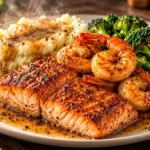
- A larger seafood dinner alongside Cajun salmon tray bake with garlic butter shrimp
Storage
For best texture, serve the lobster as soon as it’s cooked. If you have leftovers, refrigerate them in a covered container within 2 hours. Use within 3 to 4 days and reheat gently until hot throughout. Avoid repeated reheating, which can make lobster firm and chewy.
Troubleshooting
- The lobster turned rubbery: It may have cooked too long. Next time, begin checking earlier and stop once it is heated through.
- The butter browned too quickly: Lower the heat and move the skillet off the burner briefly if needed.
- The claw didn’t brown: The surface may have been damp or the pan may not have been hot enough. Pat thawed lobster dry before cooking.
- The lobster tastes too salty: Lobster can vary in saltiness. Taste before adding much salt.
- The butter is separating or scorching: Reduce the heat and keep the butter moving around the pan as you turn the claw.
FAQs
Is this recipe for a cooked or raw lobster claw?
The directions are written to warm a cooked lobster claw in butter. If your claw is raw, it needs to be cooked fully before serving; the short warming method here may not be enough.
Can I use a frozen lobster claw?
Yes. Thaw it in the refrigerator, then pat it dry before adding it to the skillet.
How do I know when the lobster is heated through?
The lobster should be hot throughout and opaque, with a tender texture. Avoid leaving it in the skillet longer than needed.
Can I make this with more than one claw?
Yes. Use a skillet that gives the claws room to sit without crowding, and cook in batches if needed so they warm evenly.
Can I use salted butter?
You can, but taste before adding salt because both salted butter and lobster can contribute saltiness.
What skillet works best?
A heavy skillet that heats evenly works well. A stainless steel or cast-iron skillet can help the lobster brown lightly.
Can I prepare it ahead?
It’s best made just before serving. Lobster can become tough when reheated repeatedly.
What can I do with leftover pan butter?
Spoon it over the lobster or use it to flavor a side served with the meal.
Conclusion
Buttery Pan-Seared Lobster Claw keeps the preparation simple: warm the lobster gently in butter, season it to taste, and serve while tender. Save this quick recipe for a small seafood dinner or an easy special-occasion plate.
Follow Us
Love easy seafood recipes, creamy dinners, and quick weeknight meals?
👉 Follow us on Facebook for daily viral recipes and cooking inspiration
👉 Save your favorite recipes on Pinterest for easy meal planning and seafood ideas
Buttery Pan-Seared Lobster Claw
Equipment
- skillet For melting the butter and warming and browning the lobster claw.
- tongs For turning the claw gently in the butter.
- serving plate For serving the lobster claw hot.
- spoon For spooning the remaining pan butter over the claw.
Ingredients
- 1 cooked lobster claw
- 2 tbsp butter
- Salt and pepper, to taste
Instructions
- Melt the Butter
Set a skillet over medium heat. Add the butter and let it melt and coat the skillet. - Warm the Lobster
Place the cooked lobster claw in the melted butter and carefully turn it to coat all sides. - Brown Gently
Cook for 2 to 3 minutes per side, adjusting the heat as needed. The claw should be lightly browned, with meat that’s hot throughout and still tender. - Season the Claw
Sprinkle with salt and pepper to taste, then turn the claw once more to distribute the seasoning. - Serve Immediately
Transfer the lobster claw to a serving plate and spoon any butter left in the pan over it. Serve immediately.
Notes
Use a cooked lobster claw. If it’s frozen, thaw it in the refrigerator and pat it dry before cooking so the surface can brown. Skillet tips
Use a heavy skillet with enough room for the claw. Melt the butter over medium heat, and lower the heat if the butter darkens quickly. Turn the claw gently with tongs and start checking at 2 minutes per side, especially for a small claw. Take it out as soon as it’s hot throughout to keep the meat tender. Seasoning and optional variations
Taste before adding much salt, especially if you use salted butter. For a garlic butter variation, briefly cook a little minced garlic in the melted butter before adding the claw. For a stronger pepper flavor, add extra black pepper at the table. Serving suggestions
Serve the claw hot with the pan butter. Steamed rice, asparagus, a green salad, buttered noodles, roasted potatoes, steamed green beans, or crusty bread all make simple sides. Storage and reheating
For the best texture, prepare the lobster just before serving. Refrigerate leftovers in a covered container within 2 hours, use them within 3 to 4 days, and reheat gently until hot throughout. Reheat only once to help keep the meat tender. Recipe times
Prep time is 2 minutes. Cook time is 6 minutes. Total time is 8 minutes with a cooked claw ready to use. Nutrition
The article estimates 220 calories and 22 grams of protein per serving. The edible weight of the claw, the amount of butter eaten, and the amount of salt added are unspecified.
Nutrition
All nutritional information is based on third party calculations and is only an estimate. Each recipe’s nutritional value will vary depending on the ingredients used, measuring methods, and portion sizes.