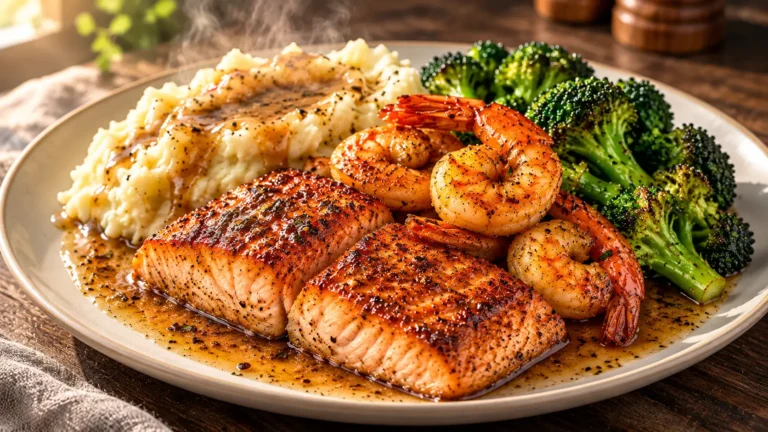
Cajun salmon with garlic mashed potatoes brings bold Southern-inspired flavor to a comforting seafood dinner. Tender, flaky salmon develops a smoky, spicy crust while buttery garlic mashed potatoes soak up rich, creamy pepper gravy. A colorful shrimp-broccoli sauté adds juicy seafood and fresh vegetable texture, creating a satisfying restaurant-style dinner for two in just 40 minutes.
Quick Overview
- Flavor and texture: Smoky, savory, garlicky, and mildly spicy, with flaky salmon, creamy potatoes, velvety pepper gravy, juicy shrimp, and tender-crisp broccoli.
- Difficulty: Easy to moderate, with simple cooking techniques and several components.
- Best for: Weeknight seafood dinners, date nights, special occasions, and satisfying meals for two.
- Cooking method: Boil and mash the potatoes, pan-sear the Cajun salmon, prepare a creamy stovetop gravy, and sauté the shrimp with broccoli.
- Prep time: 15 minutes
- Cook time: 25 minutes
- Total time: 40 minutes
- Servings: 2
- Nutrition: Approximately 620 calories and 43g protein per serving, based on the supplied estimate.
What This Is and Why You’ll Love It
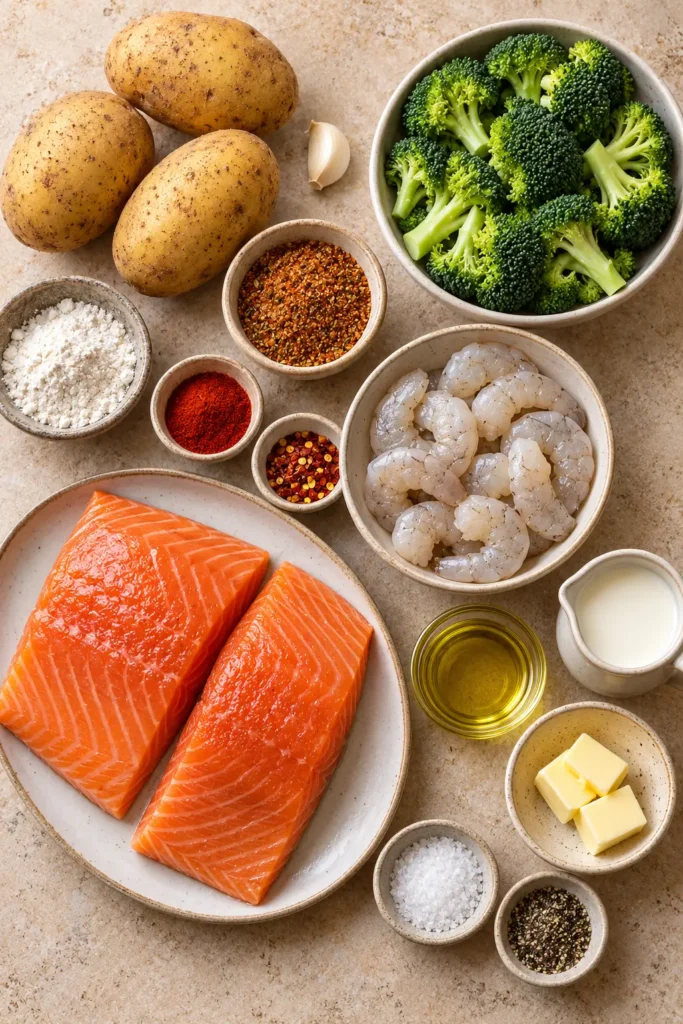
Cajun Salmon with Garlic Mashed Potatoes & Shrimp-Broccoli Sauté is a complete seafood dinner featuring four complementary components: Cajun-seasoned salmon, creamy garlic potatoes, homemade pepper gravy, and sautéed shrimp with broccoli.
The combination delivers a balance of savory spices, buttery richness, tender seafood, and fresh vegetables.
Here’s why this recipe deserves a spot on your dinner menu:
- Two seafood favorites: Salmon and shrimp bring different textures and rich seafood flavor to one satisfying plate.
- Bold Cajun seasoning: The salmon develops a deeply seasoned crust with smoky, peppery notes that complement its naturally rich flavor.
- Creamy garlic mashed potatoes: Butter, milk, and minced garlic transform simple potatoes into a smooth, comforting side.
- Homemade pepper gravy: A simple butter-and-flour base creates a creamy sauce with gentle heat from crushed red pepper flakes.
- Fresh broccoli contrast: Tender-crisp broccoli adds color and freshness alongside the rich salmon and potatoes.
- Ready in 40 minutes: Simple stovetop techniques make this an approachable seafood dinner without a lengthy cooking process.
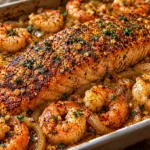
- Perfect for seafood lovers: If you enjoy combining salmon and shrimp, you’ll also love our Cajun Salmon Tray Bake with Garlic Butter Shrimp for another flavorful dinner option.
Ingredients
- 2 salmon fillets
- 1 tbsp olive oil, plus 1 tsp for sautéing
- 1 tbsp Cajun seasoning
- Salt, to taste
- 3 medium potatoes, peeled and cubed
- 2 tbsp butter, plus 1 tbsp for gravy
- 1/4 cup milk, more if needed, plus 1 cup for gravy
- 1 clove garlic, minced
- Salt and pepper, to taste
- 1 tbsp all-purpose flour
- 1/2 tsp crushed red pepper flakes
- 1 cup broccoli florets
- 8–10 medium shrimp, peeled and deveined
- 1/2 tsp paprika
Key ingredients
Salmon fillets
Salmon is the main protein in this recipe. Its rich, tender flesh pairs especially well with Cajun spices.
Choose fillets of similar thickness whenever possible so they cook evenly. Pat them dry before seasoning to encourage better browning.
Cajun seasoning
Cajun seasoning gives the salmon its signature savory, smoky, and mildly spicy character.
Different blends contain varying amounts of salt and chili pepper. Taste carefully before adding extra salt.
Potatoes
Three medium potatoes create the creamy garlic mash that anchors the dinner.
Peeling and cubing the potatoes helps them cook evenly. Drain them thoroughly before mashing to prevent a watery consistency.
Butter, milk, and garlic
Butter adds richness, milk creates a smooth texture, and minced garlic provides savory depth.
The same milk and butter ingredients also form the foundation of the creamy pepper gravy.
All-purpose flour
Flour thickens the gravy when cooked briefly with butter.
Whisking the milk into the butter-flour mixture gradually helps prevent lumps.
Shrimp
Medium shrimp are ideal for a quick sauté because they cook rapidly.
Use peeled and deveined shrimp, and remove them from the heat as soon as they are fully opaque and tender.
Broccoli and paprika
Broccoli provides color, freshness, and a slightly crisp texture.
Paprika gives the shrimp a warm reddish color and gentle savory flavor.
Substitutions
The original recipe works best with the exact ingredients listed above, but these optional substitutions can accommodate different preferences.
- Salmon: Skin-on or skinless salmon fillets work. If using skin-on salmon, begin searing skin-side down.
- Milk: Lactose-free dairy milk can replace regular milk in the same quantities.
- Butter: Plant-based butter may be used in the same amounts, although the gravy’s flavor and consistency may change slightly.
- Shrimp: Frozen peeled and deveined shrimp work well when fully thawed and patted dry before cooking.
- Cajun seasoning: A salt-free Cajun blend can be used in the same amount if you prefer more control over saltiness.
- Paprika: Smoked paprika can replace regular paprika in the same amount for a deeper smoky flavor.
How to Make It: Cajun Salmon with Garlic Mashed Potatoes
This dinner comes together in five straightforward steps. Prepare your ingredients before starting so the salmon, gravy, and shrimp can be served while hot.
1. Mash the Potatoes
Bring a pot of salted water to a boil. Add the peeled and cubed potatoes and cook until tender.
Drain thoroughly, then mash with 2 tablespoons butter, 1/4 cup milk, minced garlic, salt, and pepper.
Continue mashing until smooth and creamy. Add a little more milk only if needed.
Doneness cue: A fork should slide through the potatoes without resistance. The finished mash should be fluffy and creamy, not watery or gluey.
2. Season and Sear Salmon
Pat the salmon fillets dry with paper towels.
Coat them with 1 tablespoon olive oil and 1 tablespoon Cajun seasoning. Add salt to taste, accounting for any salt already in the spice blend.
Heat a skillet over medium heat. Place the salmon in the skillet and sear for 4 to 5 minutes per side, adjusting for thickness.
The exterior should develop a dark golden, Cajun-spiced crust.
Doneness cue: The salmon should flake easily, appear opaque, and reach an internal temperature of 145°F (63°C) at the thickest part. If the outside browns too quickly, lower the heat.
3. Prepare Pepper Gravy
Melt 1 tablespoon butter in a small saucepan over medium heat.
Add the flour and whisk continuously for approximately 1 minute to cook out the raw flour taste.
Gradually pour in 1 cup milk while whisking to create a smooth sauce.
Simmer gently until the gravy thickens, then season with crushed red pepper flakes, salt, and black pepper.
Doneness cue: The gravy should lightly coat the back of a spoon and flow smoothly when poured.
4. Sauté Shrimp and Broccoli
Heat the remaining teaspoon of olive oil in a skillet over medium heat.
Add the broccoli florets and sauté for 2 to 3 minutes, stirring occasionally.
Add the peeled and deveined shrimp and sprinkle with paprika.
Continue cooking, turning the shrimp as needed, until the broccoli is tender and the shrimp are fully cooked.
Doneness cue: The broccoli should be bright green and fork-tender. The shrimp should be pink on the outside, opaque throughout, and curled into a loose C shape. Avoid cooking them until tightly curled and rubbery.
5. Plate the Components
Spoon a generous serving of garlic mashed potatoes onto each plate.
Pour the warm pepper gravy over the potatoes.
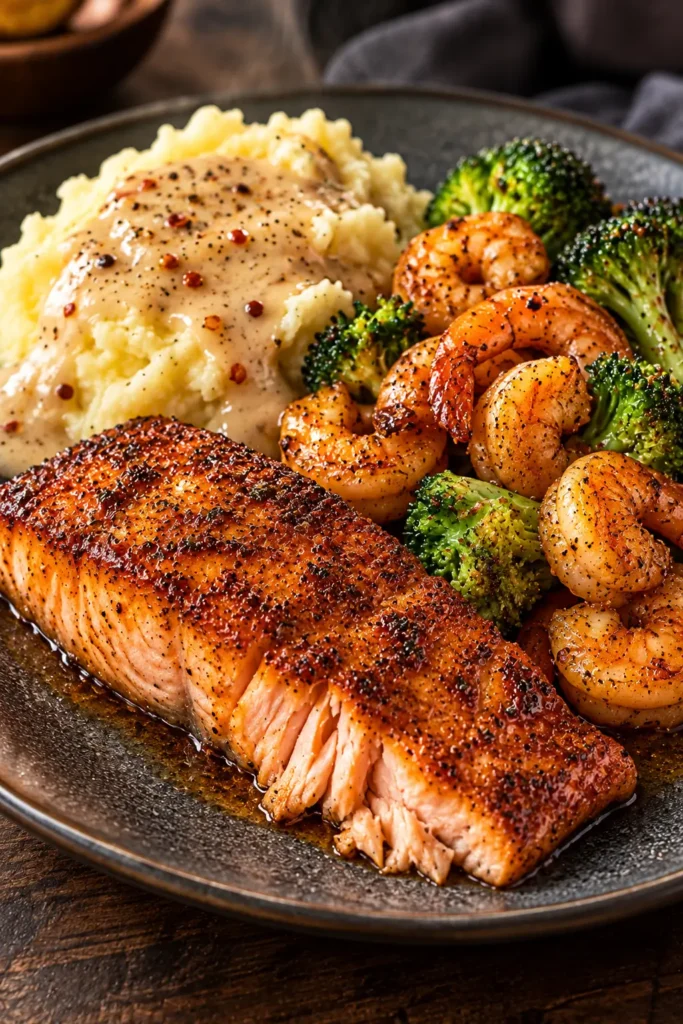
Arrange a Cajun-seared salmon fillet beside the mashed potatoes, then add the shrimp-broccoli sauté.
Serve immediately while the salmon is flaky, the gravy is warm, and the shrimp remain tender.
Pro Tips
- Dry the salmon thoroughly: Moisture on the surface prevents good browning. Pat the fillets dry before adding olive oil and Cajun seasoning.
- Use evenly sized salmon fillets: Similar thickness helps both pieces finish cooking at approximately the same time.
- Avoid excessive heat: Cajun spices can darken quickly. Medium heat creates a flavorful crust without burning the seasoning.
- Don’t overwork the potatoes: Mash just until creamy. Excessive mixing can release too much starch and produce a gummy texture.
- Warm the milk if convenient: Milk that isn’t refrigerator-cold incorporates more easily into hot mashed potatoes.
- Whisk the gravy continuously at first: Gradually adding milk while whisking is the simplest way to maintain a smooth sauce.
- Watch the shrimp closely: Medium shrimp cook quickly. Once opaque and loosely curled, remove them from direct heat to preserve their juicy texture.
- Avoid overcrowding the skillet: Giving the salmon enough space encourages a proper sear rather than steaming.
- Coordinate the finishing times: Keep the mashed potatoes warm, finish the gravy as the salmon cooks, and prepare the shrimp-broccoli sauté last for the freshest texture.
Variations
1. Skin-On Cajun Salmon
Use skin-on salmon fillets and place them skin-side down in the skillet first.
Allow the skin to develop a crisp surface before turning carefully. This creates an additional texture contrast without changing the seasoning or other ingredients.
2. Rustic Garlic Mashed Potatoes
Instead of mashing the potatoes until completely smooth, leave a few soft potato pieces intact.
This creates a more rustic texture while preserving the same garlic, butter, and milk flavors.
3. Extra-Creamy Potato Finish
Use the recipe’s allowance for additional milk if the mashed potatoes seem too thick.
Incorporate it gradually until the potatoes reach your preferred consistency, avoiding unnecessary mixing.
4. Deeper Cajun Crust
Allow the seasoned salmon to sit undisturbed during the initial sear.
This helps develop a more pronounced browned surface. Keep the skillet at moderate heat so the spices toast without burning.
5. Softer Broccoli Sauté
For more tender broccoli, let it cook toward the upper end of its sauté time before adding the shrimp.
This gives the vegetables a head start while preventing the shrimp from overcooking.
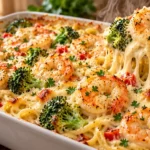
More Cajun seafood inspiration: For a different meal featuring tender shrimp and rich Cajun flavors, explore our Creamy Cajun Shrimp Spaghetti.
What to Serve With It
Because this recipe already includes protein, potatoes, gravy, and vegetables, it works beautifully as a complete meal.
However, adding a simple side can bring extra freshness or variety to a larger dinner spread.
Here are eight serving ideas:
- Fresh garden salad: Crisp lettuce and a light vinaigrette provide a refreshing contrast to the creamy potatoes.
- Cucumber and tomato salad: Juicy tomatoes and cool cucumbers balance the heat of the Cajun seasoning.
- Roasted asparagus: Tender asparagus with lightly browned tips complements both salmon and shrimp.
- Steamed green beans: A simple vegetable side adds freshness without overwhelming the main course.
- Warm crusty bread: Perfect for soaking up any extra pepper gravy.
- Grilled zucchini: Mild, lightly charred zucchini pairs naturally with the spicy seafood.
- Sweet corn: The natural sweetness of corn contrasts nicely with the savory Cajun spices.
- Green bean casserole: For a hearty family-style seafood spread, add a small serving of our Classic Green Bean Casserole Recipe.
Best pairing: A fresh cucumber-tomato salad or simple green salad keeps the meal balanced without making the plate feel too heavy.
Storage
Refrigeration
Allow leftovers to cool briefly, then transfer them to airtight containers.
For the best texture, store the salmon, shrimp-broccoli sauté, mashed potatoes, and pepper gravy separately if possible.
Refrigerate within 2 hours of cooking and enjoy within approximately 2 days for the best seafood quality.
Reheating
Reheat seafood gently to minimize drying.
Place the salmon and shrimp in a covered oven-safe dish and warm at a low oven temperature, checking frequently. For food safety, reheat leftovers to 165°F.
Warm the mashed potatoes separately over low heat, stirring gently.
Reheat the pepper gravy in a small saucepan, whisking until smooth. If necessary, use a small splash of milk to restore its consistency.
Avoid repeatedly reheating shrimp because they can become tough.
Freezing
Freezing the fully prepared meal is not ideal.
Cooked salmon and shrimp may lose moisture, while milk-based pepper gravy can separate after thawing.
Mashed potatoes can also develop a different texture.
For the most enjoyable results, prepare this seafood dinner fresh or refrigerate leftovers for short-term storage.
Make-Ahead Tips
You can peel and cube the potatoes ahead of time. Keep them submerged in cold water in the refrigerator until ready to cook.
The shrimp can also be peeled and deveined in advance, then refrigerated safely.
Measure the seasonings and prepare the broccoli before cooking to make the final assembly easier.
Troubleshooting
- Salmon is dry: It was likely cooked too long or over high heat. Check the thickest portion with an instant-read thermometer and remove it promptly when it reaches 145°F.
- Cajun seasoning tastes burnt: The skillet may have been too hot. Reduce the heat and avoid leaving the seasoned fish undisturbed once the spices begin to scorch.
- Shrimp are rubbery: They have likely overcooked. Add them only after the broccoli has started softening, and cook until opaque and loosely curled.
- Pepper gravy is lumpy: Milk may have been added too quickly. Whisk vigorously over gentle heat, or strain the gravy if necessary.
- Mashed potatoes are gummy: Overmixing can release excessive starch. Use a potato masher rather than a blender, and stop mixing once the potatoes are creamy.
- Broccoli is too firm: The florets may be large or need additional cooking. Cut them into similar sizes and allow them to soften before adding shrimp.
FAQs
1. How spicy is Cajun salmon with garlic mashed potatoes?
The salmon has a warm, peppery kick from the Cajun seasoning, while the gravy adds another layer of heat from crushed red pepper flakes.
The butter, milk, and potatoes soften the overall intensity, creating a balanced meal rather than an overwhelmingly spicy one.
The precise heat level depends on your Cajun seasoning blend.
2. How do I know when Cajun salmon is fully cooked?
Properly cooked salmon should appear opaque and flake easily when gently pressed with a fork.
The most reliable food-safety check is an instant-read thermometer inserted into the thickest part of the fillet.
The recommended internal temperature is 145°F (63°C).
3. Can I use frozen shrimp for this seafood dinner?
Yes. Frozen raw shrimp work well when thawed completely before cooking.
Drain away excess liquid and pat the shrimp dry so they sauté properly.
Cook until the flesh becomes fully opaque and the shrimp curl into a loose C shape.
4. Can I make the garlic mashed potatoes ahead of time?
Yes. You can prepare the mashed potatoes in advance and refrigerate them in an airtight container.
Reheat gently, stirring occasionally, and use a little additional milk if needed to bring back their creamy texture.
For the best results, prepare the salmon and shrimp close to serving time.
5. Why is my pepper gravy too thick?
The gravy thickens as the flour cooks with the milk and may continue to thicken while cooling.
If the consistency becomes too heavy, whisk in a small amount of additional milk until the sauce pours smoothly.
Keep the saucepan over gentle heat rather than boiling aggressively.
6. Can I use skin-on salmon fillets?
Absolutely.
Skin-on salmon develops a pleasant crisp texture when placed skin-side down in a properly heated skillet.
Allow the skin to brown before carefully turning the fillet.
Check the internal temperature to determine when the salmon is safely cooked.
7. Can I cook the shrimp and salmon in the same skillet?
Yes, but cooking them separately is easier for controlling their different cooking times.
Salmon fillets generally require more time than medium shrimp.
If using one skillet, cook the salmon first, transfer it to a clean plate, and then prepare the shrimp and broccoli.
8. Is this Cajun salmon and shrimp dinner high in protein?
Salmon and shrimp both contribute substantial protein.
The supplied recipe estimate is approximately 43g protein and 620 calories per serving when divided into two portions.
Actual nutrition will vary depending on salmon fillet size, milk and butter choices, and the quantities consumed. The estimate has not been independently verified.
Conclusion
Cajun salmon with garlic mashed potatoes combines smoky, tender fish, creamy garlic mash, rich pepper gravy, and juicy shrimp with colorful broccoli in one satisfying 40-minute dinner.
Save this recipe for your next seafood night, and share it with someone who loves bold Cajun flavors and comforting homemade meals.
Follow Us
Love easy seafood recipes, creamy dinners, and quick weeknight meals?
👉 Follow us on Facebook for daily viral recipes and cooking inspiration
👉 Save your favorite recipes on Pinterest for easy meal planning and seafood ideas
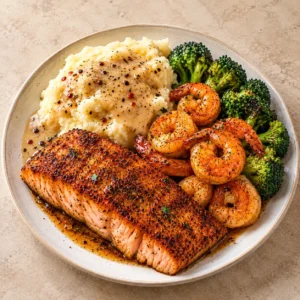
Cajun Salmon with Garlic Mashed Potatoes & Shrimp-Broccoli Sauté
Equipment
- large pot For boiling the peeled and cubed potatoes until tender.
- potato masher For mashing cooked potatoes with butter, milk, and garlic.
- skillet For searing the Cajun salmon and sautéing the shrimp and broccoli.
- small saucepan For preparing the creamy homemade pepper gravy.
- whisk For combining flour, butter, and milk into a smooth gravy.
Ingredients
- 2 salmon fillets
- 1 tbsp olive oil (for salmon)
- 1 tsp olive oil (for sautéing)
- 1 tbsp Cajun seasoning
- salt, to taste
- 3 medium potatoes, peeled and cubed
- 2 tbsp butter (for mashed potatoes)
- 1 tbsp butter (for gravy)
- 1/4 cup milk (for mashed potatoes, more if needed)
- 1 cup milk (for gravy)
- 1 clove garlic, minced
- salt and pepper, to taste
- 1 tbsp all-purpose flour
- 1/2 tsp crushed red pepper flakes
- 1 cup broccoli florets
- 8–10 medium shrimp, peeled and deveined
- 1/2 tsp paprika
Instructions
- Bring a pot of salted water to a boil. Add the peeled and cubed potatoes and cook until tender. Drain thoroughly, then mash with 2 tablespoons butter, 1/4 cup milk, minced garlic, salt, and pepper. Continue mashing until smooth and creamy. Add a little more milk only if needed. The potatoes are ready when a fork slides through without resistance. The finished mash should be fluffy and creamy, not watery or gluey.
- Pat the salmon fillets dry with paper towels. Coat them with 1 tablespoon olive oil and 1 tablespoon Cajun seasoning. Add salt to taste, accounting for any salt already in the spice blend. Heat a skillet over medium heat. Place the salmon in the skillet and sear for 4 to 5 minutes per side, adjusting for thickness. The exterior should develop a dark golden, Cajun-spiced crust. The salmon should flake easily, appear opaque, and reach an internal temperature of 145°F (63°C) at the thickest part. If the outside browns too quickly, lower the heat.
- Melt 1 tablespoon butter in a small saucepan over medium heat. Add the flour and whisk continuously for approximately 1 minute to cook out the raw flour taste. Gradually pour in 1 cup milk while whisking to create a smooth sauce. Simmer gently until the gravy thickens, then season with crushed red pepper flakes, salt, and black pepper. The finished gravy should lightly coat the back of a spoon and flow smoothly when poured.
- Heat the remaining teaspoon of olive oil in a skillet over medium heat. Add the broccoli florets and sauté for 2 to 3 minutes, stirring occasionally. Add the peeled and deveined shrimp and sprinkle with paprika. Continue cooking, turning the shrimp as needed, until the broccoli is tender and the shrimp are fully cooked. The broccoli should be bright green and fork-tender. The shrimp should be pink on the outside, opaque throughout, and curled into a loose C shape. Avoid cooking them until tightly curled and rubbery.
- Spoon a generous serving of garlic mashed potatoes onto each plate. Pour the warm pepper gravy over the potatoes. Arrange a Cajun-seared salmon fillet beside the mashed potatoes, then add the shrimp-broccoli sauté. Serve immediately while the salmon is flaky, the gravy is warm, and the shrimp remain tender.
Notes
Nutrition
All nutritional information is based on third party calculations and is only an estimate. Each recipe’s nutritional value will vary depending on the ingredients used, measuring methods, and portion sizes.