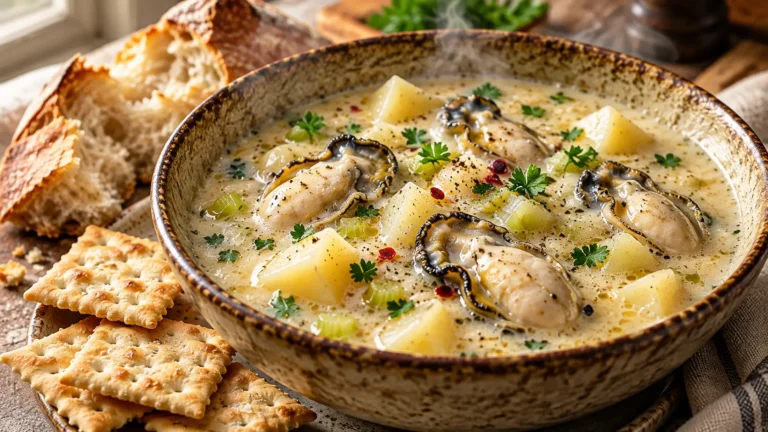
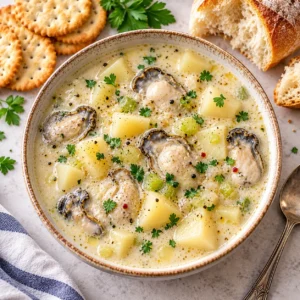
Creamy Oyster Stew brings briny oysters, tender potatoes, celery, and a buttery milk broth together in one warm, comforting bowl. The oysters cook for only a few minutes at the end, keeping them plump and tender while their liquor adds deep seafood flavor to the creamy broth.
Quick Overview
- Flavor/texture: Buttery, creamy, lightly briny, with tender potatoes and soft, plump oysters
- Difficulty: Easy and beginner-friendly
- Best for: Cozy dinners, seafood nights, holiday meals, or chilly evenings
- Method: Sauté the aromatics, gently simmer the potatoes in milk, then add the oysters at the end
- Prep Time: 15 min
- Cook Time: 25 min
- Total Time: 40 min
- Servings: 4
- Approx.: 400 calories | 16g protein per serving with whole milk, excluding crackers; estimates will vary
What This Is and Why You’ll Love It
- This classic-style Creamy Oyster Stew gets its rich seafood flavor directly from fresh oysters and their liquor.
- Potatoes make the broth more substantial without overpowering the delicate oysters.
- Butter, onion, celery, and garlic create a savory foundation before the milk goes into the pot.
- The cooking method is gentle, which helps prevent the dairy from scorching and the oysters from becoming rubbery.
- You need only one pot, making cleanup simple for a comforting seafood dinner.
- Cayenne is optional, so you can keep the stew mild or give the creamy broth a subtle warming finish.
- If creamy seafood dinners are your favorite, this Creamy Crab and Shrimp Stuffed Salmon is another rich seafood recipe worth saving.
Ingredients
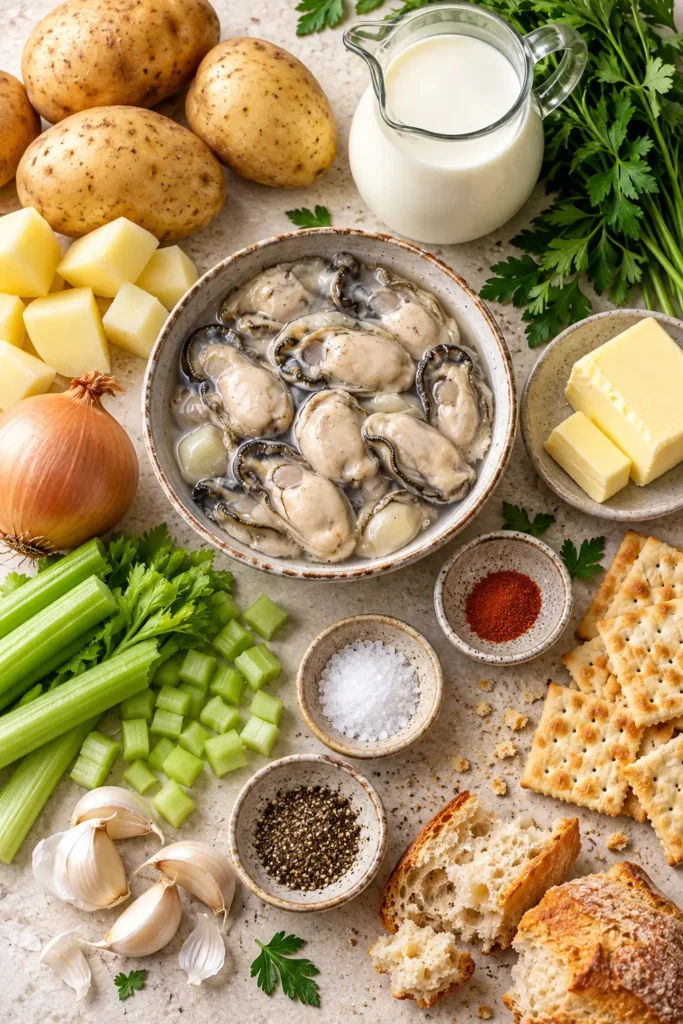
- 4 tbsp butter
- 1 small onion, finely chopped
- 2 celery stalks, finely chopped
- 2 garlic cloves, minced
- 2 medium potatoes, peeled and cut into ¾-inch cubes
- 1 quart whole milk, or half-and-half for a richer stew
- 1 pint fresh shucked oysters, with their liquor
- ¼ tsp cayenne pepper, optional
- Salt and freshly ground black pepper, to taste
- 2 tbsp chopped fresh parsley
- Crackers or crusty bread, for serving
Key ingredients
Fresh shucked oysters: The oysters are the star of the stew, and their reserved liquor seasons the broth with natural briny flavor. Keep both together until you are ready to add them to the pot.
Oyster liquor: This flavorful liquid is important to the character of oyster stew. Because it can already be salty, taste the finished broth before adding additional salt.
Potatoes: The ¾-inch cubes become fork-tender as they gently simmer and give every serving a hearty bite.
Whole milk or half-and-half: Whole milk creates a smooth, creamy broth, while the specified half-and-half option makes it noticeably richer.
Butter: Four tablespoons create the rich base for the onion and celery while giving the finished broth its buttery flavor.
Onion, celery, and garlic: These aromatics soften in butter before the dairy is added, creating savory depth without hiding the oysters.
Substitutions
- Whole milk: Use the listed half-and-half option when you want a richer, fuller-bodied broth.
- Cayenne pepper: It is optional, so simply leave it out for a completely mild oyster stew.
- Serving choice: Use either crackers or crusty bread, depending on whether you prefer something crisp or something that can soak up the creamy broth.
- Salt: Treat it as an adjustable seasoning rather than adding it automatically because oyster liquor varies naturally in salinity.
- Fresh parsley: Keep it as the finishing garnish so its freshness remains noticeable against the warm, buttery broth.
How to Make It
- Soften the Aromatics
Melt the butter in a large pot over medium heat. Add the onion and celery and cook for about 5 minutes, until softened. Stir in the garlic and cook for 30 seconds.
Cue: The onion and celery should look softened and glossy but not deeply browned, and the garlic should smell fragrant. - Add the Milk and Potatoes
Pour in the milk and add the potatoes and cayenne, if using. Heat gently, stirring occasionally, until the milk reaches a gentle simmer. Don’t let it boil rapidly.
Cue: Look for small bubbles around the edge of the pot rather than vigorous bubbling across the surface. - Cook Until Tender
Reduce the heat to low, cover, and simmer for 15–20 minutes, until the potatoes are tender when pierced with a fork.
Cue: A fork should slide easily into the center of a potato cube without the potatoes falling apart. - Cook the Oysters
Stir in the oysters and their liquor. Simmer gently for 3–5 minutes, until the oysters are opaque, firm, and hot throughout. Avoid boiling the stew.
Seafood cue: The oysters should lose their translucent appearance, become opaque and slightly firm, and their edges may begin to curl. Remove the stew from aggressive heat before they become tight or rubbery. - Season and Serve
Taste before adding salt, since the oyster liquor can be salty. Season with black pepper and additional salt if needed. Garnish with parsley and serve hot with crackers or crusty bread.
Cue: The finished broth should taste creamy and buttery with a distinct but balanced briny oyster flavor.
Pro Tips
- Keep the heat moderate when warming the milk. Rapid boiling can make the dairy more likely to scorch or develop an uneven texture.
- Stir the pot occasionally while the potatoes cook, especially along the bottom where milk can catch.
- Cut the potatoes into consistent ¾-inch cubes so they become tender at approximately the same time.
- Add the oysters only after the potatoes are completely tender. The oysters need just 3–5 minutes and should not simmer for the full potato cooking time.
- Watch the oysters rather than relying only on a timer. Their opaque color and firmer texture are the best doneness indicators.
- Keep all of the oyster liquor unless you have a specific reason not to use it; it provides much of the stew’s characteristic seafood flavor.
- Taste before salting. Fresh oysters and their liquor can contribute quite a bit of natural salinity.
- For another cozy seafood option with a creamy texture, save these Creamy Seafood Queso Rolls with Crab and Shrimp.
- Serve immediately after the oysters are cooked so they stay plump and tender rather than continuing to firm up in the hot broth.
Variations
Extra-rich oyster stew: Choose the listed half-and-half option instead of whole milk for a thicker, richer-tasting broth.
Mild version: Leave out the optional cayenne and let the oysters, butter, celery, and black pepper provide the flavor.
Peppery version: Use a more noticeable finishing amount of freshly ground black pepper while keeping the rest of the recipe unchanged.
Cracker-style serving: Serve each bowl with crackers for a crisp contrast against the creamy broth.
Bread-bowl inspiration: Pair the stew with generous pieces of crusty bread for dipping. If you enjoy creamy seafood paired with bread, this Stuffed Seafood Shrimp Bread Bowl offers another cozy approach.
What to Serve With It
- Crisp crackers for crumbling over individual bowls
- Thick slices of crusty bread for dipping into the buttery broth
- A simple green salad for a fresh contrast
- Roasted vegetables alongside the stew
- Steamed green beans for a light vegetable side
- Roasted potatoes if you are serving a larger seafood spread
- A simple vegetable plate for a lighter meal
- For a more substantial seafood dinner, pair smaller portions of stew with Garlic Butter Seafood Sheet Pan Salmon with Roasted Veggies.
Storage
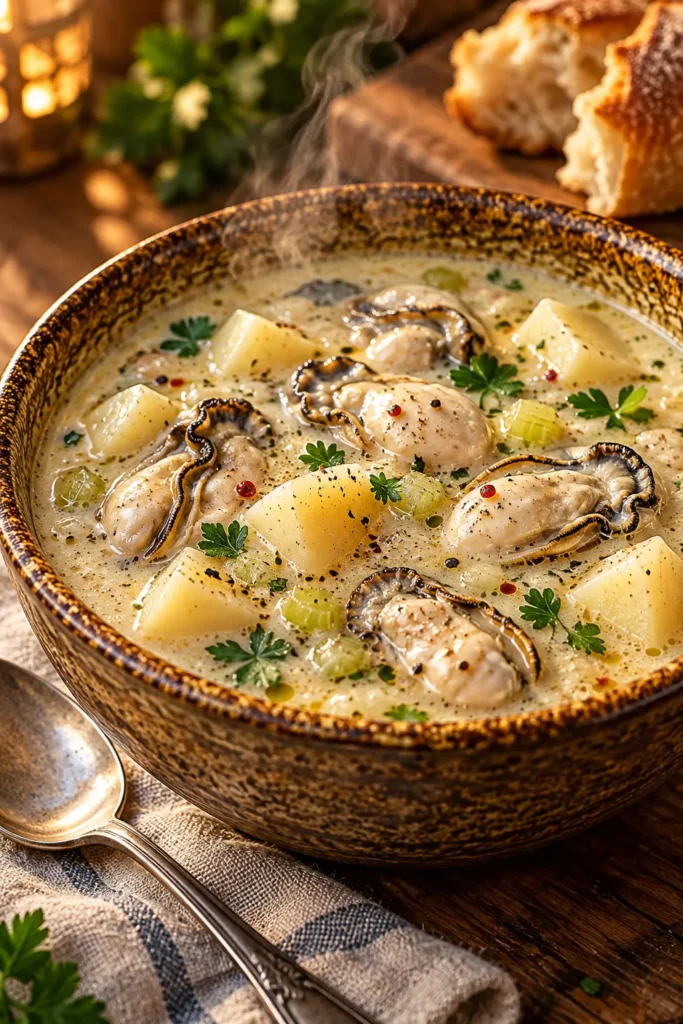
Allow leftover Creamy Oyster Stew to cool, then transfer it to an airtight container and refrigerate promptly.
Because both seafood and dairy are delicate, the stew is best enjoyed fresh. When reheating leftovers, use low heat and warm only until the broth and oysters are heated through. Avoid bringing the stew to a hard boil, which can toughen the oysters and affect the creamy broth.
Stir gently as it reheats so the milk warms evenly without breaking up the tender potatoes.
Freezing is not recommended for the best texture because dairy-based broth and cooked potatoes can change consistency after thawing, while reheated oysters can become tougher.
Troubleshooting
- The oysters are rubbery: They were likely cooked too long or at too high a temperature. Add them only at the end and stop cooking once they are opaque, firm, and hot throughout.
- The milk is scorching: The heat may be too high. Keep the stew at a gentle simmer and stir the bottom of the pot periodically.
- The potatoes are still firm: Continue the low simmer before adding the oysters. The potatoes should be completely fork-tender first.
- The stew tastes too salty: Oyster liquor naturally varies in salinity, which is why additional salt should be added only after tasting.
- The broth boiled rapidly: Lower the heat immediately and return it to a gentle simmer. Oyster stew benefits from low, controlled heat.
- The stew seems less rich than desired: Use the listed half-and-half option the next time you prepare it for a richer broth.
FAQs
What is oyster stew?
Oyster stew is a simple, creamy seafood dish built around fresh oysters and their flavorful liquor. This version also includes potatoes, onion, celery, garlic, butter, milk, parsley, and optional cayenne for a satisfying one-pot meal.
How do I know when oysters are cooked?
Oysters are ready when they turn opaque, become slightly firm, and are hot throughout. Their edges may curl slightly. For this recipe, that generally takes about 3–5 minutes at a gentle simmer.
Why shouldn’t I boil oyster stew?
A vigorous boil can make oysters firm and rubbery while also being harder on the milk-based broth. Gentle heat keeps both the seafood and the creamy base in better condition.
Do I use the liquid from the oysters?
Yes. The recipe specifically calls for the oysters with their liquor. That briny liquid contributes important oyster flavor to the broth.
Can I make Creamy Oyster Stew richer?
Yes. The ingredient list gives you the option of using half-and-half instead of whole milk for a richer stew.
Should I add salt at the beginning?
No. Wait until the oysters and their liquor have been added, then taste the finished stew. Oyster liquor can be naturally salty, so you may need very little additional salt.
Can I cook the oysters with the potatoes?
It is better not to. The potatoes require 15–20 minutes to become tender, while the oysters need only about 3–5 minutes. Adding the oysters later prevents overcooking.
What goes well with oyster stew?
Crackers and crusty bread are the easiest options because they complement the creamy broth without competing with the oysters. A simple salad or green vegetable also works well when you want a larger meal.
Conclusion
This Creamy Oyster Stew keeps the focus exactly where it belongs: plump oysters, tender potatoes, aromatic vegetables, and a buttery cream broth warmed gently until everything comes together. Serve it hot with crackers or crusty bread, and save the recipe for the next time a cozy seafood dinner sounds just right.
Follow Us
Love easy seafood recipes, creamy dinners, and quick weeknight meals?
👉 Follow us on Facebook for daily viral recipes and cooking inspiration
👉 Save your favorite recipes on Pinterest for easy meal planning and seafood ideas
Creamy Oyster Stew
Equipment
- large pot with lid For sautéing the aromatics and gently simmering the stew.
- wooden spoon or heatproof spatula For stirring the milk and ingredients while cooking.
- sharp kitchen knife For finely chopping vegetables and cutting potatoes into ¾-inch cubes.
- cutting board For preparing onion, celery, garlic, potatoes, and parsley.
- vegetable peeler For peeling the potatoes before cutting them into cubes.
Ingredients
- 4 tbsp butter
- 1 small onion, finely chopped
- 2 stalks celery, finely chopped
- 2 cloves garlic, minced
- 2 medium potatoes, peeled and cut into ¾-inch cubes
- 1 quart whole milk, or half-and-half for a richer stew
- 1 pint fresh shucked oysters, with their liquor
- ¼ tsp cayenne pepper, optional
- salt and freshly ground black pepper, to taste
- 2 tbsp chopped fresh parsley
- crackers or crusty bread, for serving
Instructions
- Soften the Aromatics: Melt the butter in a large pot over medium heat. Add the onion and celery and cook for about 5 minutes, until softened. Stir in the garlic and cook for 30 seconds.Cue: The onion and celery should look softened and glossy but not deeply browned, and the garlic should smell fragrant.
- Add the Milk and Potatoes: Pour in the milk and add the potatoes and cayenne, if using. Heat gently, stirring occasionally, until the milk reaches a gentle simmer. Don’t let it boil rapidly.Cue: Look for small bubbles around the edge of the pot rather than vigorous bubbling across the surface.
- Cook Until Tender: Reduce the heat to low, cover, and simmer for 15–20 minutes, until the potatoes are tender when pierced with a fork.Cue: A fork should slide easily into the center of a potato cube without the potatoes falling apart.
- Cook the Oysters: Stir in the oysters and their liquor. Simmer gently for 3–5 minutes, until the oysters are opaque, firm, and hot throughout. Avoid boiling the stew.Seafood Cue: The oysters should lose their translucent appearance, become opaque and slightly firm, and their edges may begin to curl. Remove the stew from aggressive heat before they become tight or rubbery.
- Season and Serve: Taste before adding salt, since the oyster liquor can be salty. Season with black pepper and additional salt if needed. Garnish with parsley and serve hot with crackers or crusty bread.Cue: The finished broth should taste creamy and buttery with a distinct but balanced briny oyster flavor.
Notes
Nutrition
All nutritional information is based on third party calculations and is only an estimate. Each recipe’s nutritional value will vary depending on the ingredients used, measuring methods, and portion sizes.