
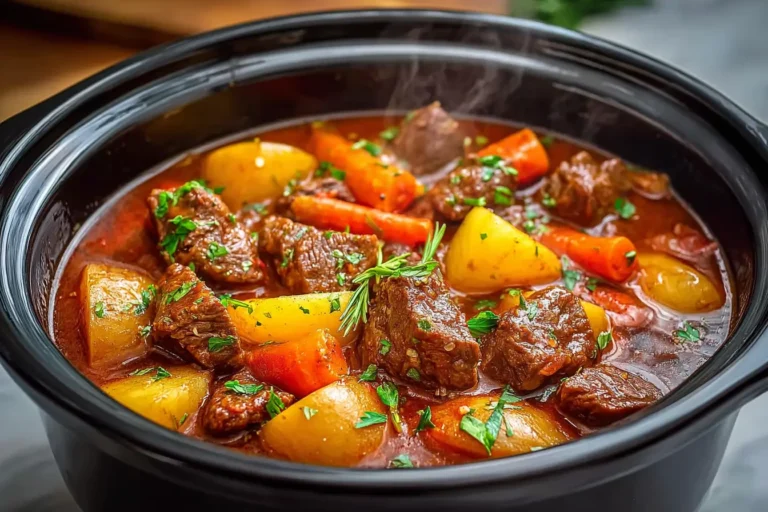
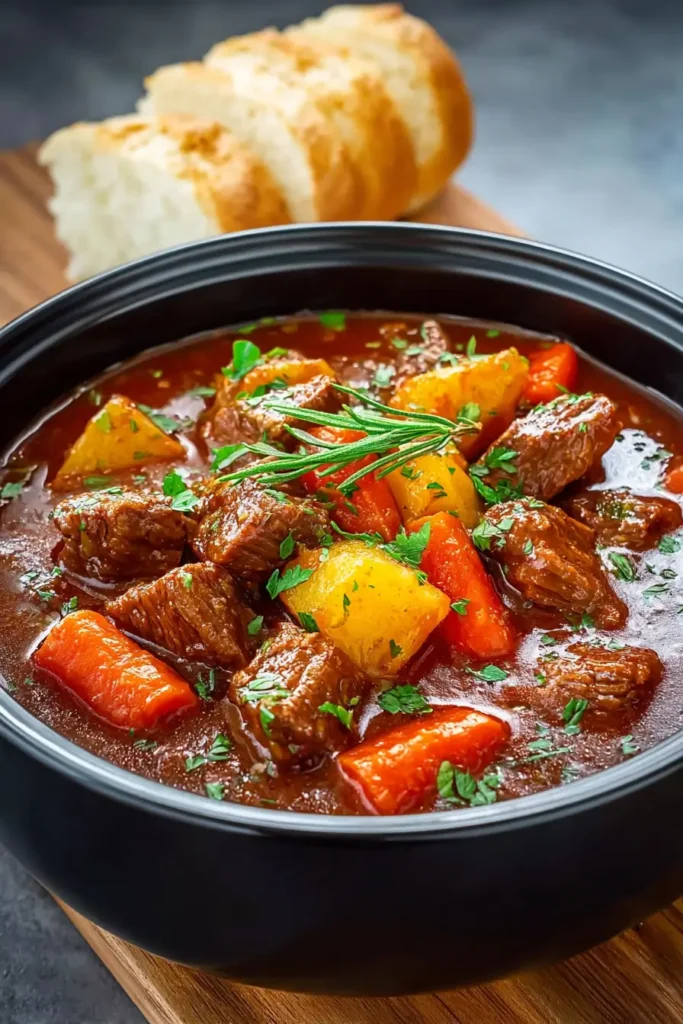
Crockpot Beef Stew is the kind of meal that fills your home with warmth and comfort. This slow-cooked classic blends tender chunks of beef, hearty vegetables, and a rich, savory broth into a wholesome, satisfying dish. By letting the ingredients simmer for hours, the flavors deepen, the meat becomes melt-in-your-mouth tender, and dinner practically cooks itself while you go about your day.
Unlike stovetop stews, Crockpot Beef Stew benefits from the low, steady heat of a slow cooker that transforms inexpensive cuts of beef into juicy, flavorful bites. This cooking method allows even beginners to create a restaurant-worthy dish with minimal effort.
(Learn more about comforting slow-cooked flavors in Crockpot Ranch Chicken)
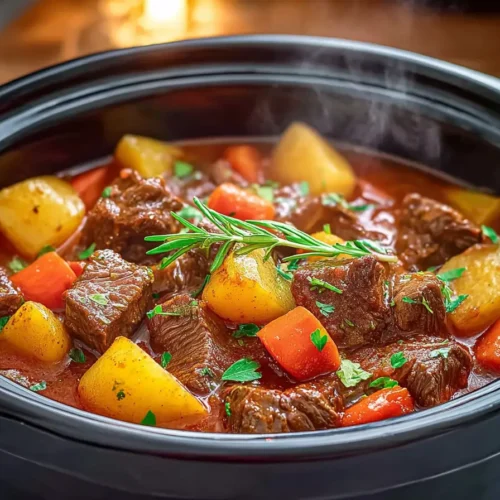
Crockpot Beef Stew
Equipment
- slow cooker
- skillet
- chef’s knife
- cutting board
- mixing bowl
- wooden spoon
Ingredients
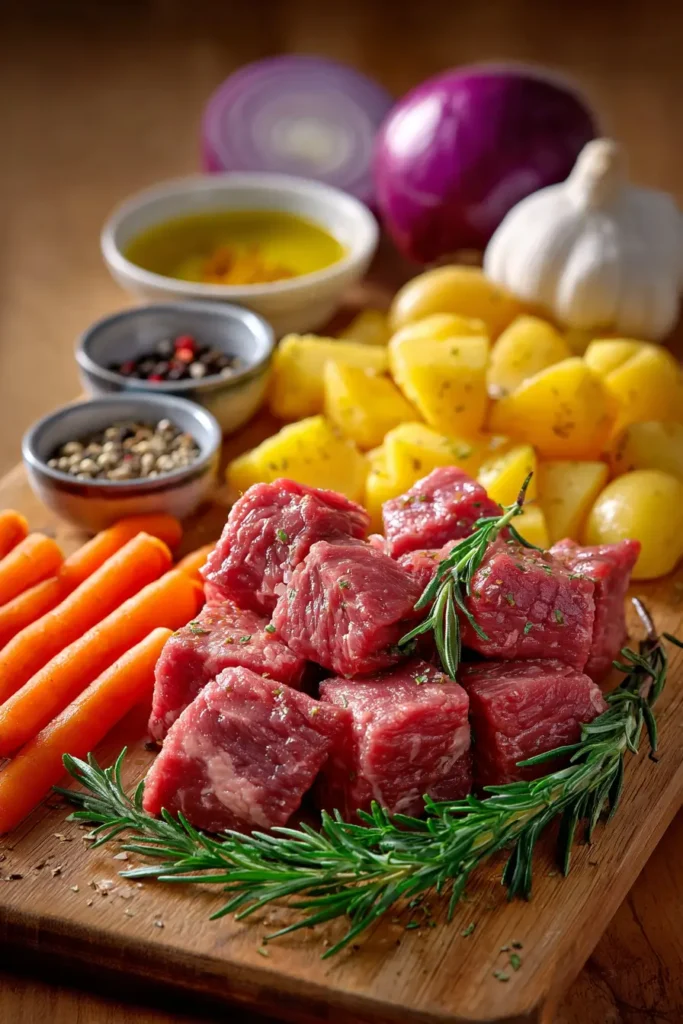
- 2 lbs chuck roast, cut into 1-inch cubes
- 1 tbsp olive oil
- 4 carrots, peeled and sliced
- 3 celery stalks, chopped
- 1 large onion, diced
- 4 Yukon gold potatoes, chopped
- 3 cups low-sodium beef broth
- 2 tbsp tomato paste
- 1/2 cup red wine (optional)
- 3 garlic cloves, minced
- 1 bay leaf
- 1 tsp dried thyme
- 1 tsp dried rosemary
- 1 tsp paprika
- 1 tbsp Worcestershire sauce
- 1 tsp salt (adjust to taste)
- 1/2 tsp black pepper
- 1 cup peas or green beans (optional, added at end)
- 2 tbsp fresh parsley, chopped (for garnish)
Instructions
- Heat oil in a skillet over medium-high heat. Brown beef cubes in batches, turning to sear all sides. Transfer to slow cooker.
- Add carrots, celery, onion, and potatoes to the slow cooker, placing the denser vegetables at the bottom.
- In a bowl, whisk together beef broth, tomato paste, red wine, garlic, Worcestershire sauce, and all seasonings. Pour over the beef and vegetables.
- Cover and cook on LOW for 8–10 hours or HIGH for 4–5 hours, until beef is fork-tender and vegetables are soft.
- 30 minutes before serving, stir in peas or green beans if using. Remove bay leaf.
- Garnish with fresh parsley. Serve warm with crusty bread or over mashed potatoes.
Notes
Nutrition
All nutritional information is based on third party calculations and is only an estimate. Each recipe’s nutritional value will vary depending on the ingredients used, measuring methods, and portion sizes.
Why It’s a Classic Comfort Dish Loved by All
Few dishes capture the heart of home cooking like a slow-simmered stew. Every spoonful combines tender meat, perfectly cooked vegetables, and a thick, savory sauce that feels like pure comfort. It’s an all-in-one meal that’s perfect for family dinners, meal prepping, or cozy evenings when you want something hearty and simple.
Families across the U.S. have made slow cooker beef stew recipes a weekly staple because they’re affordable, nutrient-packed, and effortless. You just prep the ingredients, set the crockpot, and let time do the work.
The Secret Behind the Slow Cooker Magic
What makes the slow cooker special is how it turns simple ingredients into something extraordinary. Cooking on low for several hours breaks down the beef’s connective tissues, creating a silky, flavorful broth that clings to every bite. Browning the meat first adds even more richness and depth to the dish—a technique we’ll discuss in detail in the next section.
Choosing the Right Ingredients for Crockpot Beef Stew
Best Cuts of Beef for Crockpot Stew
Choosing the right beef cut is the foundation of a perfect Crockpot Beef Stew. Because the slow cooker gently simmers meat for hours, it’s best to use tougher cuts rich in connective tissue—these transform into tender, flavorful bites during slow cooking.
The top choices include:
| Cut of Beef | Why It Works | Notes |
|---|---|---|
| Chuck Roast | Juicy, marbled, breaks down beautifully | Ideal for classic stew texture |
| Brisket | Deep, beefy flavor | Trim excess fat before use |
| Bottom Round | Leaner option, slightly firmer | Perfect for healthier stews |
Avoid lean cuts like sirloin or tenderloin; they dry out and lose texture during long cooking. For the best results, trim excess fat but leave some marbling for flavor.
(Discover great ideas like Crockpot Beef Stroganoff for more slow-cooked beef inspiration.)
Fresh Vegetables That Add Flavor and Texture
Vegetables aren’t just filler—they build the base flavor and add natural sweetness to your slow cooker beef stew. Classic choices include carrots, celery, onions, and potatoes, which hold up beautifully through long cooking times. For more depth, try adding parsnips, turnips, or mushrooms.
When chopping your veggies, keep pieces uniform in size so they cook evenly. Add delicate vegetables like peas or green beans near the end of cooking to preserve their color and texture.
Essential Liquids: Broth, Wine, or Water?
The liquid you choose defines your stew’s flavor profile. For a deep, hearty taste, go with low-sodium beef broth as your base. If you’re aiming for richness, add a splash of red wine—it enhances both color and flavor.
Water works in a pinch, but you’ll need to balance it with herbs, spices, and tomato paste to avoid a bland result.
Here’s a simple flavor comparison table:
| Liquid | Flavor Level | Best Use |
|---|---|---|
| Beef Broth | Full-bodied and savory | Everyday beef stew |
| Red Wine | Complex and rich | Special occasion stew |
| Water + Tomato Paste | Light and economical | Weeknight stews |
Choosing the Right Seasoning Base
Seasoning can make or break your Crockpot Beef Stew. Salt, black pepper, and bay leaves form the classic foundation, but you can add a pinch of thyme, rosemary, and paprika for an aromatic twist. A splash of Worcestershire sauce adds depth and umami.
(Check out Mexican Street Corn Soup for another great example of how seasoning transforms slow-cooked recipes.)
Prepping Your Ingredients for Maximum Flavor
Do You Need to Brown the Meat Before Cooking?
One of the most common questions when making Crockpot Beef Stew is whether browning the meat is worth the effort. The short answer? Absolutely yes.
Browning your beef before adding it to the crockpot creates a deeper, richer flavor. The caramelization that happens during searing develops what chefs call the Maillard reaction, giving the stew a hearty, savory backbone. Skipping this step won’t ruin your meal, but it can make the difference between a good stew and an unforgettable one.
To do it right, heat a bit of oil in a skillet over medium-high heat, add small batches of beef, and brown on all sides. Avoid crowding the pan—otherwise, the meat will steam instead of sear. Once browned, transfer the beef and all the flavorful bits from the pan into the slow cooker. Those browned bits will dissolve into your stew as it simmers, enriching the broth.
(Don’t miss our Crockpot Chicken Noodle Soup to see how layering ingredients can boost flavor in other slow-cooked dishes.)
How to Cut and Prep Vegetables for Even Cooking
Consistent chopping ensures every bite of your stew cooks evenly. Cut root vegetables like carrots and potatoes into 1-inch chunks. If you cut them smaller, they might break apart during the long cooking process. Onions should be coarsely chopped or cut into wedges to release their sweetness gradually.
A good trick is to place dense vegetables like potatoes and carrots at the bottom of the slow cooker, where they’ll get the most heat. Then, layer the browned meat on top, followed by softer ingredients such as peas or mushrooms added near the end of cooking.
Balancing Spices and Herbs for the Perfect Taste
Getting the seasoning right in a slow cooker beef stew is all about balance. Dried herbs like thyme, rosemary, and bay leaves develop beautifully over long cooking times, while fresh herbs such as parsley or dill should be added at the end for a burst of freshness.
For a rich depth of flavor, try blending paprika, garlic powder, and a splash of Worcestershire sauce into the mix. A little acid—like a squeeze of lemon juice or a tablespoon of tomato paste—can also help brighten the flavor just before serving.
(Looking for inspiration? Try Crockpot Chicken Pasta for another example of how spices transform simple ingredients into extraordinary meals.)
Step-by-Step Crockpot Beef Stew Recipe
Cooking Time and Temperature Guidelines
The beauty of a Crockpot Beef Stew lies in its simplicity. Once your ingredients are prepped, the slow cooker does the hard work for you.
For the best results, cook your stew on LOW for 8 to 10 hours or HIGH for 4 to 5 hours. Cooking on low gives you the most tender, flavorful meat because it allows the collagen to fully break down.
Avoid opening the lid frequently—every time you do, the temperature drops, and your stew may need extra cooking time. Patience is key to developing that signature thick, hearty texture.
(Check out how timing affects flavor in our Frozen Chicken Crock Pot Recipes guide.)
How to Layer Ingredients in Your Slow Cooker
Layering ingredients properly ensures everything cooks evenly. Start by placing root vegetables such as carrots, potatoes, and parsnips at the bottom. They need the most heat and take longer to soften. Next, add your browned beef along with any juices from the skillet—this brings incredible richness to the broth.
On top, pour your liquid mixture (broth, wine, and seasonings) so that everything is just covered. Avoid overfilling the crockpot—keep it about two-thirds full to prevent overflow and ensure even cooking.
Here’s a quick layering summary:
| Layer | Ingredient Type | Reason |
|---|---|---|
| Bottom | Root vegetables | Need most heat and stability |
| Middle | Browned beef chunks | Distributes flavor evenly |
| Top | Broth, herbs, and lighter vegetables | Gentle cooking prevents mushiness |
Tips for Avoiding Mushy Vegetables
Nobody wants soggy veggies in their slow cooker beef stew. To keep them firm and flavorful:
- Cut larger pieces: Bigger chunks retain texture better during long cooking.
- Add delicate vegetables later: If you’re including peas, mushrooms, or zucchini, stir them in during the last 30–45 minutes.
- Don’t over-stir: Let the stew simmer without too much disruption so ingredients hold their shape.
To thicken your stew naturally, remove the lid during the final 30 minutes of cooking, or mix a tablespoon of cornstarch with water and stir it in gently.
(Learn more about thickening sauces and stews in our French Onion Meatballs article.)
Finishing Touches for a Perfect Stew
Once your Crockpot Beef Stew has finished cooking, taste it before serving. Add a bit more salt or pepper if needed, and stir in a handful of fresh parsley for color and freshness. If the stew feels too thick, you can loosen it with a little warm beef broth.
Serve it warm with crusty bread, rice, or over mashed potatoes for a comforting meal that never fails to impress.
(Don’t miss our Crockpot Lasagna Recipe for another hearty slow-cooked family favorite.)
Common Mistakes to Avoid When Making Beef Stew
Overcooking or Undercooking the Meat
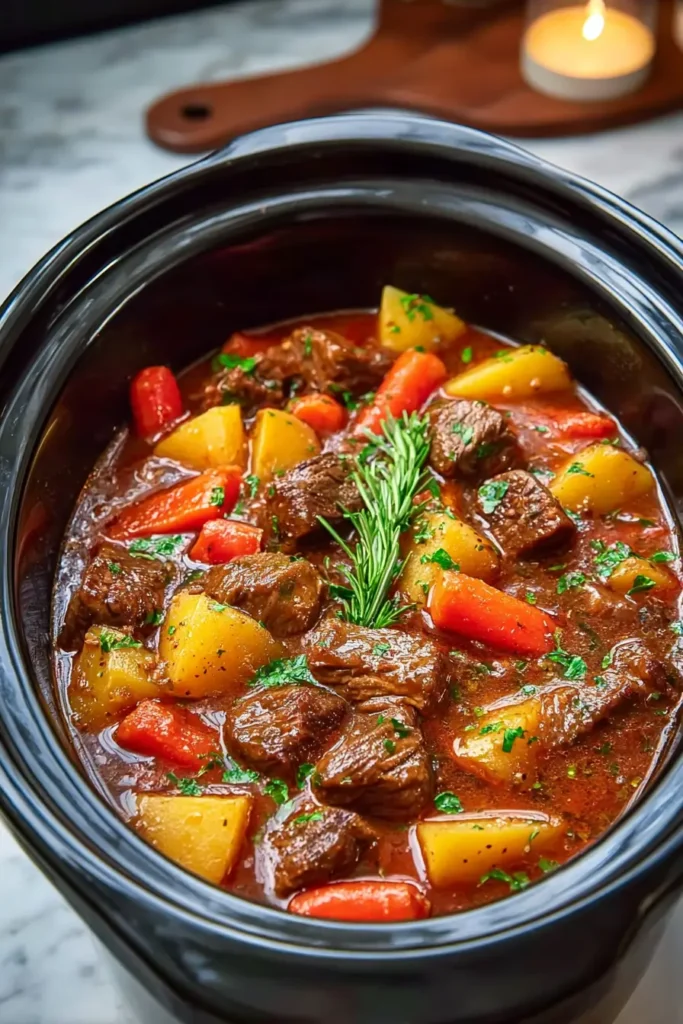
Even though Crockpot Beef Stew is forgiving, cooking time still matters. One of the biggest mistakes is letting the stew cook for too long or too little. Overcooked meat becomes stringy and loses moisture, while undercooked beef stays tough and chewy.
To avoid this, always cook on LOW for 8–10 hours or HIGH for 4–5 hours depending on your schedule. The low-and-slow method allows the beef’s connective tissues to break down gradually, resulting in tender, juicy bites.
(Discover how to master slow-cooking times in our Slow Cooker Lemon Chicken and Rice guide.)
Using the Wrong Cut of Beef
Not all beef cuts perform well in the slow cooker. Lean cuts like sirloin or ribeye may seem appealing, but they dry out quickly during long cooking times. Instead, choose chuck roast, brisket, or bottom round for their marbling and texture. These cuts hold up beautifully during hours of simmering, transforming into fork-tender pieces that practically melt in your mouth.
If you’re shopping on a budget, ask your butcher for stew meat cut from the shoulder — it’s flavorful and affordable.
Adding Too Much Liquid or Thickener
Another frequent issue with slow cooker beef stew is excess liquid. Since a crockpot doesn’t allow evaporation like a stovetop pot, using too much broth or water leads to a watery stew. Start with just enough liquid to cover the ingredients. If the stew turns out thin, thicken it at the end by adding a cornstarch slurry or letting it simmer uncovered for the last 30 minutes.
Similarly, avoid adding flour or cornstarch too early; they can clump or lose thickening power after hours of cooking.
(Looking for inspiration? Try our Buffalo Chicken Dip Crock Pot recipe to learn how to control texture and thickness in creamy slow cooker dishes.)
Neglecting Seasoning Adjustments
Spices and herbs develop differently in a slow cooker than on the stovetop. Over time, their potency can fade, making your stew taste dull. To fix this, season lightly at the start, then adjust right before serving. Add salt, pepper, or herbs like thyme and parsley at the end to bring your Crockpot Beef Stew to life.
Forgetting About Layering and Timing
Dumping all your ingredients at once can result in uneven cooking. Dense root vegetables like potatoes and carrots should always go on the bottom, closest to the heat source. Softer vegetables, peas, or mushrooms belong near the top or added later in the cooking cycle. Timing and layering make a world of difference between a mushy mess and a perfectly balanced stew.
(Check out our expert layering techniques in Crockpot Ravioli Lasagna Recipe.)
Best Seasonings and Flavor Boosters for Crockpot Beef Stew
Top Spices That Elevate Flavor
When it comes to seasoning Crockpot Beef Stew, balance is everything. The slow-cooking process gently melds spices and herbs, so you want ingredients that hold their flavor over time. The essential spice lineup includes black pepper, paprika, thyme, and bay leaves. These seasonings build a savory base that deepens as the stew simmers.
If you want a touch of warmth, sprinkle in smoked paprika or cayenne pepper. For an earthy depth, rosemary and oregano make excellent additions. Start with small amounts—about ½ teaspoon of each—and adjust near the end once you taste the final broth.
(Learn how slow seasoning transforms flavor in our Crockpot Chicken and Dumplings guide.)
Balancing Salt, Pepper, and Herbs
One of the secrets to perfecting slow cooker beef stew is seasoning in layers. Salt enhances flavor, but adding too much early on can overpower the dish. Instead, lightly salt your beef during browning, then season again halfway through cooking. The same goes for black pepper—add some at the start for heat and a pinch at the end for brightness.
Fresh herbs should come in at the finish line. Stir in chopped parsley, basil, or thyme just before serving for a burst of color and freshness.
For a heartier, umami-rich stew, try blending in soy sauce, Worcestershire sauce, or a teaspoon of tomato paste. These add depth and balance without masking the natural flavors of beef and vegetables.
Using Garlic, Onion, and Bay Leaves the Right Way
Garlic and onion are the backbone of any good Crockpot Beef Stew. Their natural sweetness intensifies as they cook, creating a robust flavor base. Always sauté them lightly before adding to the slow cooker if you have time—it brings out their aroma and prevents bitterness.
Add bay leaves early in the process so they can infuse the broth throughout cooking, but remember to remove them before serving. If you enjoy bolder flavor, a hint of crushed red pepper flakes adds a gentle heat that balances beautifully with the beef’s richness.
(Looking for inspiration? Try the savory depth of our French Onion Meatballs to see how onions transform a dish.)
Optional Flavor Enhancers for a Gourmet Touch
Want your Crockpot Beef Stew to taste like something from a high-end bistro? A splash of red wine or balsamic vinegar just before serving enhances acidity and rounds out the flavors. You can also stir in a tablespoon of butter at the end to give the stew a glossy finish and richer mouthfeel.
If you love smoky flavors, add a small piece of bacon or pancetta at the start. As it renders, it infuses the broth with irresistible savoriness.
(Don’t miss our Caramel Apple Cheesecake Bars for a sweet dessert pairing to balance out your hearty beef stew dinner.)
Serving and Storing Crockpot Beef Stew
Perfect Side Dishes to Pair With Beef Stew
One of the best things about Crockpot Beef Stew is how versatile it is when it comes to sides. Its rich, savory broth pairs beautifully with simple accompaniments that soak up all that delicious sauce. Here are some favorites:
| Side Dish | Why It Works | Serving Tip |
|---|---|---|
| Crusty Bread | Absorbs the stew’s flavorful gravy | Warm in oven before serving |
| Mashed Potatoes | Creamy texture balances the beef | Spoon stew over a generous scoop |
| Steamed Rice | Simple and hearty | Perfect for weeknight meals |
| Egg Noodles | Adds a comforting twist | Toss lightly with butter and herbs |
| Roasted Vegetables | Brings color and sweetness | Use carrots, parsnips, or zucchini |
If you prefer a lighter meal, serve your stew with a side salad topped with vinaigrette to balance the richness.
(Check out Chicken Spaghetti Recipe for another cozy dinner pairing idea.)
How to Store and Reheat Leftovers Safely
One of the biggest advantages of slow cooker beef stew is how well it keeps. Proper storage not only prevents waste but actually improves the flavor—stews often taste even better the next day.
To store safely:
- Refrigerator: Let the stew cool completely, then transfer it to an airtight container. It will keep for up to 4 days in the fridge.
- Reheating: Warm gently on the stovetop over low heat or use the microwave in short intervals, stirring occasionally. Add a splash of broth or water to restore the perfect consistency.
Avoid reheating multiple times, as that can affect texture and safety.
(Learn more about keeping your dishes fresh in How to Make Kasha Low Carb).
Freezing Crockpot Beef Stew for Meal Prep
If you love having ready-made meals, Crockpot Beef Stew freezes beautifully. Once it cools, divide it into single-serving containers or freezer bags, leaving a little space for expansion. Label each with the date, and store for up to 3 months.
When you’re ready to enjoy it, thaw the stew in the refrigerator overnight and reheat it slowly on the stove or in the crockpot. Avoid microwaving from frozen, as it can create uneven heating.
A tip for best texture: If you plan to freeze the stew, undercook the vegetables slightly—they’ll soften further when reheated.
(For another great make-ahead dish, try our Orzo with Shrimp for a light yet satisfying seafood meal.)
Variations and Customizations of Crockpot Beef Stew
Healthy Crockpot Beef Stew Options
If you’re watching calories or sodium intake, there are plenty of ways to make Crockpot Beef Stew lighter without sacrificing flavor. Start by using lean cuts of beef like bottom round or sirloin tip, and trim visible fat before cooking. Substitute low-sodium beef broth for regular broth, and skip heavy thickeners like flour or roux.
Load your stew with more vegetables—zucchini, bell peppers, green beans, or spinach all add color and nutrients. For a low-carb version, replace potatoes with cauliflower florets or turnips; they’ll still provide hearty texture while keeping carbs in check.
(For more wholesome cooking ideas, explore Is Kasha Low in Carbs? Everything You Need to Know).
Low-Sodium and Gluten-Free Versions
Creating a gluten-free Crockpot Beef Stew is simple. Just replace flour-based thickeners with cornstarch or arrowroot powder. Both work beautifully when mixed with a bit of water and added toward the end of cooking.
For a low-sodium version, use homemade beef stock if possible. It gives you full control over salt levels. Avoid canned soups or pre-made sauces, as they often contain hidden sodium. Instead, enhance flavor naturally with fresh herbs, garlic, and a splash of balsamic vinegar.
(Learn about other allergen-friendly ideas in Gluten-Free Pancakes Recipe).
Creative Twists: Adding Wine, Mushrooms, or Root Veggies
One of the best things about Crockpot Beef Stew is its versatility. You can easily adapt the recipe to suit your tastes or the ingredients you have on hand.
- Red Wine Stew: Add half a cup of red wine to your broth for a richer, more sophisticated flavor. It enhances the sauce’s depth and complements the beef’s natural sweetness.
- Mushroom Lover’s Stew: Swap some of the potatoes for cremini or baby bella mushrooms. They soak up the juices beautifully and add a meaty, earthy flavor.
- Root Vegetable Mix: Try adding parsnips, rutabaga, or sweet potatoes for an extra layer of natural sweetness and texture.
These variations not only keep your stew exciting but also make it adaptable for different dietary needs or flavor preferences.
(Don’t miss Perfect Crookie Recipe if you’re looking for a sweet, crowd-pleasing dessert to pair with your hearty meal.)
Cultural Twists and Flavor Inspirations
Looking to take your slow cooker beef stew around the world? Try adding global flavors to make it your own:
- Italian Style: Mix in diced tomatoes, oregano, and a touch of basil.
- Mexican Style: Add chili powder, cumin, and corn for a smoky twist.
- Asian Style: Combine soy sauce, ginger, and sesame oil for a rich umami depth.
Each variation transforms your classic beef stew into something entirely new without complicating the cooking process.
FAQs About Crockpot Beef Stew
How to make the best beef stew in a slow cooker?
To make the best Crockpot Beef Stew, start with a well-marbled cut of beef like chuck roast. Brown the meat first to build flavor, then layer it over root vegetables in your slow cooker. Add beef broth, tomato paste, and seasonings such as thyme, garlic, and bay leaves. Cook on LOW for 8 to 10 hours or HIGH for 4 to 5 hours until the beef becomes fork-tender and the sauce thickens naturally. A splash of red wine or Worcestershire sauce adds rich depth at the end.
Do you have to brown stew meat before putting it in the crockpot?
You don’t have to brown the meat before cooking, but doing so makes a huge difference in flavor. Searing the beef creates a caramelized crust that enhances the stew’s richness. If you skip this step, your slow cooker beef stew will still taste good—but it might lack that deep, roasted flavor you get from browning.
Can I put raw beef straight into a slow cooker?
Yes, you can add raw beef directly into your Crockpot Beef Stew. The slow, gentle heat will fully cook the meat safely and evenly. However, for the best flavor and texture, browning your beef beforehand is highly recommended. It locks in juices and elevates the dish from simple to sensational.
What are common mistakes when making beef stew?
Common mistakes include overcooking the meat, adding too much liquid, or forgetting to season properly. Using the wrong beef cut—like sirloin instead of chuck—can lead to dry results. Always follow layering rules: dense veggies on the bottom, meat in the middle, and lighter ingredients on top. Adjust seasoning at the end to ensure your Crockpot Beef Stew is flavorful and balanced.
What spices are good in beef stew?
Classic spices include thyme, rosemary, paprika, and bay leaves. Add salt and black pepper early, and finish with fresh parsley or a dash of Worcestershire sauce before serving. These herbs and spices enhance the slow-cooked flavors and create a cozy aroma that fills your kitchen.
Do I add water to a slow cooker for beef stew?
Usually, you don’t need to add water—use beef broth or stock instead. Water can dilute flavor, while broth adds depth and richness. Only add enough liquid to cover your ingredients, as the crockpot retains moisture during cooking. If your stew feels too thick at the end, stir in a small amount of warm broth or wine to adjust consistency.
Conclusion: The Joy of Slow-Cooked Comfort
There’s a reason Crockpot Beef Stew has stood the test of time—it’s the ultimate comfort food that never fails to bring warmth and satisfaction to the table. From selecting the right cut of beef to layering fresh vegetables and spices, every step adds depth and personality to this humble yet timeless dish.
The slow cooker’s gentle, consistent heat allows the ingredients to blend together perfectly, creating tender beef, rich gravy, and a hearty flavor that’s unmatched. Whether you’re cooking for a busy family weeknight or hosting a cozy dinner with friends, this stew delivers both convenience and taste in every bowl.
One of the best things about making slow cooker beef stew is its flexibility. You can adjust ingredients, spices, and even textures to fit your preferences—making each batch uniquely yours. Pair it with crusty bread, mashed potatoes, or rice, and you’ve got a meal that feels like home.
(Check out Crockpot Chicken Pasta for another simple, crowd-pleasing dinner idea.)
So, grab your slow cooker, prep your ingredients, and let time do the magic. Once you lift that lid, you’ll understand why Crockpot Beef Stew remains one of the most beloved recipes across generations.
Love cozy cooking? Follow us on Facebook and Pinterest for more comforting one-pan recipes, hearty pastas, and easy family dinners.